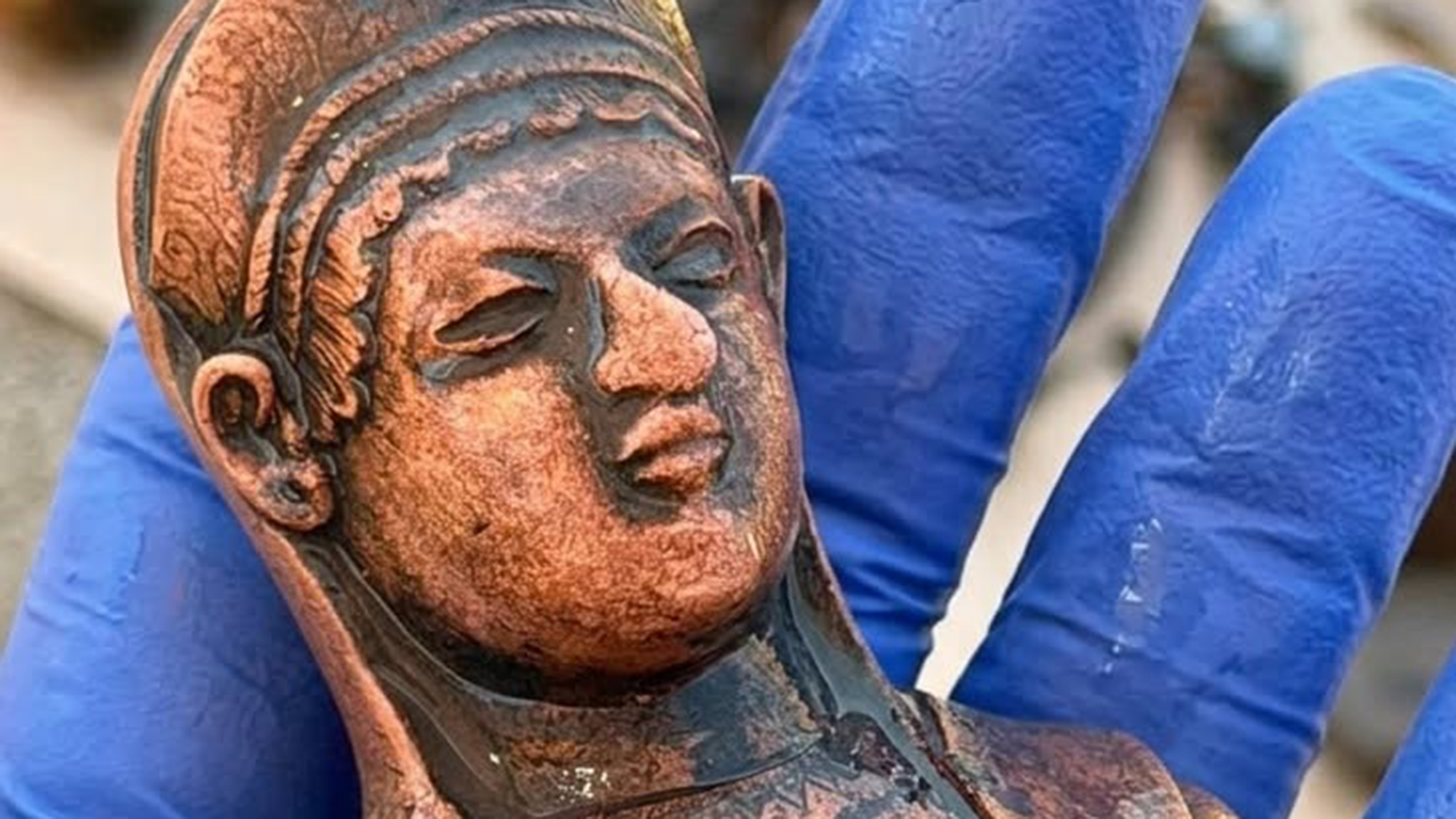
Archaeologists working near Bologna, Italy have uncovered a distinctive ritual well dating to the late sixth or early fifth century B.C., belonging to the ancient Etruscan city of Kainua. The excavation, led by researcher Elisabetta Govi from the University of Bologna, revealed remarkable bronze artifacts positioned at the well’s base, including two fragmented female statuettes and a unique bronze plate never before discovered in archaeological records.
The artifacts were likely placed as ceremonial offerings during the well’s initial dedication, possibly celebrating the founding of the city. The bronze items remained brilliantly preserved due to the low-oxygen underwater environment. Scholars believe the bronze’s symbolic significance to Etruscan culture—viewed as regenerative and “alive” due to its creation from copper and tin—connected it to themes of birth and fertility associated with the goddess Uni, the Etruscan counterpart to Rome’s Juno.
The well’s proximity to Uni’s nearby sanctuary underscores its religious importance to the community. The goddess presided over women, marriage, and agricultural growth, elements vital to this mountainous region’s survival. Evidence suggests the well served purposes beyond practical water collection, functioning instead as a focal point for religious ceremonies and rituals.
Researchers also discovered human skeletal remains within the well, suggesting individuals were ritually interred as part of a closing ceremony. Initial analysis indicates these were not sacrifice victims, though further investigation using DNA analysis and carbon-14 dating will commence in September to clarify their identities and the well’s complete chronological history.
Originally reported by Livescience →
About the Author