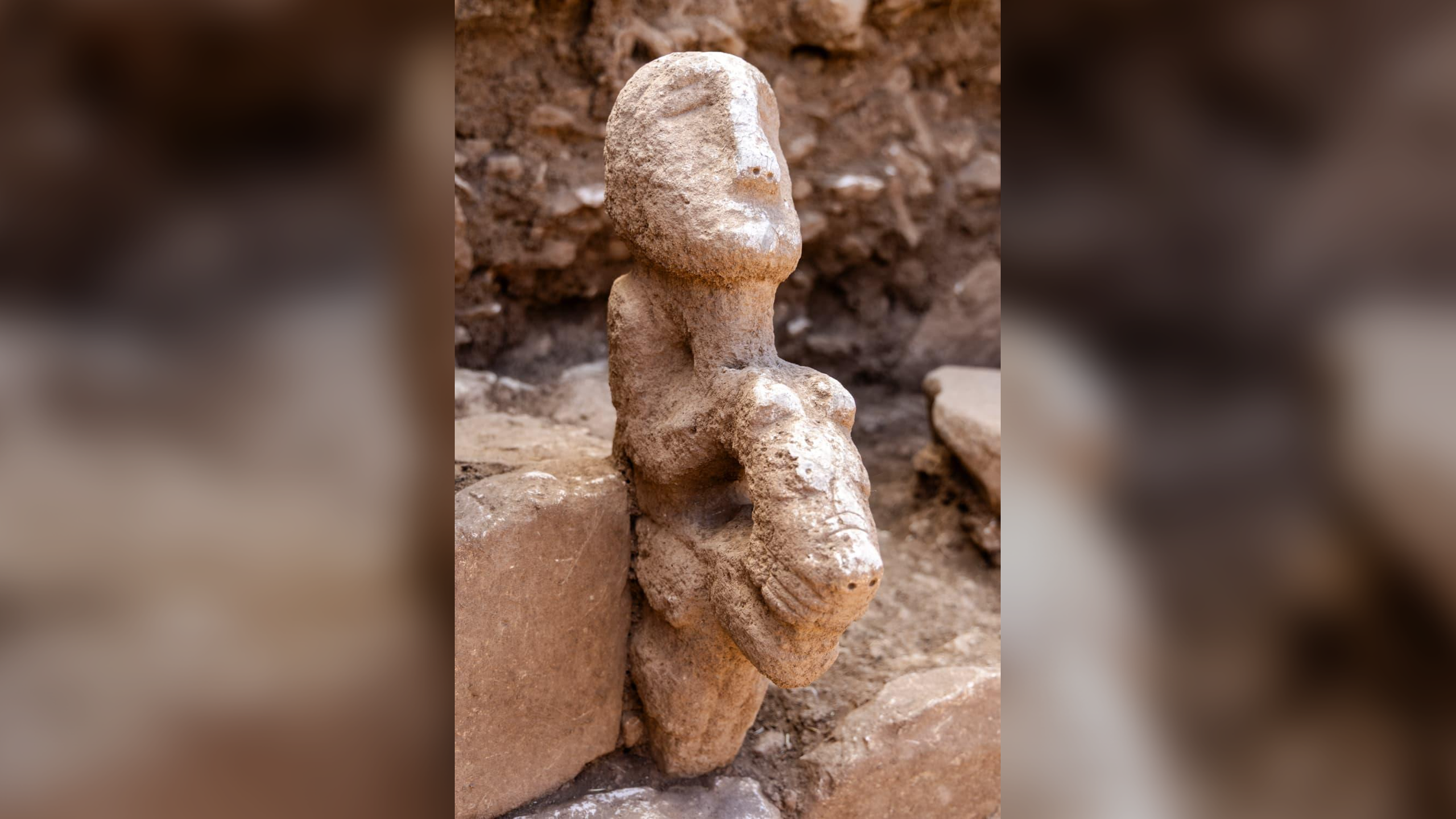
Archaeologists have made a remarkable discovery at Karahan Tepe, an ancient Neolithic settlement in southern Turkey. During excavations this summer, researchers unearthed an 11,000-year-old statue depicting a human figure positioned atop a leopard. Standing approximately 28 inches tall, the artifact represents an artistic style that experts describe as unprecedented, according to a statement from Turkey’s Ministry of Culture and Tourism.
The sculpture was found on a platform adjacent to the wall of a circular structure measuring roughly 10 feet in diameter. Karahan Tepe is among the world’s oldest known villages, established around 9750 B.C. in Turkey’s Urfa province, a region rich with other significant early settlements. This discovery adds to a growing body of enigmatic artwork from these ancient communities, including previously found statues featuring human figures and wild animals, often emphasizing masculine symbolism.
Researchers suggest the human-and-leopard motif may carry symbolic significance related to power and mastery. Jens Notroff, a Neolithic archaeologist at the German Archaeological Institute, notes that leopards were formidable predators in the region, making them challenging prey for skilled hunters. The statue may represent courage or dominance, with the human figure seemingly controlling the dangerous animal. Officials believe this finding will generate important questions about early human civilization and may significantly impact archaeological understanding of humanity’s earliest settlements.
Originally reported by Livescience →
About the Author