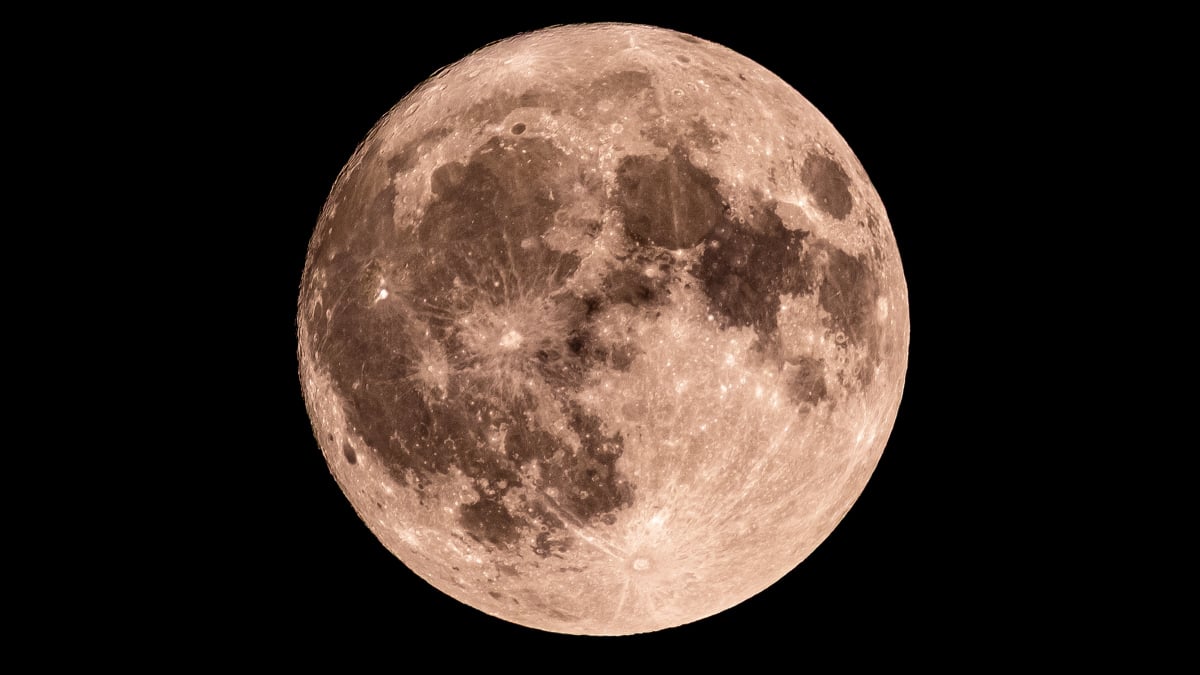
August 28, 2026 brings a rare celestial event to night skies: a Full Moon paired with a partial lunar eclipse. This eclipse occurs when Earth’s shadow engulfs the Moon, an alignment that requires the Sun, Earth, and Moon to be positioned in a straight line. Because of these specific geometric requirements, lunar eclipses can only take place during Full Moon phases.
On Friday, August 28, NASA’s tracking data confirms the Moon reaches its fully illuminated phase, with 100 percent of its surface visible. Stargazers with the naked eye can observe notable lunar features including the Mares Serenitatis, Vaporum, and the Aristarchus Plateau. Those equipped with binoculars will gain views of additional formations such as the Mares Frigoris and Nectaris, plus the Grimaldi Basin. Telescope users can explore even more distant details, including historical Apollo 17 landing evidence and the Fra Mauro and Descartes Highland regions.
The Moon completes its orbital cycle approximately every 29.5 days, progressing through eight distinct phases. The appearance we observe depends on how the Moon’s position relative to Earth and the Sun determines which portions of its illuminated surface face our planet. The cycle begins with the barely visible New Moon, progresses through crescent and quarter phases, reaches maximum illumination at the Full Moon, then reverses through declining phases before beginning anew. The subsequent Full Moon will not occur until September 26.
Originally reported by Mashable →
About the Author