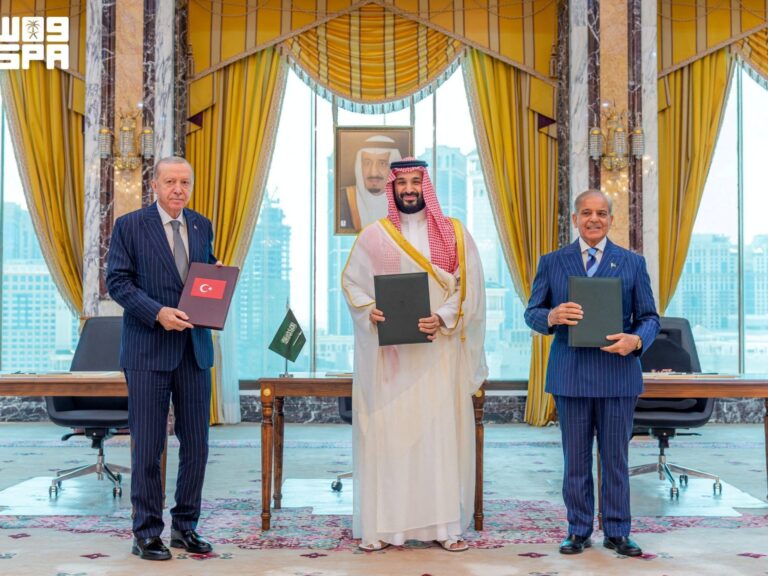
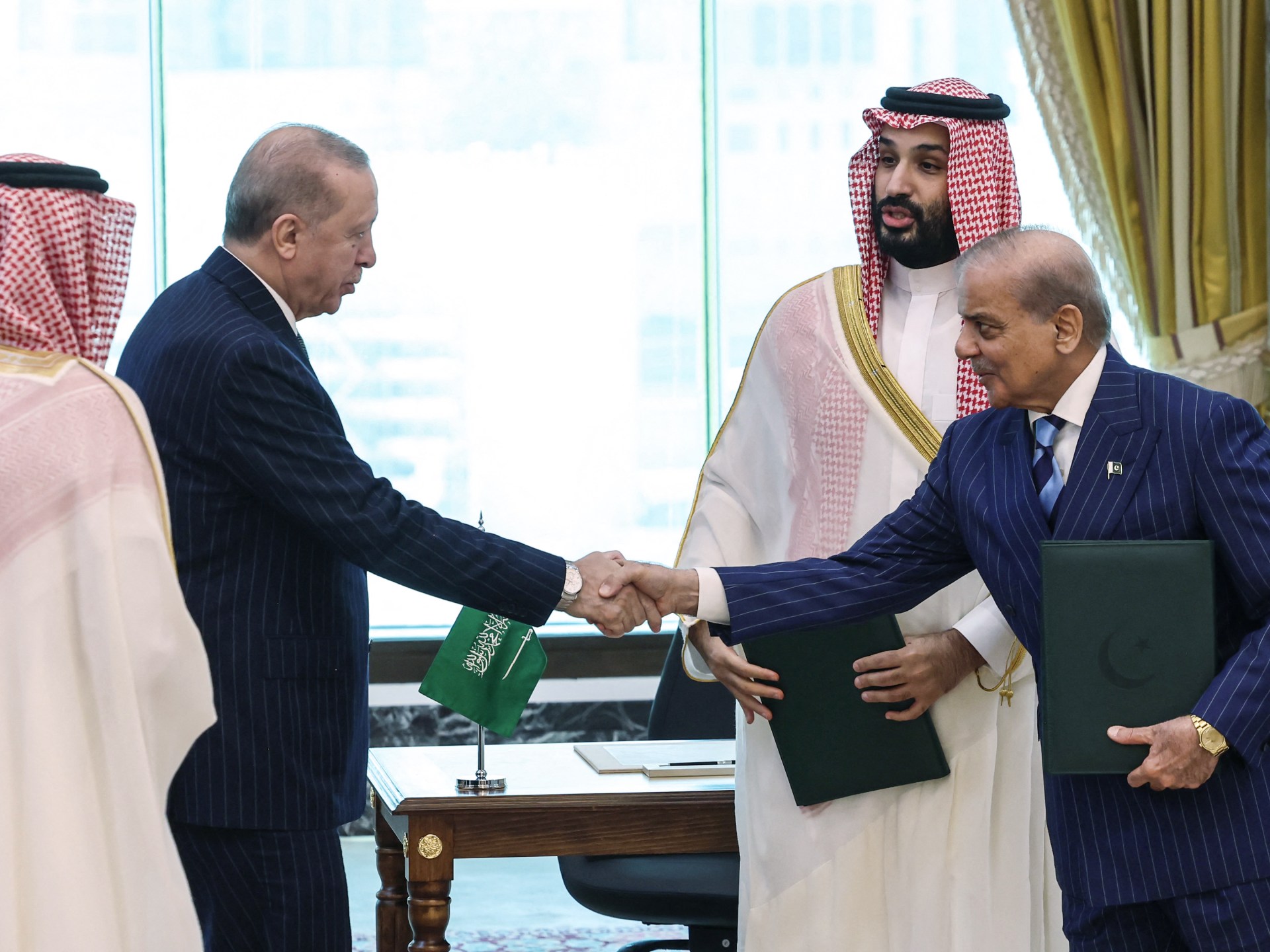
Turkiye’s defence ministry has outlined the operational framework for a military alliance established between Turkiye, Pakistan, and Saudi Arabia last week. The Mecca Joint Defence Agreement, signed on August 7, creates a collective defence arrangement where an armed attack against any member nation would be considered an attack on all parties, mirroring NATO’s Article 5 provision.
According to Turkish officials, the three nations will establish formal strategic structures involving defence ministers, foreign ministers, and senior military commanders. These institutional mechanisms are designed to place defence and military cooperation on a more permanent and organized foundation. The countries plan to conduct joint military exercises across land, naval, and air operations, with specific focus on air defence capabilities and unmanned systems.
Beyond military exercises, the alliance will prioritize defence industry collaboration, encompassing joint development and manufacturing of defence products alongside technology sharing initiatives. Officials emphasized that priority areas include unmanned and autonomous systems, electronic warfare technology, and artificial intelligence capabilities. Turkiye has indicated the pact remains open to expansion, potentially welcoming additional members, while asserting that the agreement does not conflict with existing international alliances.
Turkish defence officials also addressed Middle Eastern security concerns, calling for international intervention to resolve conflicts in Gaza and Lebanon, emphasizing the need for adherence to international law and humanitarian principles in the region.
Originally reported by Aljazeera →
About the Author