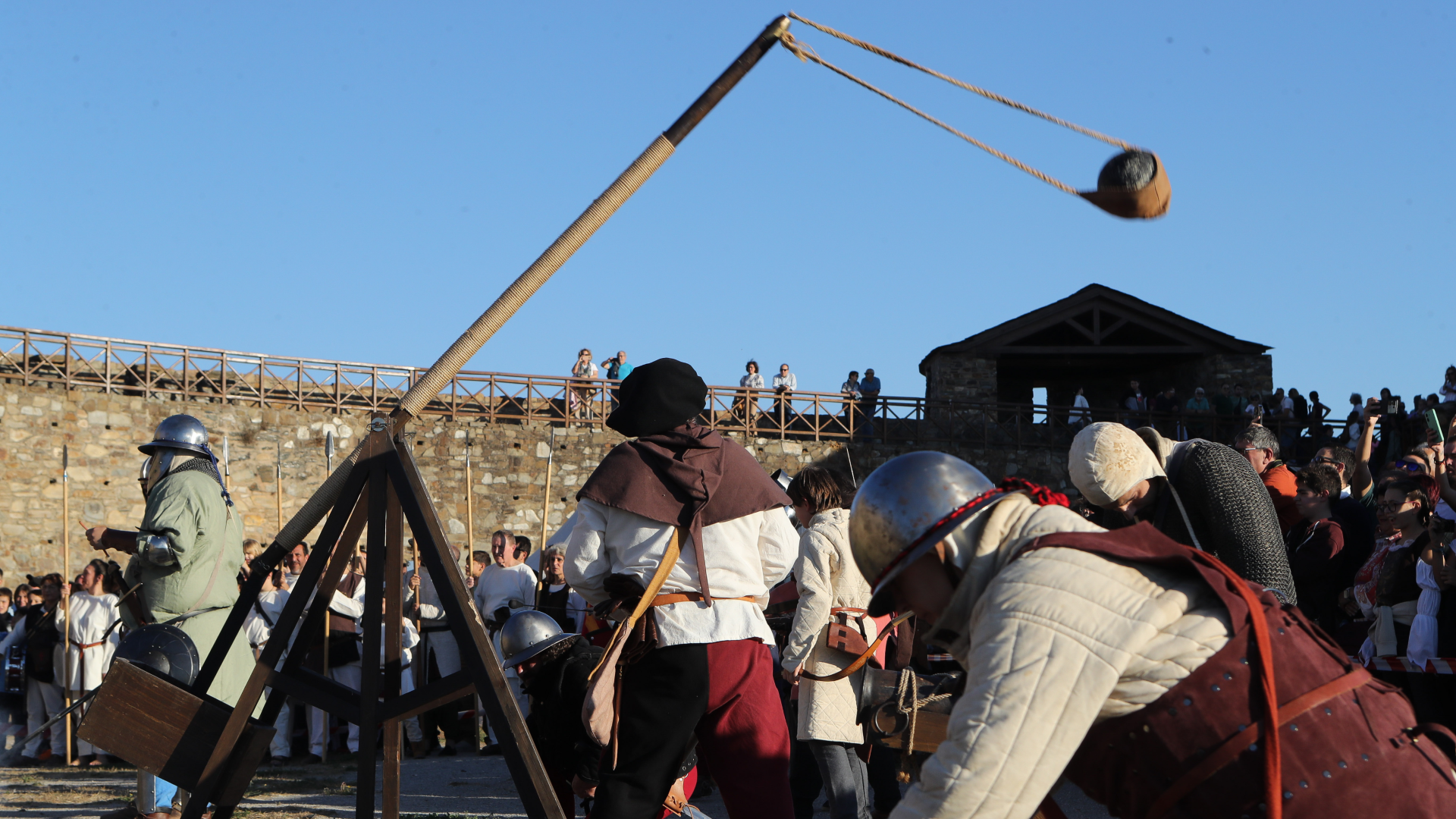
Researchers have identified what may be the oldest known death caused by a trebuchet siege weapon. The remains of a young man discovered beneath Stirling Castle in Scotland in 1997 show evidence of approximately 167 fractures, concentrated primarily in the upper body. Using modern scanning techniques including micro-CT imaging, scientists determined the injuries occurred around the time of death rather than after burial, suggesting a catastrophic impact from a high-velocity projectile.
The skeleton, designated as Skeleton 150, dates to around 1300 according to carbon-14 analysis, placing it during England’s First War of Scottish Independence. Historical records indicate that English King Edward I deployed numerous siege engines during his 1304 assault on Stirling Castle, including a massive trebuchet known as the “War Wolf.” Researchers note that the distinctive zigzag fracture pattern found on the remains resembles injuries consistent with impact from such weapons, though definitive attribution remains uncertain.
Biological anthropologist Jo Buckberry from Bradford University presented the findings at the European Paleopathology Association meeting. The fracture distribution suggests the individual was standing when struck and likely died instantaneously. Eight medieval skeletons were found buried in the castle’s chapel, all showing signs of trauma from various weapons, but Skeleton 150’s injury pattern remains uniquely consistent with trebuchet damage, making it a rare archaeological window into medieval siege warfare’s devastating effects.
Originally reported by Livescience →
About the Author