
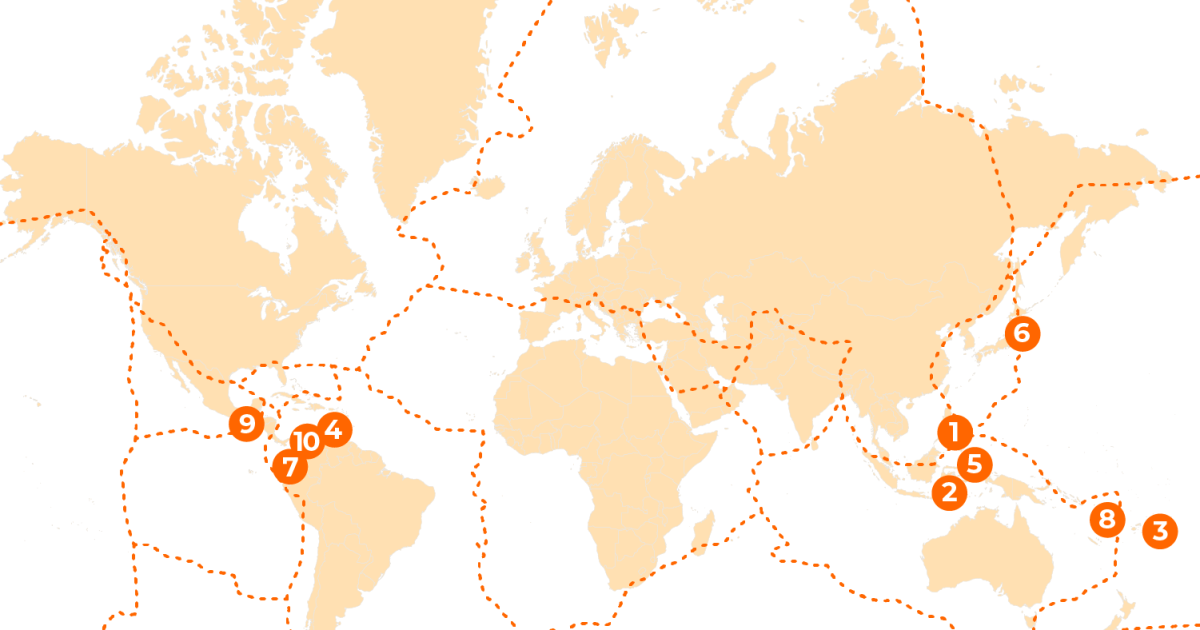
A series of devastating earthquakes struck multiple regions in recent months, raising questions about whether seismic activity is intensifying globally. Indonesia, Colombia, and Mexico each experienced magnitude 7 or higher tremors in July and August, while Venezuela was hit by two powerful consecutive quakes in June. These events prompted widespread speculation about whether Earth’s seismic patterns are changing.
Analysis of earthquake data from the past decade reveals that current activity remains within expected ranges. The United States Geological Survey records approximately 20,000 earthquakes yearly, though most are too minor for people to detect. By mid-August, the year had recorded 91 magnitude 6 or above earthquakes—slightly ahead of historical averages but not unprecedented. The decade from 2016 to 2025 averaged 133 such earthquakes annually, fluctuating between 99 and 157.
Earthquake severity depends less on magnitude than on location factors. Building quality, urban density, and proximity to population centers determine casualty rates more than the Richter scale reading. Scientists cannot predict individual earthquakes since tectonic stress accumulates over decades or centuries, defying seasonal patterns. Instead, seismologists calculate probability assessments and operate early warning systems to protect communities.
The Pacific Ring of Fire remains the world’s most seismically active zone, accounting for approximately 90 percent of global earthquakes and stretching from the Americas through Southeast Asia. The Alpide belt, extending from Java through the Himalayas to the Mediterranean, produces 17 percent of the largest quakes worldwide.
Originally reported by Aljazeera →
About the Author