
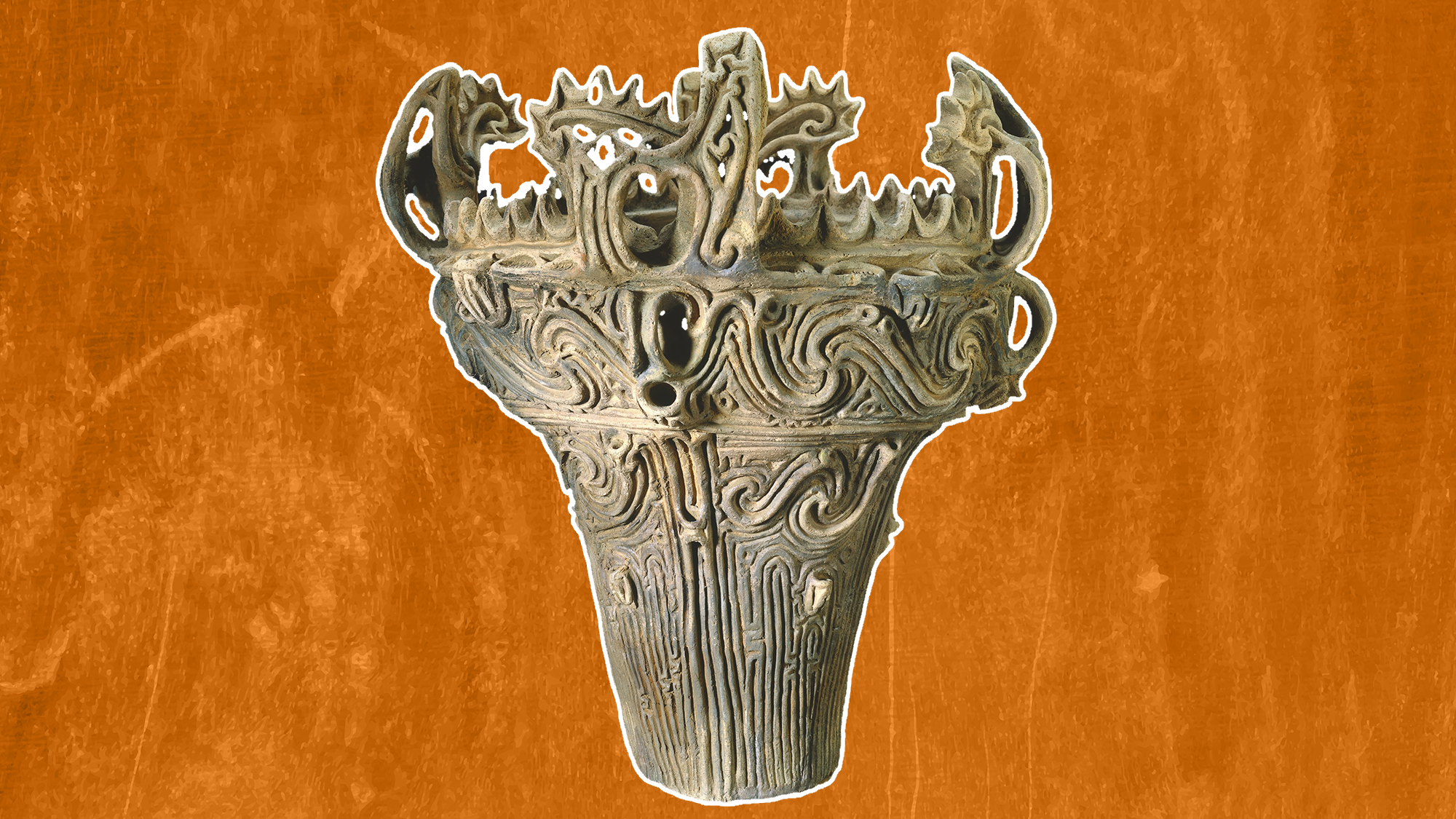
Archaeologists have identified an exceptionally well-preserved ceramic vessel from ancient Japan that dates back approximately 4,500 years. The artifact, housed at the Cleveland Museum of Art, originates from the Niigata region of Honshu and represents one of the finest examples of fire-flame pottery ever discovered. Standing 24 inches tall with a diameter of 22 inches, the vessel features distinctive decorative projections around its rim that resemble stylized flames.
The pot was created by the Jōmon people, a hunter-gatherer society that inhabited Japan during the prehistoric Jōmon period. Despite lacking a written language, these communities demonstrated remarkable artistic sophistication, crafting elaborate ceramics through a meticulous process of coil construction and surface decoration. The flame-like ornaments adorning the rim were added as a final embellishment to the already complex design.
The vessel’s true purpose remains enigmatic to scholars. Its design suggests it may have been impractical for everyday use, as the flame projections could not support the weight necessary for lifting. Some experts propose the pot might have been partially buried in soil for cooking purposes, while others theorize it served ceremonial or religious functions. The exceptional preservation and aesthetic refinement of this particular example indicate it was likely a valued object rather than utilitarian kitchenware.
The fire-flame vessel exemplifies the Jōmon people’s advanced pottery technology and their appreciation for decorative artistry. However, the specific significance of the flame motifs and the vessel’s precise role in their society continue to elude definitive explanation, preserving the mystery surrounding this remarkable archaeological find.
Originally reported by Livescience →
About the Author