Apple unveiled its latest product lineup on September 9, with new CEO John Ternus leading his first keynote presentation at Apple Park’s Steve Jobs Theater. The event showcased the company’s expanded focus on integrating artificial intelligence across its ecosystem, with particular emphasis on Apple Intelligence capabilities woven throughout multiple new devices.
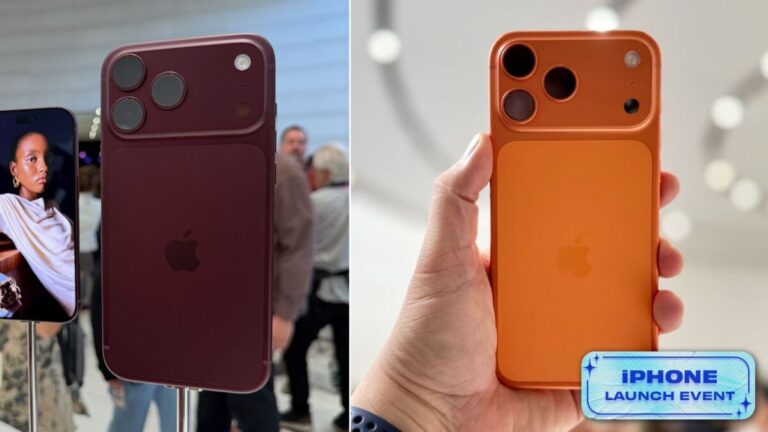
The iPhone 18 Pro and Pro Max mark a significant advancement in mobile photography, featuring a 48-megapixel camera system with variable aperture technology controlled by laser-cut blades that adjust across four settings. Professional photographers will appreciate the new manual controls for aperture, shutter speed, and white balance, along with an onscreen histogram for exposure checking. Both phones operate on the new A20 Pro chip and deliver exceptional battery performance, with the Pro Max achieving up to 45 hours of video playback—the largest battery improvement in iPhone history. Available in black, silver, glacier, and burgundy finishes, the phones start at $1,199 and $1,299 respectively, representing a $100 price increase from previous models. Pre-orders begin September 12, with availability on September 18.
The headline-grabbing announcement was Apple’s first foldable device, the iPhone Duo. When unfolded, the device displays a 7.6-inch screen, while a 5.4-inch outer display appears when closed. The Duo features the same A20 Pro chip as the Pro models and promises up to 44 hours of battery life using the outer display. Apple designed iOS 27 specifically for the device, introducing Split View to allow simultaneous app usage. The iPhone Duo launches October 23, with pre-orders starting October 16, priced at $1,999.
Additional announcements included AirPods 5 with enhanced noise cancellation and Apple Intelligence features, Apple Watch Ultra 4 and Series 12 with new health monitoring capabilities, and a redesigned Health app supporting at-home assessments and lab test scheduling. Siri AI officially debuts with iOS 27, bringing conversational assistant capabilities powered by on-device processing and Apple’s Private Cloud Compute system.
Originally reported by Mashable →
About the Author