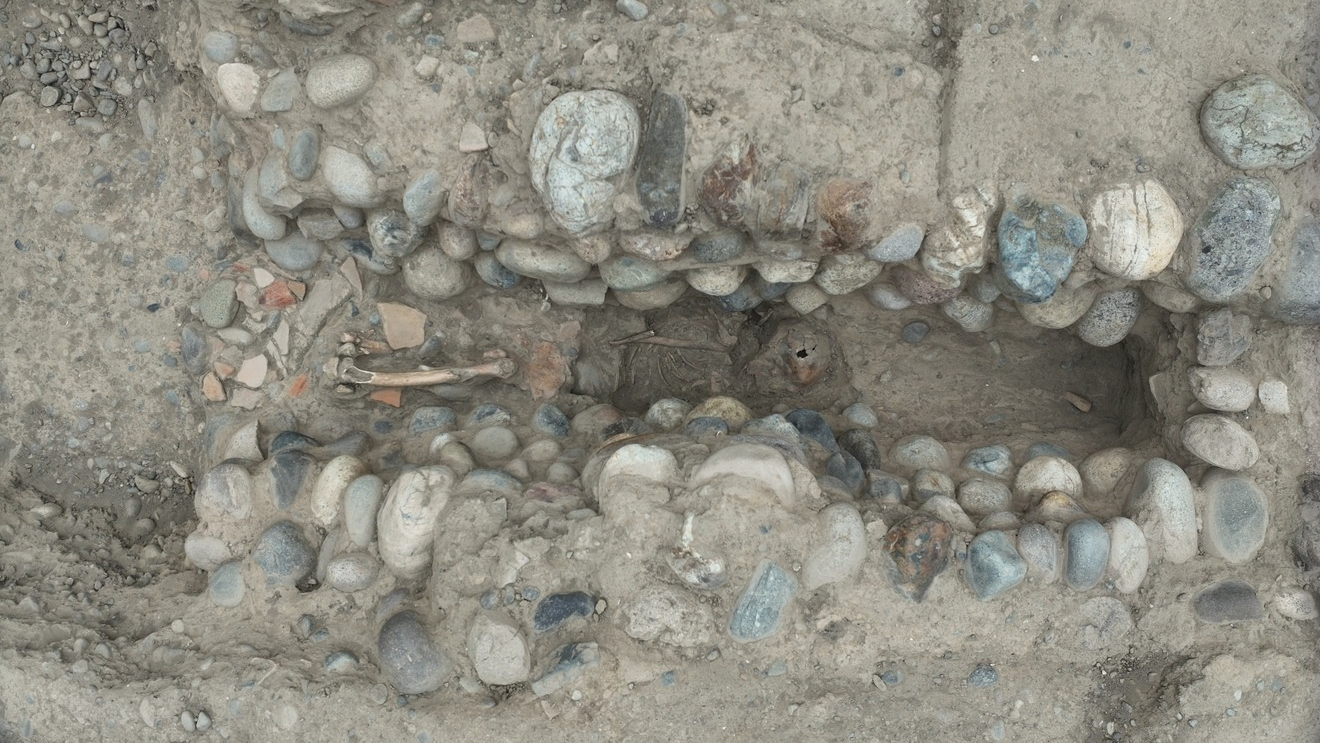
Archaeologists working at the Huaca Pucllana pyramid site in Lima, Peru have uncovered skeletal remains that may indicate a ritual sacrifice dating back approximately 1,400 years. The male skeleton was discovered in an underground water channel earlier this year and appears to have been deliberately positioned on its left side, with the head oriented toward both the ocean and the pyramid structure.
The Huaca Pucllana settlement flourished from around A.D. 400 until approximately 1440, serving as a ceremonial center for various pre-Hispanic cultures. The Lima people, who constructed the site’s distinctive platform pyramid, engaged in three primary ritual practices: the destruction of large pottery vessels, ceremonial feasts, and human sacrifice. Historical excavations at the site, including discoveries in 2007 and 2009, have revealed earlier sacrificial burials positioned within the pyramid’s foundations, likely connected to construction and renovation ceremonies.
Dating to around A.D. 650, the newly discovered remains rested within a water channel leading to a ceremonial well. Researchers determined the individual was likely male through analysis of pelvic and cranial features, though additional investigations will confirm biological details and identify any physical evidence suggesting sacrificial circumstances. Future study of both the skeleton and the surrounding water infrastructure may provide additional insights into the ceremonial practices associated with closing the ritual well.
Originally reported by Livescience →
About the Author