
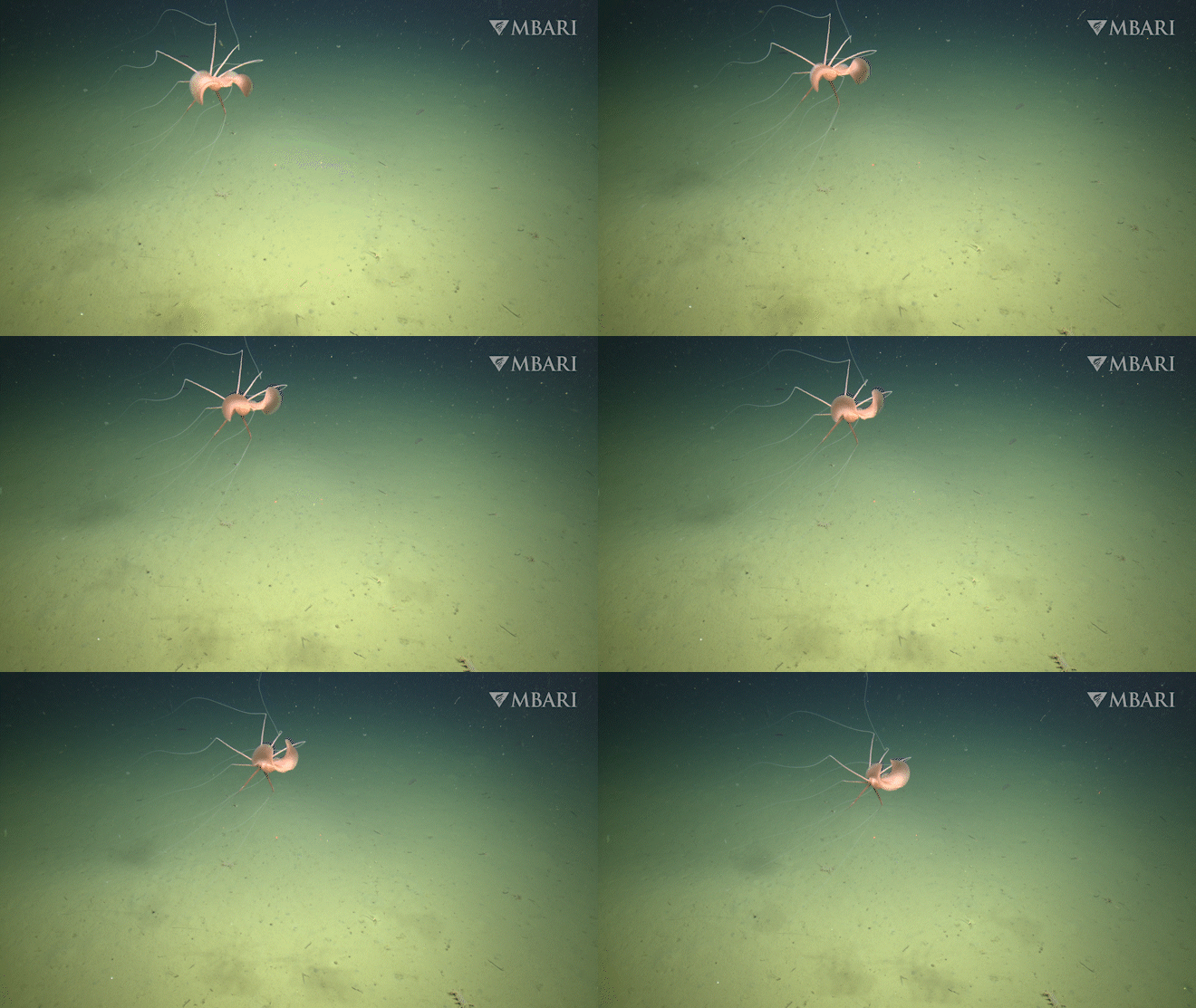
Scientists have documented the first-ever video recording of a bigfin squid in the northeastern Pacific Ocean, marking a significant milestone in deep-sea research. The unusual creature was captured on August 7 by researchers from the Monterey Bay Aquarium Research Institute and the National Oceanic and Atmospheric Administration using an uncrewed submersible exploring underwater mountains off the California coast at depths exceeding 10,000 feet.
The squid displayed a distinctive posture during the encounter, holding its arms and tentacles at a 90-degree angle that researchers termed the “elbow pose.” According to deep-sea ecologist Olívia Soares Pereira, this positioning may represent a passive feeding strategy, allowing the creature to capture prey without tangling its appendages. The observed specimen measured approximately 4.1 feet in total length, with the majority comprised of its remarkably elongated tentacles and arms.
Bigfin squid hold the distinction of being the deepest-dwelling squid species known to science, with some individuals discovered at depths exceeding 20,000 feet. Their appendages can extend to lengths 20 times greater than their body size. The most recent sighting near Hawaiian waters occurred in 2001, making this northeastern Pacific discovery particularly noteworthy for the scientific community.
The discovery occurred during a 10-day expedition investigating biodiversity hotspots within the Monterey Bay National Marine Sanctuary. Pereira expressed her excitement about encountering an unexpected species during research focused on deep-sea corals, sponges, octopuses, and beaked whales, underscoring the remarkable diversity of these underwater ecosystems.
Originally reported by Livescience →
About the Author