Tiny Wrinkles in Graphene Turn It Into a Battery, Physicists Find
 Microscopic changes, big impacts.
“`html
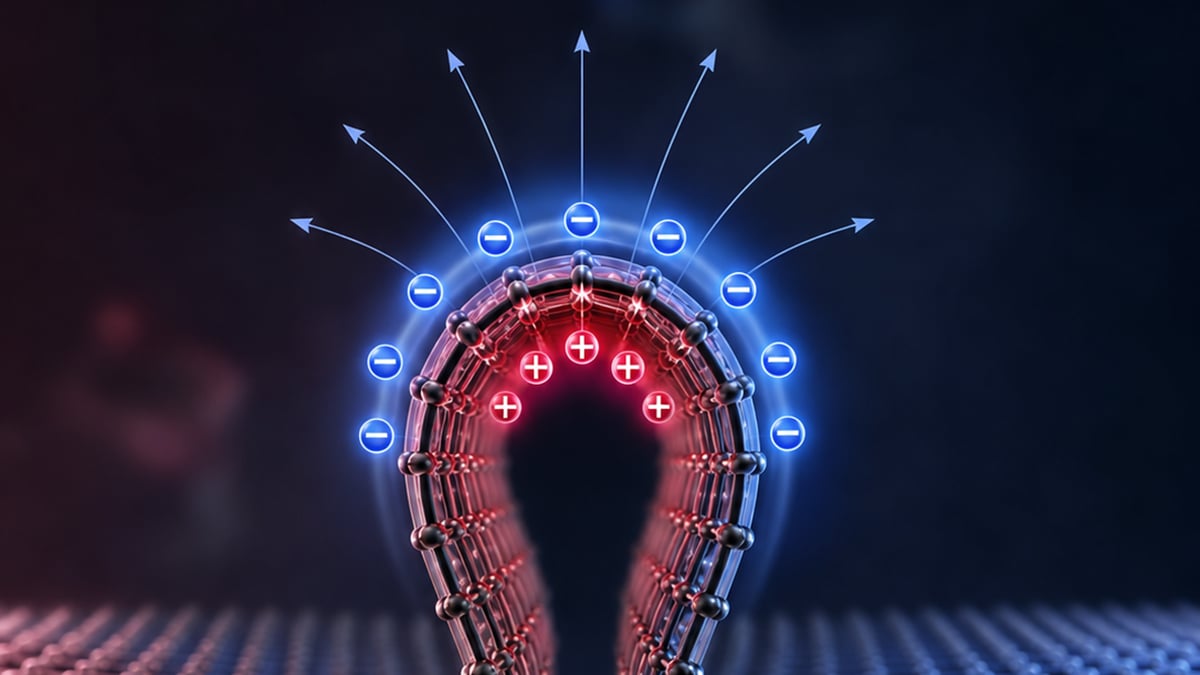
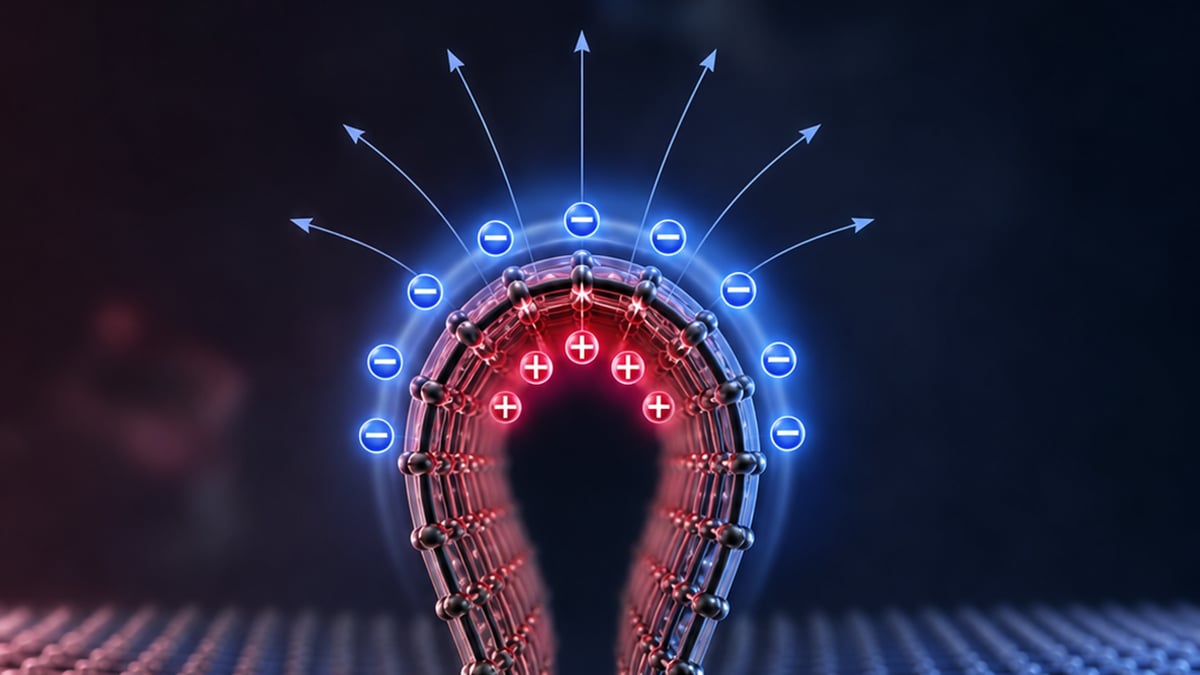
Researchers from the United States and United Kingdom have discovered that microscopic wrinkles in graphene can dramatically alter its electrical characteristics. Graphene, a material consisting of a single atomic layer, possesses exceptional properties combining quantum and magnetic attributes. Scientists found that minuscule deformations in this ultra-thin material trigger a phenomenon called flexoelectricity, wherein bending or warping generates electrical charge. This quantum-level manifestation of flexoelectricity had been theoretically predicted for graphene but lacked substantial experimental verification until now.
In their investigation published in Advanced Materials, the research team created nanoscale wrinkles measuring less than one billionth of a meter across. Using specialized microscopy techniques and computer simulations, they analyzed how these structural features affected electrical behavior. The findings revealed that the wrinkles functioned as obstacles to electron flow, with electrons accumulating on one side of the deformation to create opposing electrical charges resembling a miniature battery. The electric polarization intensity proved remarkable, reaching levels up to 10 million times stronger than in larger flexoelectric systems previously studied.
The research indicates that the sharpness of wrinkles matters more than their overall dimensions, suggesting scientists could precisely control electrical properties by manipulating nanoscale curvature. Such discoveries could eventually lead to revolutionary applications in sensors and electronic devices with ultra-compact designs. However, researchers acknowledge that their analysis incorporated some model estimates alongside direct observations due to the extreme microscopic scale involved, and further studies will be necessary to confirm and expand upon these initial findings.
“`
Originally reported by Sciencealert →
About the Author