
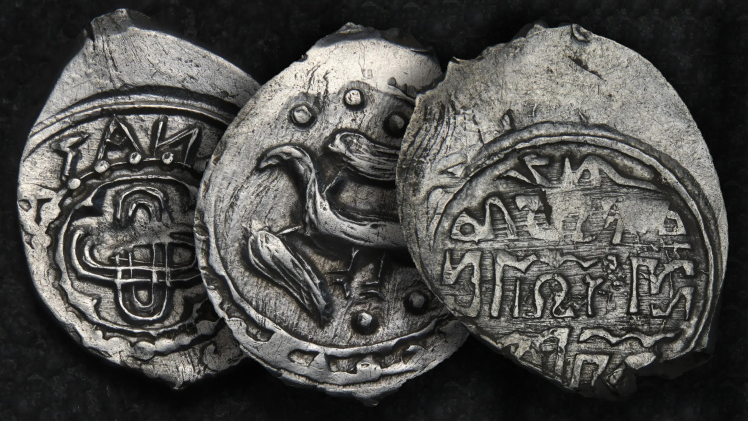
Russian archaeologists have discovered a significant medieval coin cache containing approximately 2,600 silver pieces near Moscow. The coins were discovered sealed within a ceramic vessel and buried in Kolomna, a city located roughly 70 miles southeast of Moscow that served as an important regional center during the 14th and 15th centuries.
The majority of the coins are dengi, a currency type first produced in the late 14th century by the Grand Principality of Moscow. Most pieces date from the reigns of two grand princes, Vasily I and Vasily II, who ruled during the late 1300s and mid-1400s. Among the most noteworthy discoveries are more than 350 coin varieties previously unknown to scholars, along with an exceptionally rare denga depicting a bird in flight created during Vasily I’s final years of rule.
Researchers believe the cache’s owner was likely a prominent individual with substantial wealth and status, possibly a high-ranking official or successful merchant. The newest coins in the collection were minted in the second half of the 1420s, suggesting the hoard was buried around that time. This timing may provide crucial insight into its burial: a devastating plague outbreak struck Russian principalities between 1424 and 1427, potentially claiming the life of whoever concealed this valuable collection.
Originally reported by Livescience →
About the Author