
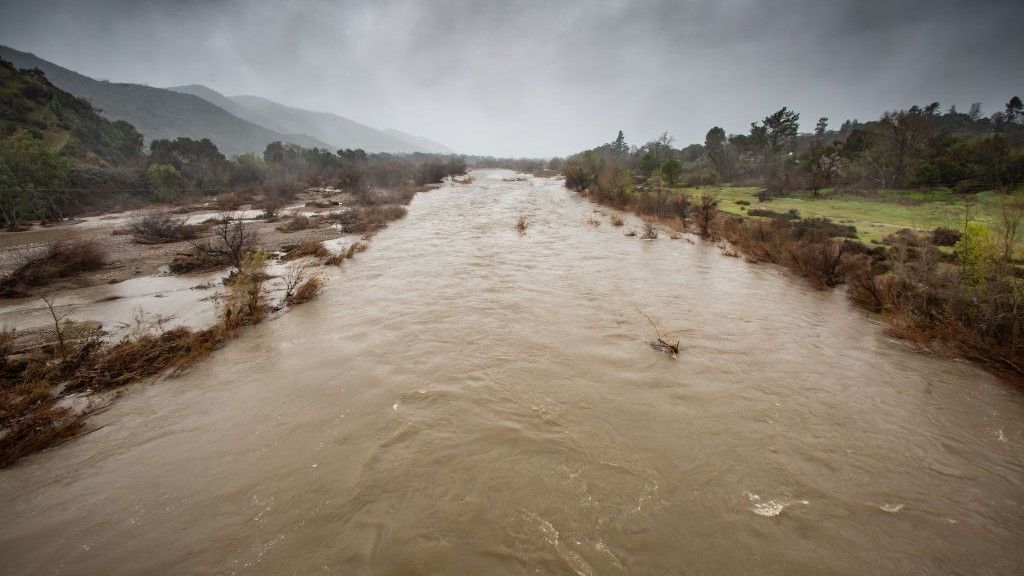
A new study has identified a previously unknown connection between temperature patterns on the Tibetan Plateau and extreme rainfall events in the western United States. Researchers discovered that abnormally warm conditions over the plateau in late 2016 and early 2023 preceded record-breaking precipitation in California, Nevada, Oregon, Utah, and Arizona by approximately one month. The devastating storms caused around $6.6 billion in damage and claimed at least nine lives.
The mechanism behind this climate teleconnection involves atmospheric waves that travel vast distances across the planet. When the Tibetan Plateau experienced unusual warming, it created atmospheric disturbances that propagated eastward along the jet stream through a series of waves known as Rossby waves. These waves eventually reached the northeastern Pacific Ocean, where they broke suddenly and intensified atmospheric rivers—narrow corridors of concentrated water vapor—above the West Coast, producing the catastrophic rainfall.
This discovery carries significant implications for weather forecasting. Current prediction systems failed to anticipate these extreme precipitation events, partly because they occur during La Niña years, which typically bring dry conditions to the region. By incorporating data about Tibetan Plateau temperatures into forecasting models, meteorologists may develop improved early warning systems for coastal communities facing potential flooding and severe weather threats.
The research, published in Science Advances, suggests that seemingly distant land temperatures can profoundly influence weather patterns thousands of miles away, opening new possibilities for enhancing the accuracy and timeliness of extreme weather predictions.
Originally reported by Livescience →
About the Author