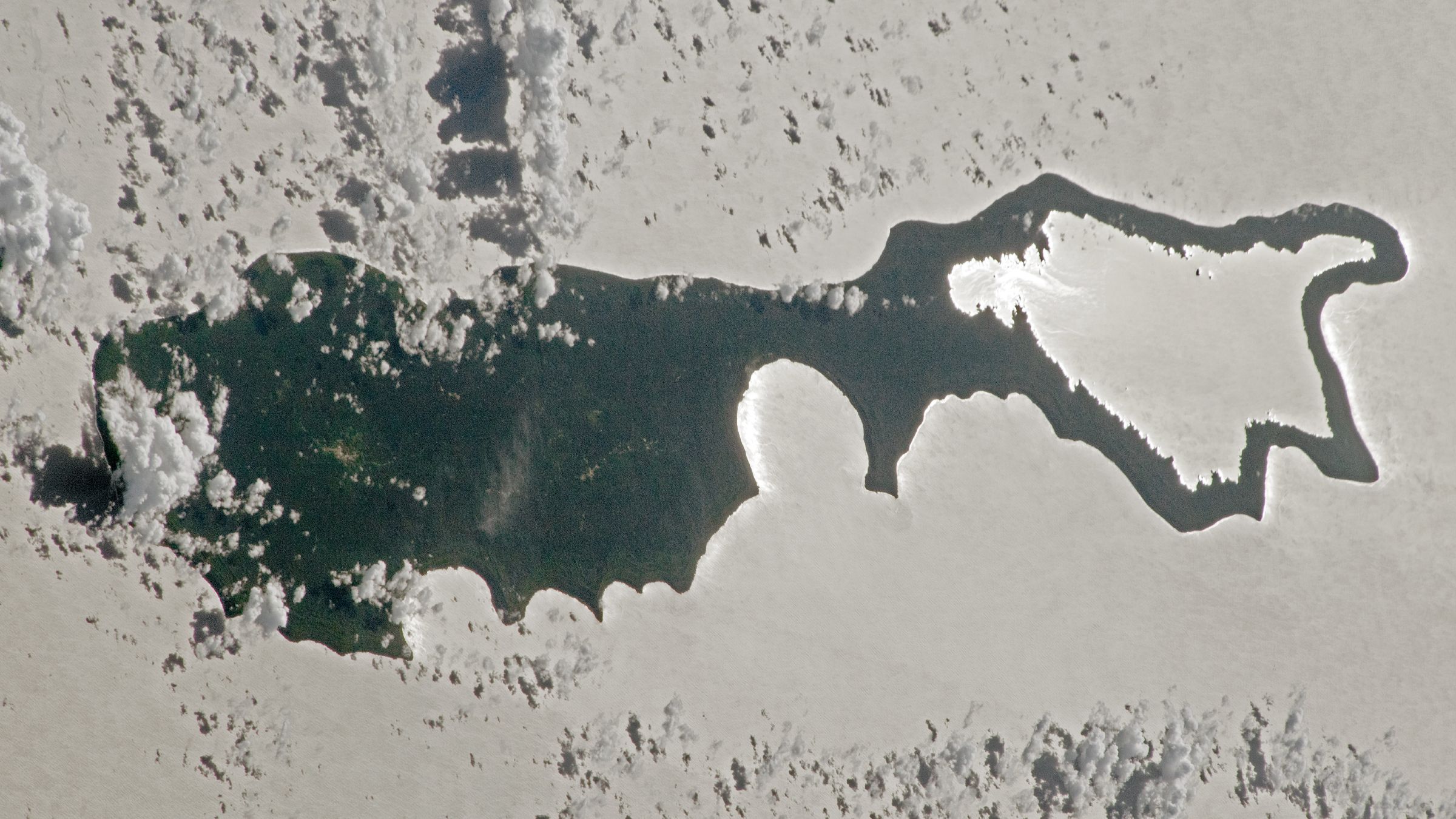
An International Space Station astronaut captured a striking photograph of Rennell Island in the Solomon Islands on January 8, 2023, revealing a rare optical phenomenon that made the Pacific landscape shimmer like polished silver. The image showcases a “sunglint,” an effect where sunlight reflects directly off calm water surfaces and into the camera lens, creating an illusion of a giant magnifying glass made of metal.
Rennell Island, also known as Mugaba, stretches approximately 50 miles long and 8 miles wide across the Pacific. The southeastern portion contains Lake Tegano, a brackish water body covering roughly 60 square miles and representing the largest lake found on any Pacific island. The lake’s sheltered waters and still surface conditions contributed to the intensified reflection captured in the photograph, while a horseshoe-shaped bay on the island’s lower edge also displayed prominent sunglint effects.
Scientists value sunglint observations because they reveal hidden oceanic and aquatic details, including subsurface currents and internal waves that become visible during these reflective moments. However, the same brightness that makes sunglints scientifically useful can obstruct satellite imagery, complicating tasks like hurricane monitoring. Consequently, most operational satellite images have sunglints digitally removed to maintain clarity.
Rennell Island itself represents a geological marvel as the world’s tallest atoll, rising approximately 500 feet above sea level. The region around Lake Tegano functions as a protected biodiversity hotspot and UNESCO World Heritage Site, hosting over 20 endemic bird species and the vulnerable Crocker’s sea snake.
Originally reported by Livescience →
About the Author