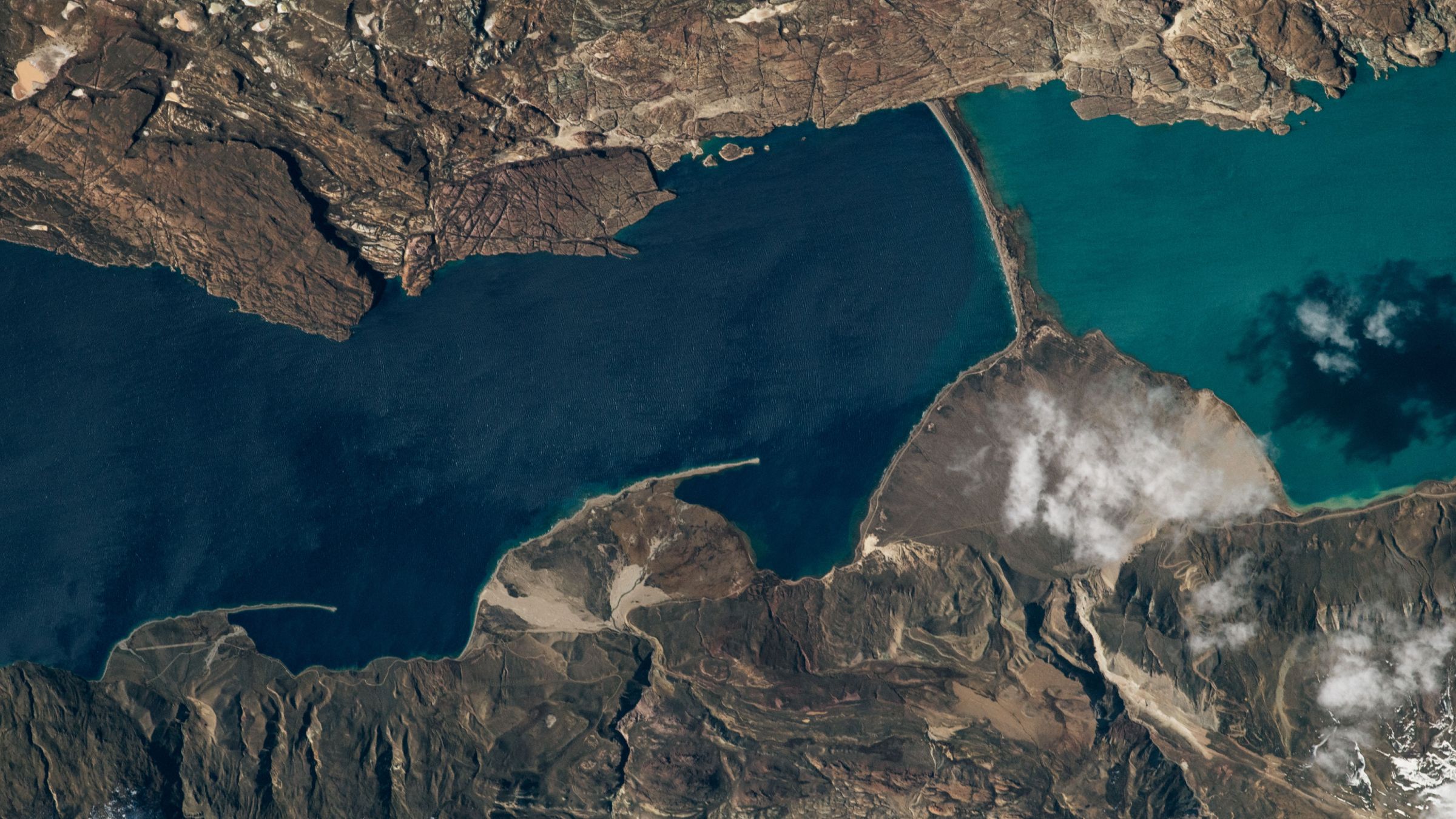
An astronaut photograph captured from the International Space Station on September 15, 2020, reveals a striking geographical phenomenon in Argentina’s Patagonia region: two lakes separated by a distinctive land bridge displaying contrasting colors. Lake Pueyrredón, the deeper of the two bodies of water, appears in deep blue tones due to its crystalline water that reaches depths of up to 1,600 feet. In contrast, the smaller Lake Posadas displays a lighter teal hue, caused by shallow waters and significant sediment contributions from nearby rivers.
The unusual barrier dividing these lakes formed thousands of years ago when a thick sediment deposit accumulated across Lake Pueyrredón’s southern section, creating the conditions for Lake Posadas to develop. Geologists believe this separating strip is likely a moraine—a formation of sediment and rocks deposited by ancient glacial activity—rather than a traditional sandspit. The dramatic color difference between the two water bodies becomes particularly visible from above, making this location a popular subject for space-based photography.
The region’s geological character was shaped by massive ice sheets that carved deep valleys across Patagonia centuries ago. Rivers flowing from nearby hills deposited sediment along Lake Pueyrredón’s western shore, creating fan-shaped deltas that increase in size progressively. Wind-driven currents subsequently moved sediment from these deltas, forming thin strips of land known as sandspits. Despite its remote location and sparse population, the area attracts outdoor enthusiasts who visit for camping, hiking, fishing, and kayaking activities.
Originally reported by Livescience →
About the Author