
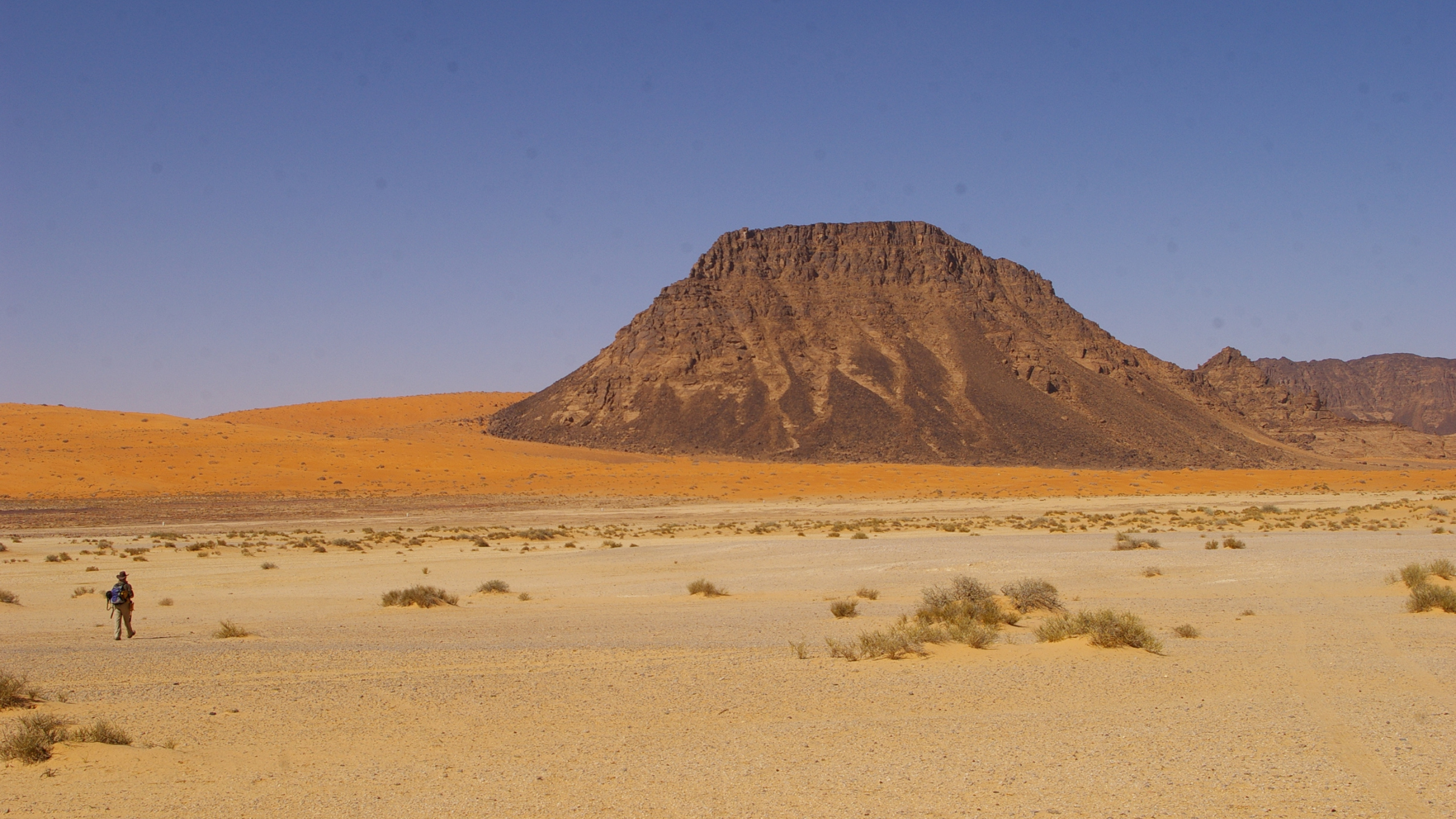
A new study published in Quaternary Science Reviews suggests that Neanderthals may have ventured into the Arabian Peninsula approximately 55,000 years ago, extending their known range significantly farther south than previously believed. Researchers examining stone tools discovered at an archaeological site called Jebel Katefeh-1 near Jubbah in Saudi Arabia’s Nefud Desert found evidence pointing to Neanderthal rather than modern human manufacture.
Scientists analyzed hundreds of stone flakes from the site and compared their shapes to tools from other locations where the toolmakers’ identities were established. Using statistical modeling, the research team determined that the Arabian tools matched Neanderthal manufacturing techniques more closely than those associated with Homo sapiens. To establish a timeline, researchers dated sand grains from newly excavated soil layers using optically stimulated luminescence, pinpointing the tool use to around 55,000 years ago.
The timing coincides with a climate shift when the region transitioned from arid conditions to wetter periods, potentially attracting grazing animals that Neanderthals would have hunted. While independent archaeologists acknowledge the findings as compelling, they note that the evidence remains circumstantial without fossil or DNA confirmation. The study challenges traditional views of Neanderthals as exclusively cold-adapted European inhabitants, as previous discoveries have already placed them across Siberia and the Middle East.
Researchers acknowledge that artifacts in Arabia’s harsh climate rarely preserve well enough to yield skeletal remains, making stone tools the most reliable archaeological evidence for understanding the region’s ancient human inhabitants.
Originally reported by Livescience →
About the Author