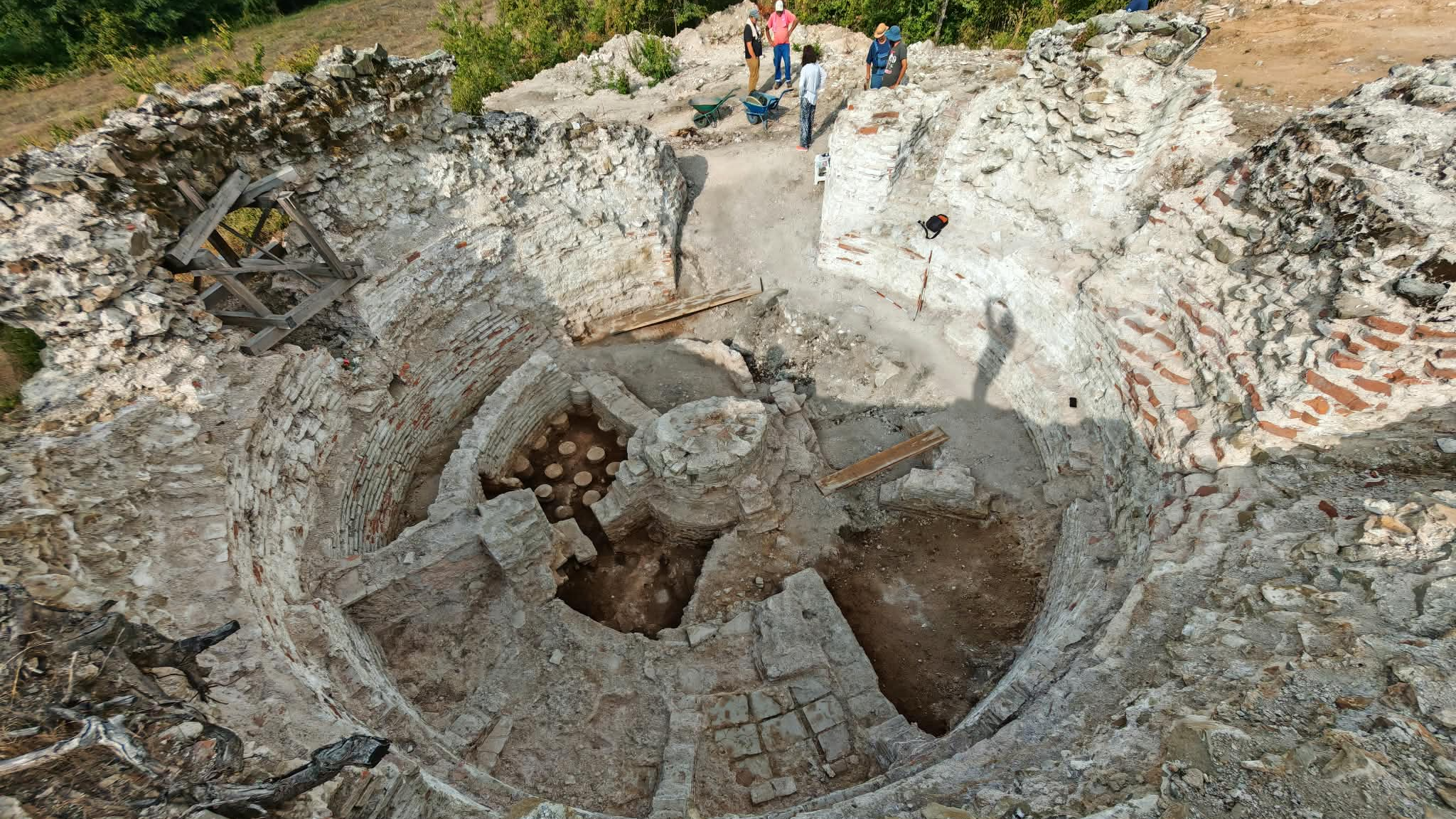
Archaeologists working at an ancient fortified residence in eastern Serbia have uncovered a remarkably ornate bathing facility that once served an early fourth-century Roman ruler. The structure, located within a tower at the Vrelo-Šarkamen palace complex, featured heated flooring, multiple bathing pools, and steam room amenities. Researchers from Serbia’s Institute of Archaeology noted that the circular design with a domed ceiling and six windows represents an unprecedented architectural approach to Roman bath construction, departing from the linear layouts typical of the era.
The palace belonged to Maximinus Daza, who ruled as Roman emperor between 310 and 313. Born in present-day Serbia, Maximinus served as one of four regional administrators known as tetrarchs under a governmental system established by Emperor Diocletian. Though he initially held junior status, Maximinus elevated himself to senior emperor around 301 but maintained this position for merely three years before his death in 313 following a civil conflict with rival Licinius.
The bathing complex itself divided into two distinct sections: one housing the mechanical infrastructure and another designated for bathing and leisure. Excavations revealed a furnace for heating floors and the foundation of a copper boiler, though the boiler itself has not survived. Within the residential bathing area, archaeologists identified three separate pools and a sudatorium, or steam bath facility.
According to researchers, the sophisticated engineering and amenities demonstrate that this was not merely utilitarian but rather a meticulously designed private retreat for high-ranking palace occupants. Ongoing investigations aim to clarify the internal layout and how the emperor and his family accessed these luxurious accommodations.
Originally reported by Livescience →
About the Author