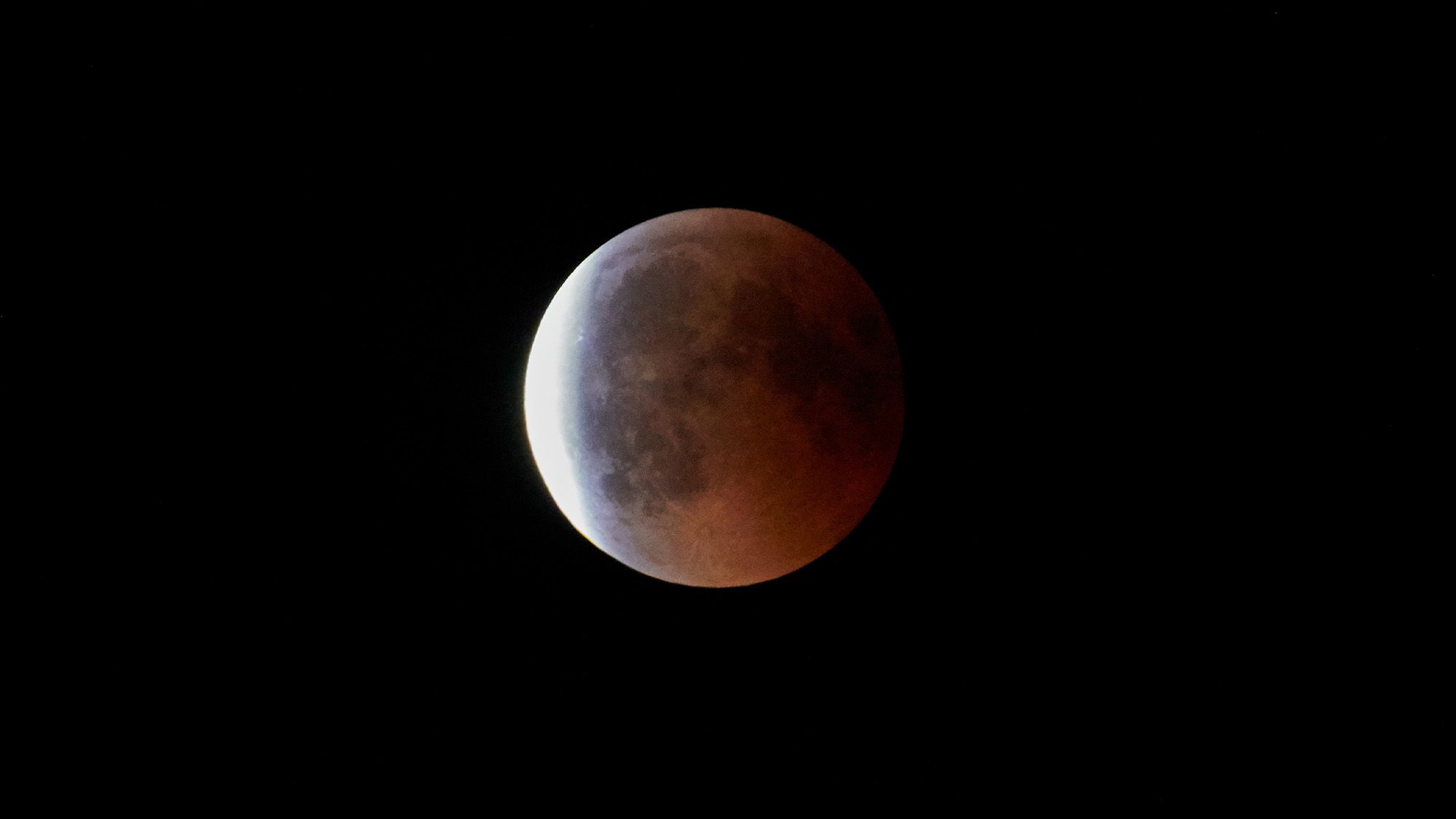
A deep partial lunar eclipse will occur on the night of August 27-28, with Earth’s shadow covering more than 96% of the full moon’s surface. While this falls just short of totality and won’t technically qualify as a “blood moon,” much of the lunar surface will display coppery red tones when photographed. This will mark the deepest lunar eclipse visible from anywhere on Earth until the next total lunar eclipse arrives on December 31, 2028.
Unlike solar eclipses, lunar eclipses present no eye safety concerns and can be observed safely with the naked eye, binoculars, telescopes, or cameras. The event unfolds gradually over several hours, providing ample opportunity for both observation and photography. Viewers in North and South America will enjoy the eclipse high in the night sky, while European observers will witness it before dawn as the moon descends toward the western horizon, creating equally compelling photographic opportunities.
The eclipse occurs as part of a natural pairing with the total solar eclipse that took place on August 12. Solar and lunar eclipses often appear together during eclipse seasons, roughly 34-day periods when the sun, Earth, and moon align sufficiently for eclipses to happen. A solar eclipse occurs at new moon when the moon passes between Earth and the sun, while approximately two weeks later at full moon, the moon can pass through Earth’s shadow to create a lunar eclipse.
Whether using basic binoculars, advanced telescopes, mirrorless cameras with telephoto lenses, or smart telescopes with automated tracking, eclipse enthusiasts have numerous equipment options to capture this rare celestial event. The primary challenge for most observers will involve selecting the right gear combination for their needs and experience level.
Originally reported by Livescience →
About the Author