
Happy Monday! Here’s Your Weekly Microscope Mystery
 Challenge your eyes to start the week right.
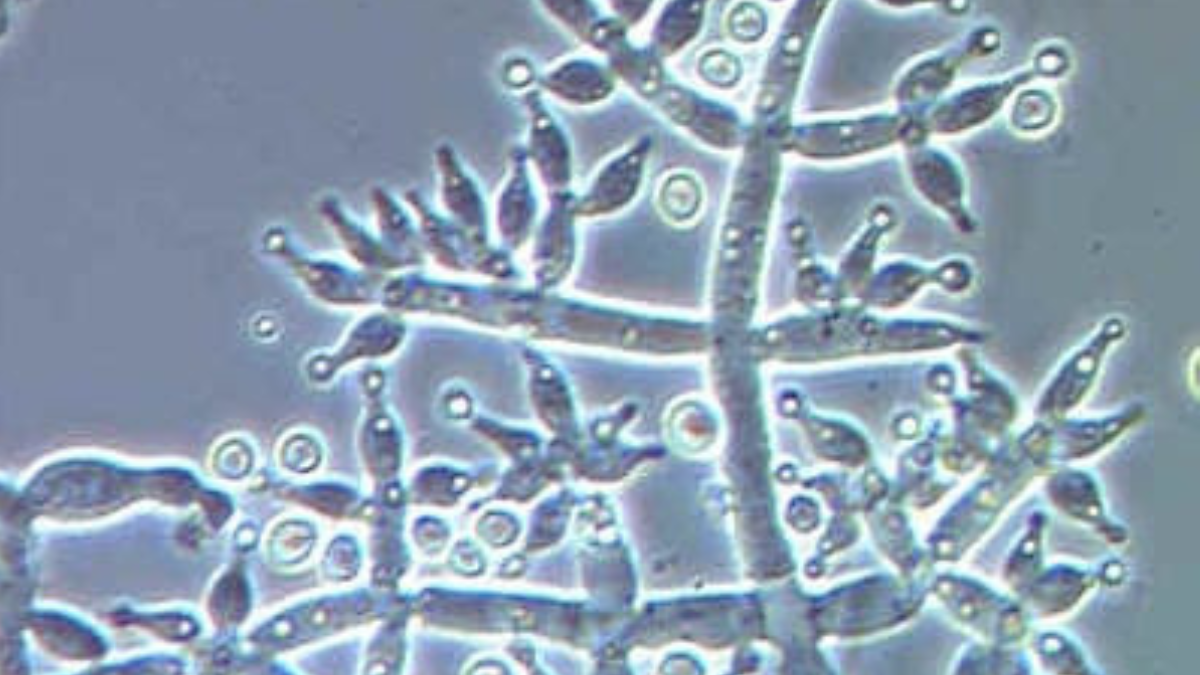
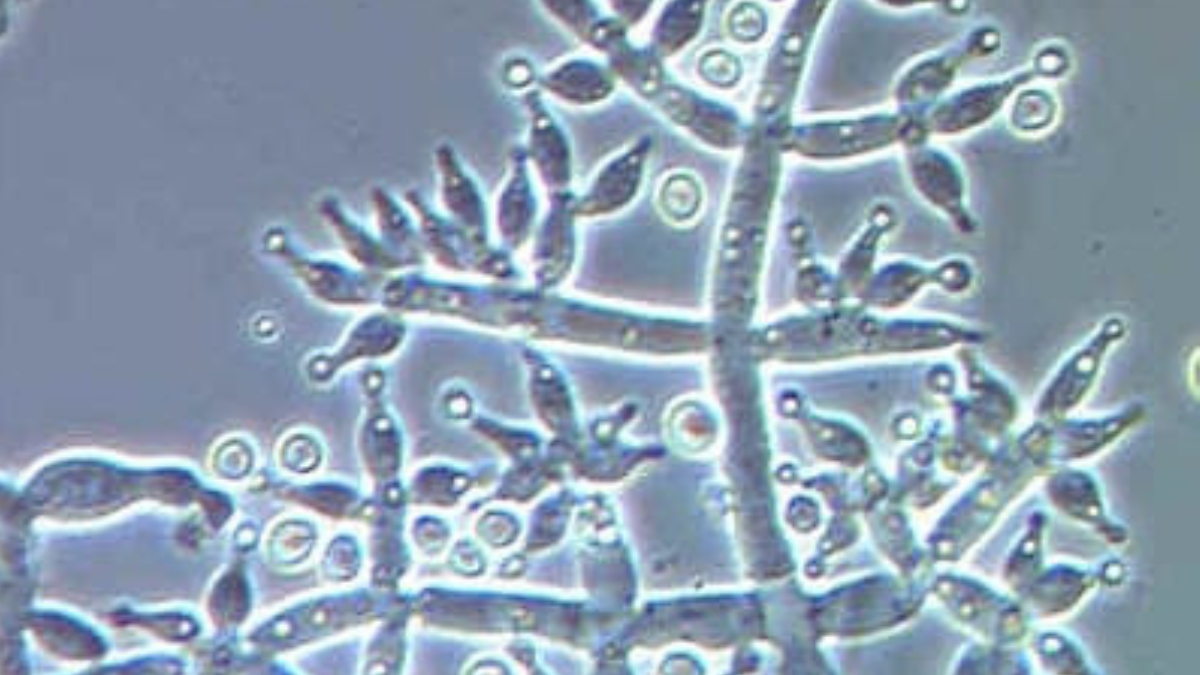
This week’s microscope mystery presents a delicate, branching structure adorned with minuscule spherical formations at each tip, resembling frost patterns crystallizing on winter glass. Readers are invited to identify the specimen from multiple choice options before the reveal.
The answer reveals an unexpected organism: a fungus producing spores. The branching structures are conidiophores, while the tiny beads represent conidia—asexual spores that are genetic clones of the parent fungus. These structures multiply and branch repeatedly as they develop, creating the intricate, tree-like appearance that characterizes many fungal reproduction systems.
The specimen belongs to Trichoderma, a common mold genus found in soils worldwide. Several species have practical applications as biocontrol agents, helping combat fungi responsible for plant diseases. Notably, one species, Trichoderma harzianum, demonstrated increased growth and spore production when exposed to white noise in laboratory settings—a phenomenon scientists attribute to sound waves stimulating cellular receptors that trigger biochemical growth responses.
These microscopic fungi remain largely invisible to the naked eye, with individual spores measuring only a few micrometers across. They inhabit soil, compost, and plant roots everywhere, quietly performing biological functions that scientists continue to study and understand.
Originally reported by Sciencealert →
About the Author