
Gruesome Discovery Shows 17th-Century Villagers Were Terrified of What Lurked in ‘Grave 75’
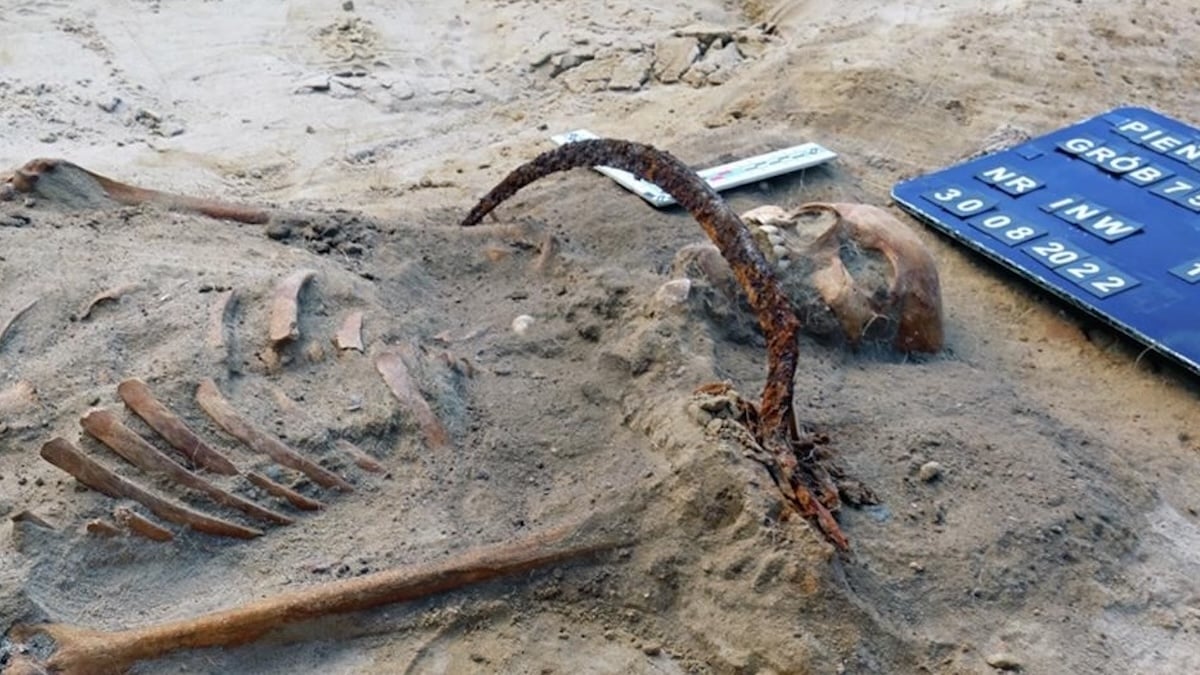 'Anti-demonic' measures.
Archaeologists in Poland have uncovered a haunting burial from the 17th century that reveals the intense supernatural fears of medieval villagers. Discovered in Pień in 2022, the grave contained the remains of a young woman between 17 and 19 years old, buried with unusual protective measures designed to prevent her from rising from the dead. A padlock had been fastened around her left big toe, while a sickle was positioned across her throat with the blade facing downward—a grim precaution against potential resurrection.
The cemetery itself, located outside any recorded settlement and lacking religious consecration, was reserved for society’s rejected members. The researchers note that such burial grounds typically contained individuals deemed dangerous after death, including suicides, the unbaptized, and victims of drowning or childbirth complications. Among the dozens of unconventional burials discovered at this site, the grave receiving both a padlock and sickle suggests the community held particularly acute fears about this individual’s potential return.
Analysis indicates the deceased was a young woman of relatively high social status, evidenced by silk and gold-threaded remains of a decorative cap. Her cause of death remains unknown, though genetic testing revealed possible Scandinavian heritage on her mother’s side. Researchers theorize that her foreign ancestry, combined with circumstances surrounding her death and subsequent community misfortunes, prompted villagers to blame her for local disasters, necessitating increasingly severe preventative measures.
This discovery represents a rare archaeological instance where both protective methods appeared on a single burial, offering insight into widespread anti-demonic practices across 17th-century Poland and the folklore surrounding the undead.
Originally reported by Sciencealert →
About the Author