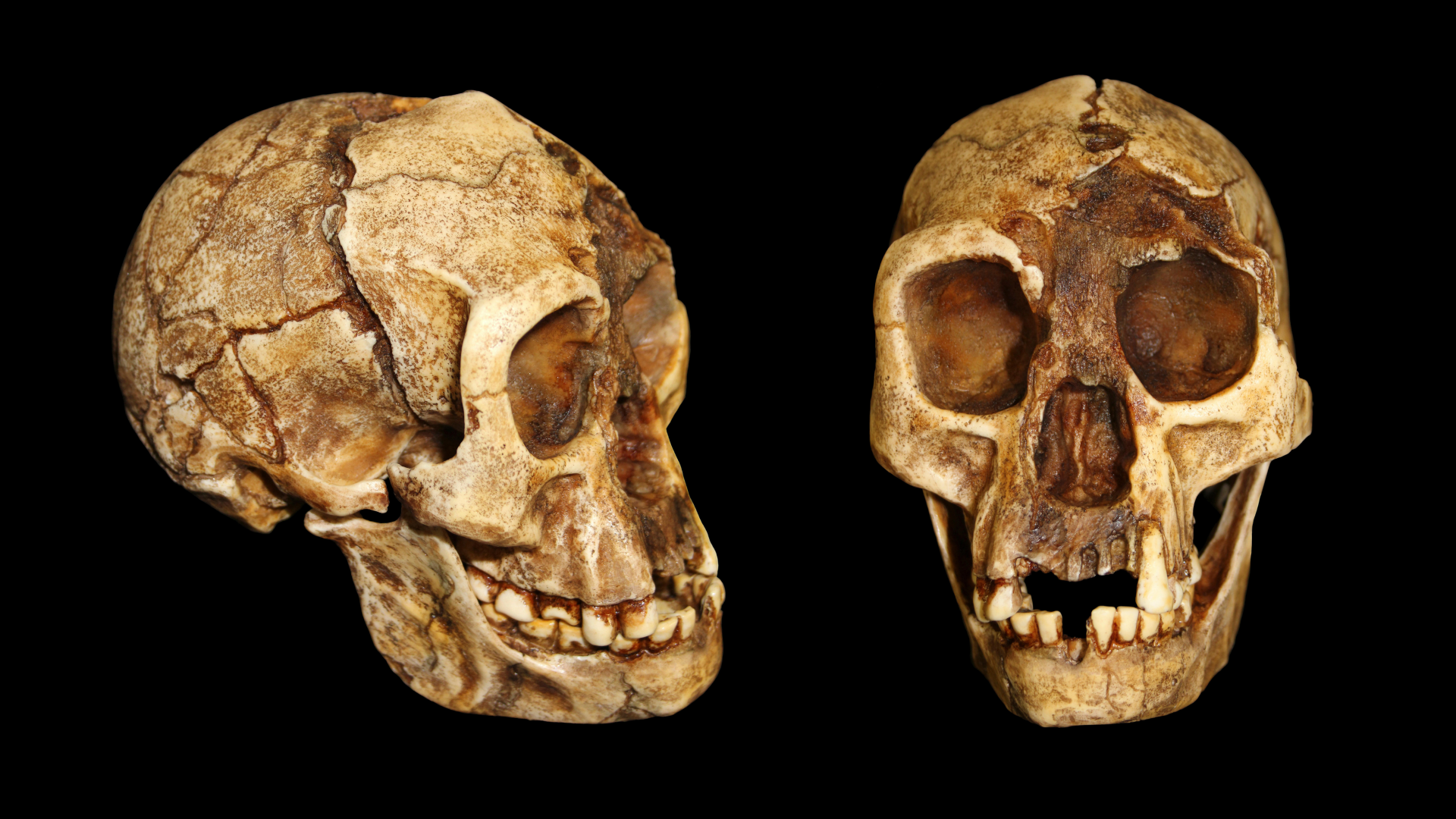
Scientists have discovered that Homo floresiensis, an extinct human relative standing roughly 3.5 feet tall, possessed hip bones remarkably similar to modern humans rather than to earlier species like Lucy. Researchers from the University of Southern California examined the pelvic structure of LB 1, an adult female specimen who lived between 100,000 and 60,000 years ago on the Indonesian island of Flores, and found her anatomy aligned more closely with other Pleistocene human species than with australopithecines.
However, the hobbit’s human-like hip structure does not indicate identical movement patterns. The analysis suggests these creatures walked upright but moved slowly and inefficiently compared to modern humans, likely traveling short distances and possibly incorporating tree-climbing into their behavior. This finding was published in August in the American Journal of Biological Anthropology and confirms earlier smaller-scale research on hobbit remains.
The discovery deepens rather than resolves the mystery of hobbit origins. Despite their human-like locomotion, these creatures lacked evidence of hunting or fire control, distinguishing them significantly from Homo sapiens. Researchers propose two competing theories: either hobbits descended from Homo erectus populations that shrank due to island living, or they evolved from an unknown smaller human species. Future genetic analysis of ancient proteins may eventually clarify this evolutionary puzzle.
Originally reported by Livescience →
About the Author