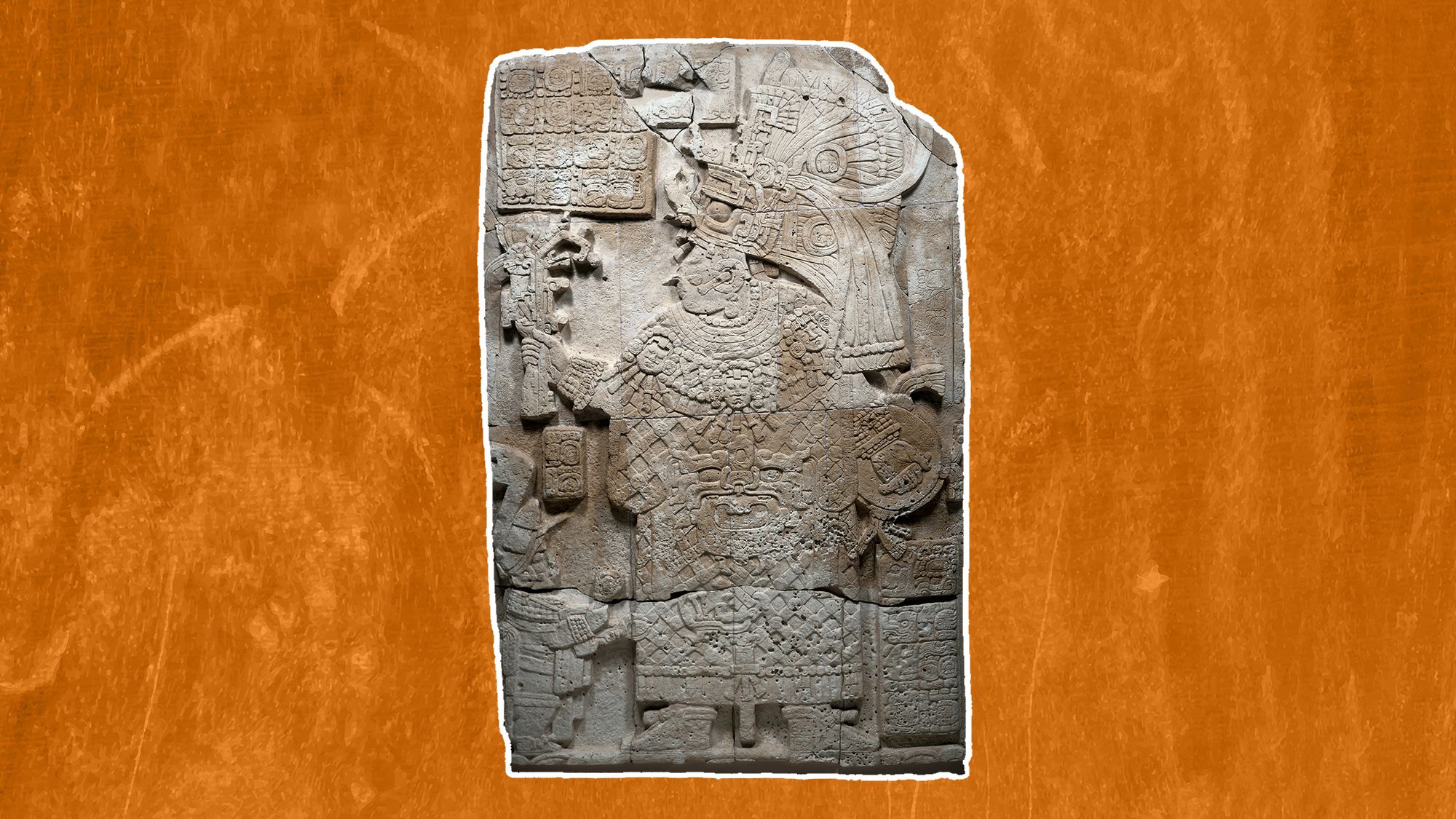
Archaeologists have long recognized the significance of ancient Maya monuments, and a remarkable limestone carving now housed at the Cleveland Museum of Art exemplifies the power and prestige of Maya female rulers. The stela, created in A.D. 692, depicts Lady K’abel, known by the titles Water Lily Hand and Divine Woman of the Snake Polity. This massive stone slab stands approximately 9 feet tall and weighs roughly 2,500 pounds, making it an imposing testament to the queen’s authority.
Lady K’abel served as the military governor of El Perú-Waka’, a provincial settlement in Guatemala’s Petén region, and held the prestigious title of Lady Supreme Warlord. As a member of the powerful Snake dynasty, she may have commanded military forces against rival Maya cities. The stela, which was erected to mark the completion of a 20-year calendar cycle, was originally positioned alongside a similar monument depicting her husband, K’inich Bahlam II, who held a lower rank than his wife.
The carved portrait reveals the queen adorned in elaborate regalia, including a headdress fashioned from quetzal feathers, jade beads, and symbolic weaponry such as a shield and scepter. Scholars suggest that her divine presentation connected her to the maize god, invoking themes of creation and renewal. The monument’s artistic reconstruction required assembling more than 40 limestone fragments recovered from the archaeological site.
In 2012, excavators discovered Lady K’abel’s tomb beneath a previously unknown staircase near where the stela stood. The burial chamber contained numerous artifacts crafted from jade, obsidian, and shells, including a bivalve shell matching one depicted on the queen’s pelvis in the carved portrait. This striking correspondence provided conclusive evidence linking the archaeological remains to the ancient ruler immortalized in stone.
Originally reported by Livescience →
About the Author