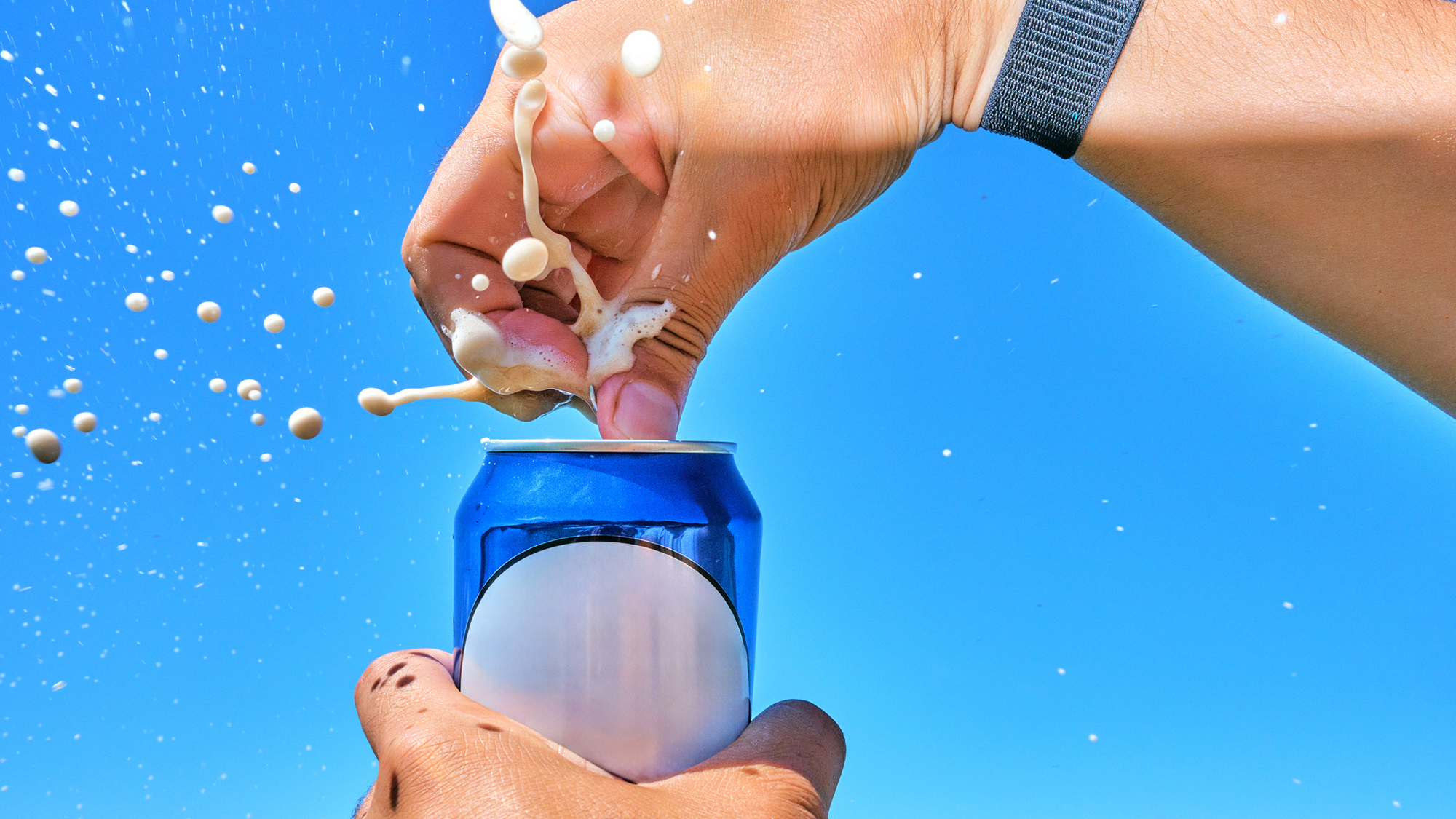
A common household remedy for preventing carbonated beverages from fizzing over is tapping the top of a shaken can. However, scientific evidence suggests this popular technique may not actually work as intended. The physics behind carbonation reveals why people believe tapping helps, but also explains why the method is largely ineffective.
Carbonated drinks contain carbon dioxide dissolved under high pressure and cold temperatures, creating a supersaturated state. When a can is shaken, mechanical action generates pressure waves that can trigger bubble formation at microscopic imperfections called nucleation sites. In theory, gentle tapping could dislodge some bubbles, allowing them to rise into the air pocket above the liquid rather than remaining in the drink. However, overly vigorous tapping produces the opposite effect, actually creating more bubbles.
A 2019 research study testing over 1,000 cans of beer found no statistically significant difference in beverage loss between tapped and untapped containers, whether they had been shaken or not. This suggests the practice offers minimal real-world benefit. According to fluid mechanics experts, more effective strategies include allowing a shaken can to rest upright for several minutes, keeping beverages cold to maintain carbonation stability, or opening the can slowly to release pressure gradually.
Originally reported by Livescience →
About the Author