
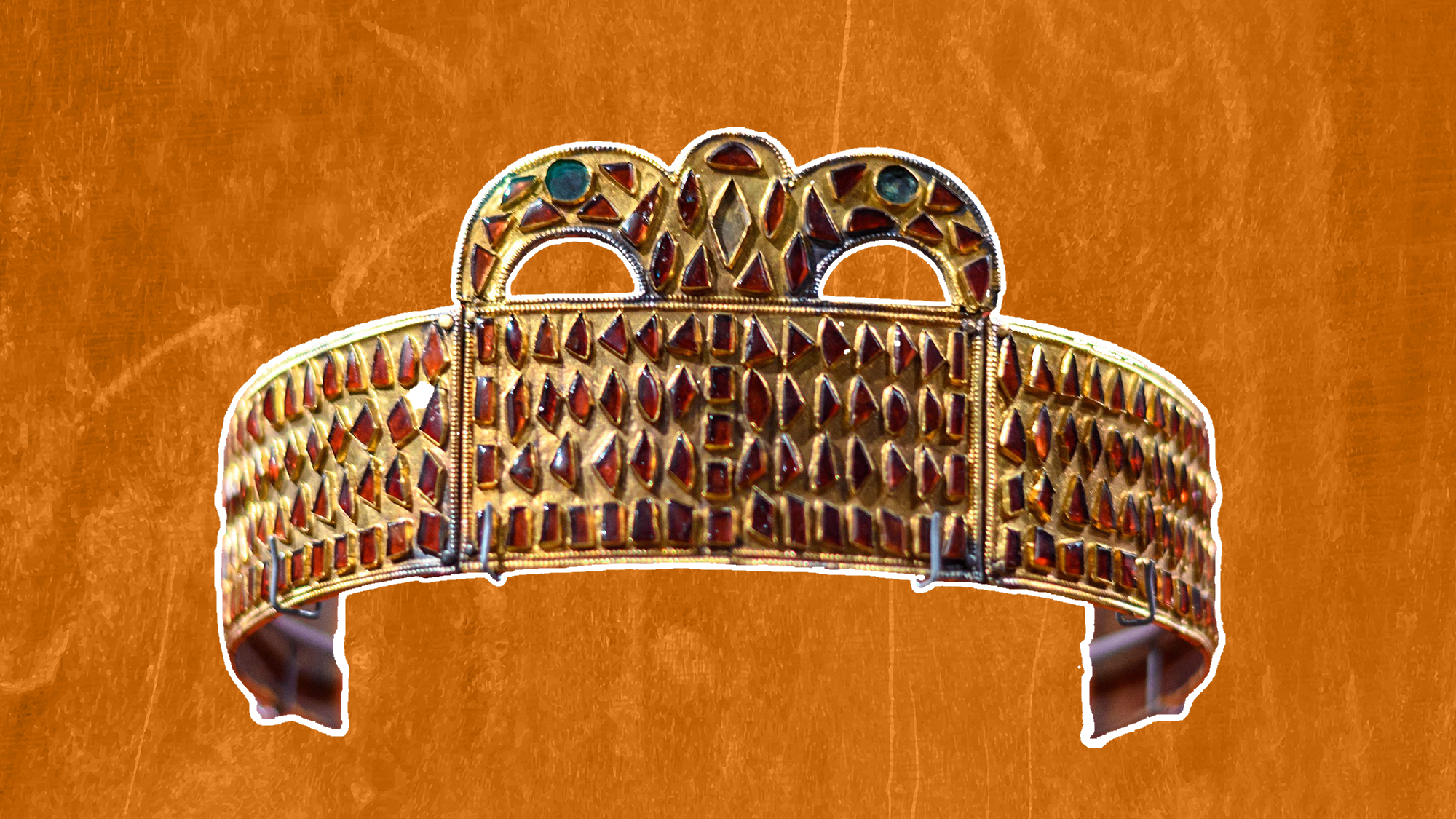
Archaeologists have unearthed a remarkable 1,600-year-old ornamental headpiece in Crimea that provides insight into Hun nobility and their cultural practices. The Crown of Kerch, a gold diadem adorned with garnets and other gemstones, was discovered during early twentieth-century excavations at the ancient city of Pantikapaion. The artifact is now housed at Berlin’s Neues Museum and represents a significant find from the period when nomadic Hun warriors migrated westward from the Don River region during the late fourth century.
The crown features intricate craftsmanship with bronze plaques covered in gold and over 250 gem-studded compartments. Standing approximately 1.7 inches tall, the band displays two stylized eagle heads flanking a central floral design, with green gemstones marking the birds’ eyes. Such imagery symbolized power and authority in Hun society, connecting this artifact to broader artistic traditions across nomadic and early medieval European cultures.
Experts believe the diadem belonged to a high-status woman interred in Pantikapaion’s necropolis, which contained as many as 2,000 burials. Archaeological evidence suggests the piece functioned as active adornment during the wearer’s lifetime, possibly secured with cloth attachments. Approximately two dozen similar diadems have been identified globally, indicating this was a marker of elite status rather than a unique royal insignia among Hun leadership.
Originally reported by Livescience →
About the Author