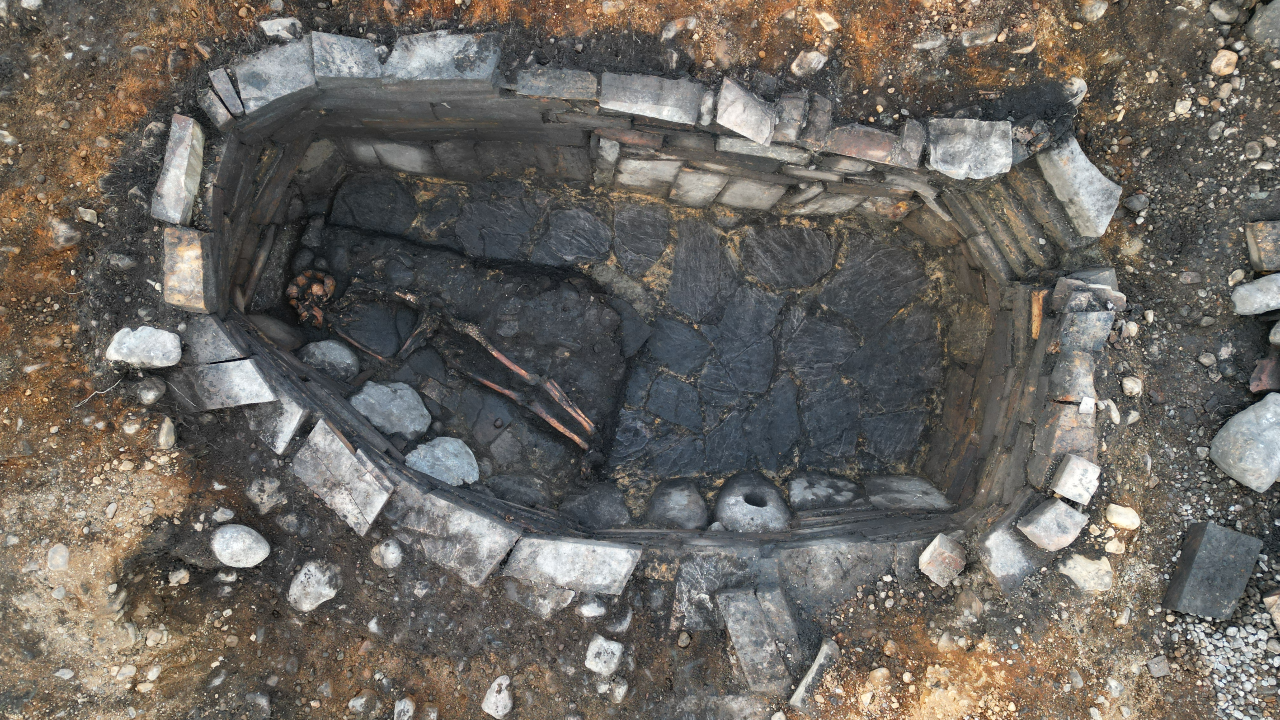
Archaeologists working in Scotland’s Highlands have uncovered a 2,000-year-old burial at the bottom of a well, potentially representing an unusual Iron Age ritual practice. The discovery was made during quarry expansion operations in the region and has prompted researchers to investigate its origins and significance.
The well itself measures approximately 10 feet long and 3 feet deep, with a stone-lined base and clay filling between gaps in the stonework. An adult skeleton was found at the well’s bottom, accompanied by animal bones placed atop the remains. Based on nearby artifacts, experts have dated the burial to the Iron Age period, though the individual’s age, sex, and cause of death remain undetermined pending further analysis.
Researchers theorize the burial may have served as a closing ceremony when the well was abandoned, citing similar examples from other Iron Age sites in Scotland. The well’s proximity to a nearby prehistoric settlement at Camore Wood, which contains remnants of at least 20 hut circles, raises questions about any connection between the two locations, though they stand roughly a mile apart.
Highland Archaeology Services continues investigating the remains through detailed study and 3D scanning technology. Officials expect comprehensive findings within the coming months that should clarify the skeleton’s characteristics and confirm the burial’s age and cultural context.
Originally reported by Livescience →
About the Author