
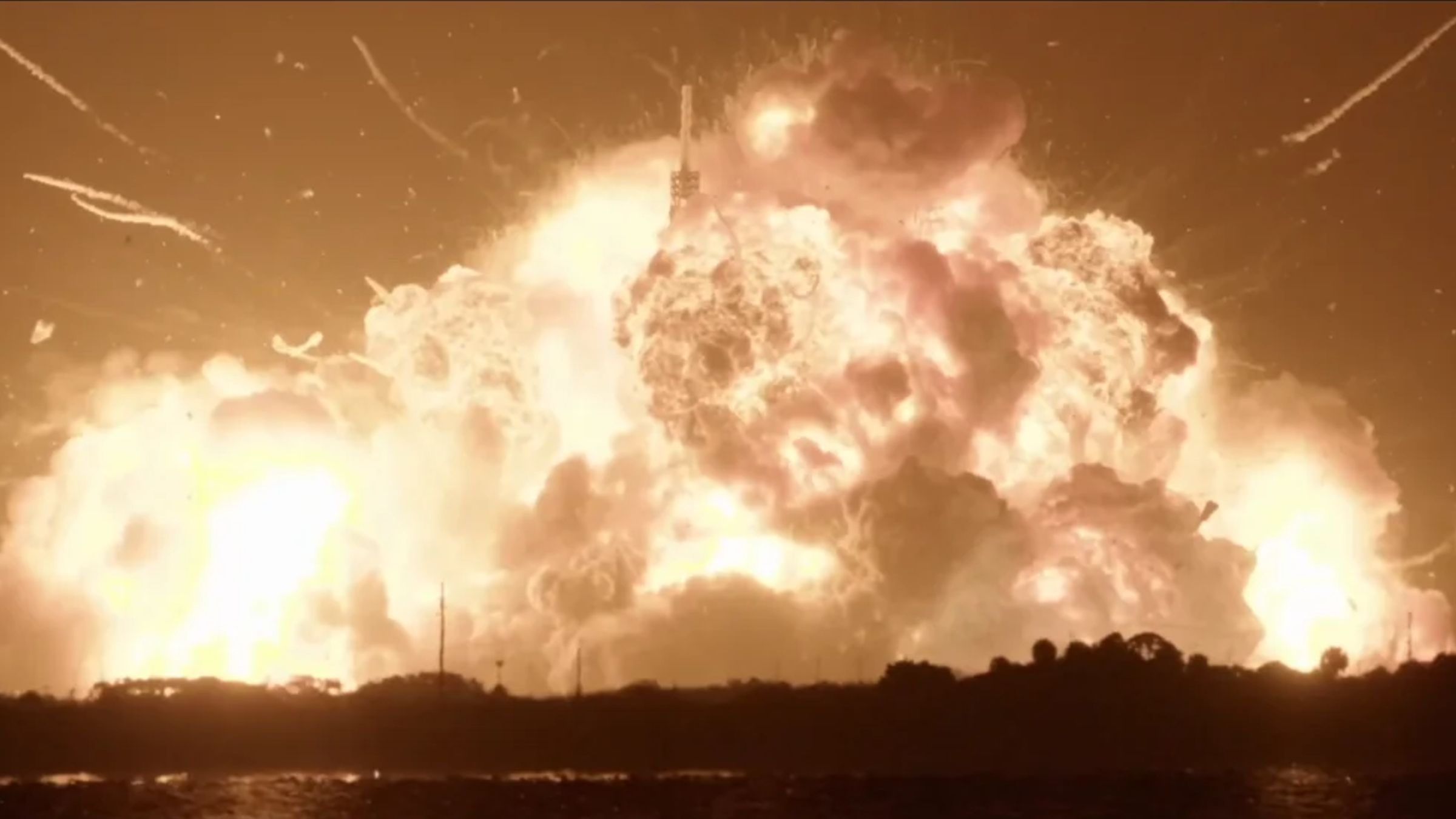
A catastrophic explosion of Blue Origin’s New Glenn rocket during a test at Cape Canaveral Space Force Station in May generated acoustic waves powerful enough to travel across much of the continental United States, according to research published in August. Scientists detected infrasound—sound frequencies below human hearing range—at 36 monitoring stations across the country, with signals reaching northeast Texas approximately 1,000 miles from the launchpad.
Researchers analyzed the acoustic data to estimate the blast’s destructive power at roughly 0.131 kilotons of TNT equivalent, comparable to the initial explosion at the Chornobyl nuclear reactor in 1986. The analysis revealed that between 3 and 6 percent of the rocket’s cryogenic fuel ignited during the initial explosion, with remaining propellant contributing to the massive fireball and plume visible from nearby areas. The incident resulted from a faulty oxygen valve, Blue Origin later confirmed.
The test explosion occurred shortly before the rocket’s scheduled fourth launch attempt and caused extensive damage to the launchpad requiring at least a year for repairs. No injuries were reported, though the event will likely delay NASA’s proposed lunar base project, which depends on New Glenn for launching critical infrastructure components. Researchers noted that infrasound detection presents an underutilized opportunity for monitoring large explosions and spacecraft incidents globally.
Originally reported by Livescience →
About the Author