2025’s Megaquake Appears to Have Awakened a Volcano That Was Dormant For 500 Years
 The gift that keeps on giving.
“`html
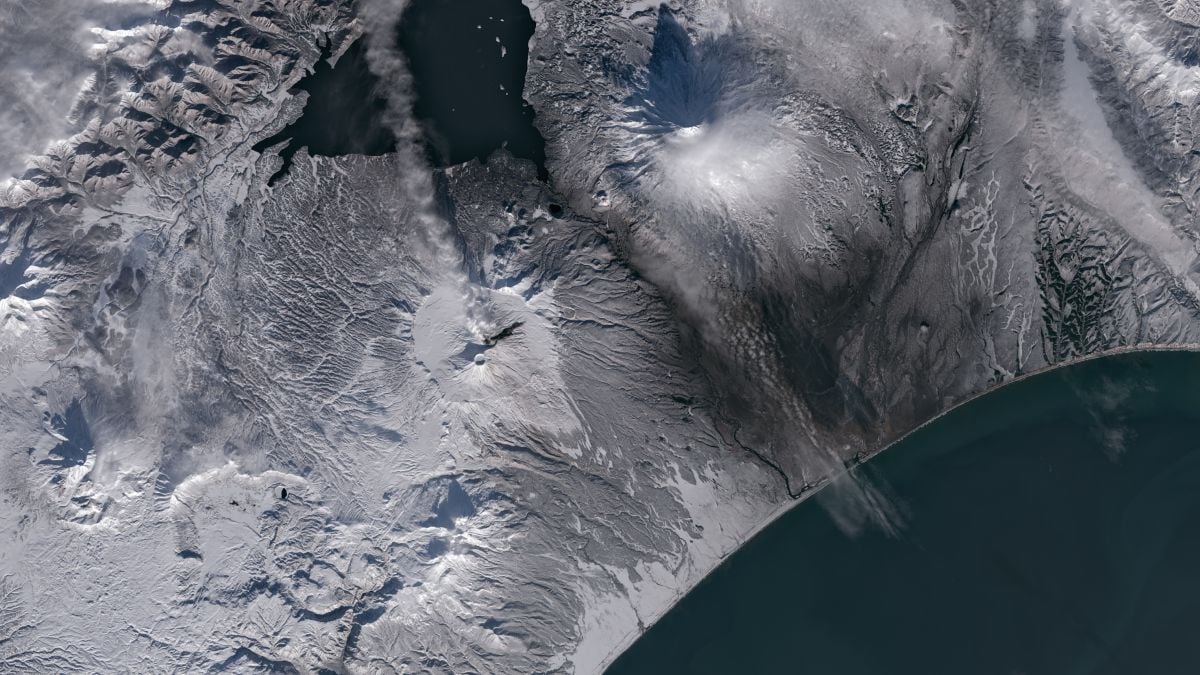
A powerful earthquake off Russia’s Kamchatka Peninsula in July 2025 may have triggered the awakening of Krasheninnikov volcano, which had remained dormant for nearly five centuries. The magnitude-8.8 megathrust quake caused multiple volcanoes across the peninsula to erupt simultaneously in what officials described as an “eruption parade.” However, Krasheninnikov’s participation in this volcanic outburst was particularly notable given its extended period of inactivity.
Researchers led by volcanologist James Hickey from the University of Exeter investigated how the seismic event could have reactivated the long-silent volcano. Despite extensive satellite monitoring showing no signs of magma accumulation or ground deformation before the earthquake, Krasheninnikov began erupting approximately two days after the seismic event. The team’s analysis revealed that roughly 32 million cubic meters of magma forced its way into a near-vertical fracture in the crust, originating from a reservoir about 6 kilometers beneath the surface.
The mechanism behind this delayed eruption appears unconventional. The permanent stress changes from the earthquake alone were too minor to trigger a volcanic rupture. Instead, researchers propose that centuries of magma crystallization had allowed gas bubbles to accumulate within the reservoir. The prolonged earthquake shaking promoted these gases to diffuse into existing bubbles and form new ones, gradually increasing internal pressure until the system became unstable and erupted.
This discovery suggests that seemingly quiet volcanoes may harbor hidden instability, particularly in regions prone to powerful earthquakes. The findings demonstrate that seismic events can awaken dormant volcanic systems through mechanisms that operate over hours or days rather than instantaneously.
“`
Originally reported by Sciencealert →
About the Author