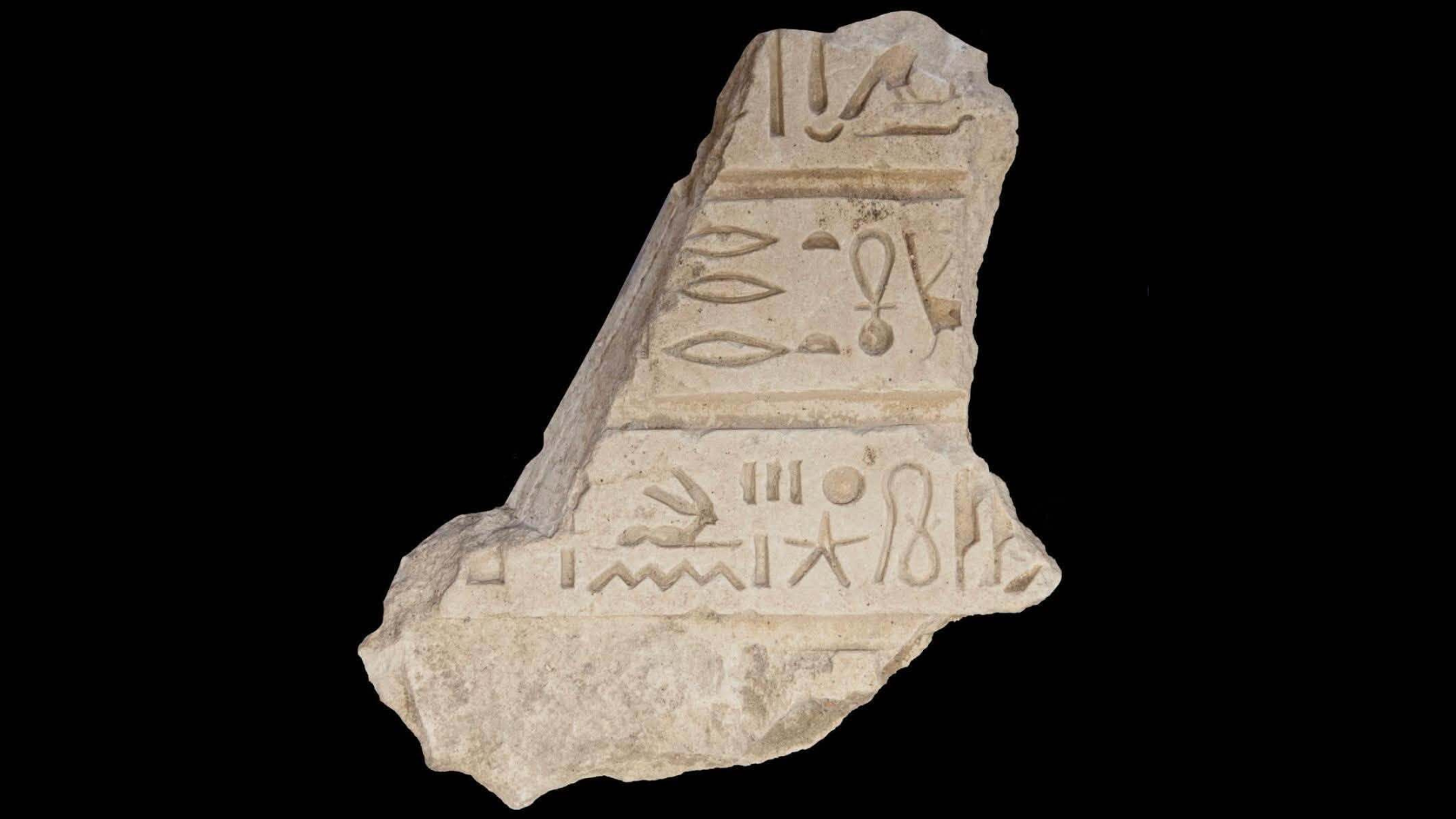
Archaeologists announced the discovery of a 3,200-year-old inscription at Tell Abu Seifi that may reveal the location of a previously lost ancient Egyptian city. The inscription, dating to the reign of Ramesses II (approximately 1279-1213 B.C.), references Horus, the falcon-headed deity associated with sky and warfare, as the “Lord of the City of Mesn.” Excavations at the site also uncovered remains of a temple dedicated to Horus, though it has been largely destroyed over time.
The archaeological site near the Suez Canal in the eastern Nile Delta region holds significant strategic importance. Tell Abu Seifi sits adjacent to the ancient “Way of Horus,” a military route that connected Egypt to the Levant and was fortified with numerous defensive structures. Researchers believe this location made it an ideal departure point for Egyptian military campaigns, particularly during Ramesses II’s expansionist campaigns across the Middle East and into Syria.
Evidence supporting the identification of Tell Abu Seifi as Mesn extends beyond the recent inscription. Previously discovered artifacts, including a bronze seal and coffins from the Ptolemaic period (304-30 B.C.), also bear inscriptions linking Horus to Mesn, suggesting the city’s religious significance persisted for centuries. The temple’s prominent placement further underscores the importance of Horus worship in the community.
While the cumulative evidence appears compelling to some experts, other scholars urge caution. Additional research, including ceramic analysis and further hieroglyphic study, remains necessary before definitively confirming Tell Abu Seifi’s identification with Mesn. Researchers also noted that comparable inscriptions referencing Mesn have appeared at other regional sites, leaving open the possibility that Mesn encompassed multiple locations.
Originally reported by Livescience →
About the Author