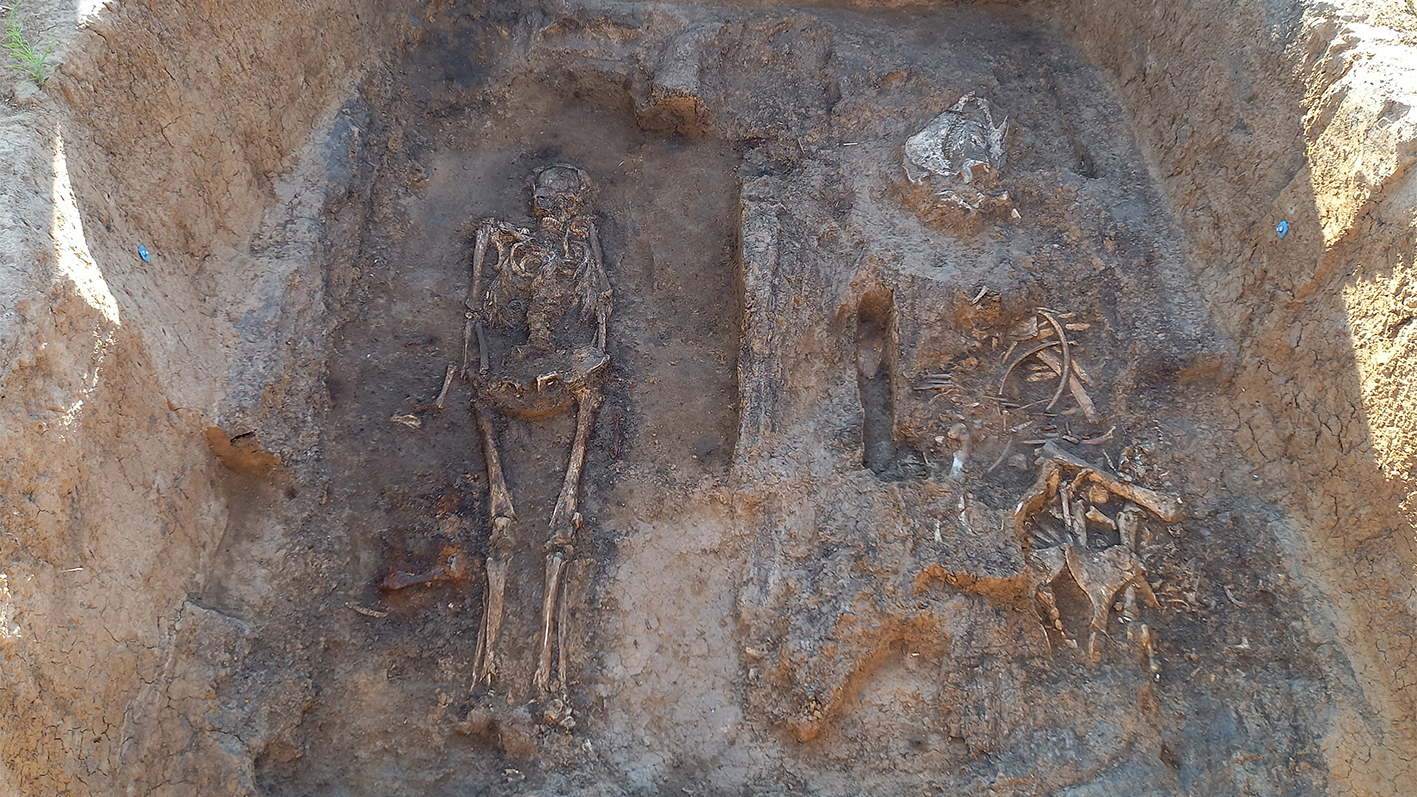
Russian archaeologists have made a significant discovery at an excavation site near Suzdal, uncovering a 10th-century wooden burial chamber containing the remains of a high-ranking individual alongside a horse and dog. The find emerged unexpectedly during summer fieldwork at the medieval cemetery in Gnezdilovo, located approximately 220 kilometers northeast of Moscow. The exceptional preservation of the chamber provides rare insight into the funeral practices of early medieval Russian nobility.
The underground wooden structure measured roughly 3.1 by 2.7 meters and housed a male skeleton aged 25 to 35 years at the time of death. The grave goods accompanying the nobleman demonstrate his elevated social standing, including an iron knife, stirrups, riding equipment, a bone comb, and a battle ax. A silver horseshoe-shaped brooch found near the skeleton’s neck further confirms his elite status within his community.
The chamber burial represents a Scandinavian-influenced funeral tradition that became prevalent among Kievan Rus’ nobility during the 10th century. This discovery holds particular importance as it is among fewer than 80 such chamber tombs identified across western Russia, with most previously found in urban centers. The presence of this rare burial type at Suzdal suggests the site functioned as a significant political and military center of the Rus’ territories, a role previously undocumented by historians.
In total, archaeologists recovered 15 burials from the Suzdal site this summer, with female graves containing ornamental items such as silver rings and crystal beads, while male burials included weapons and equestrian gear.
Originally reported by Livescience →
About the Author