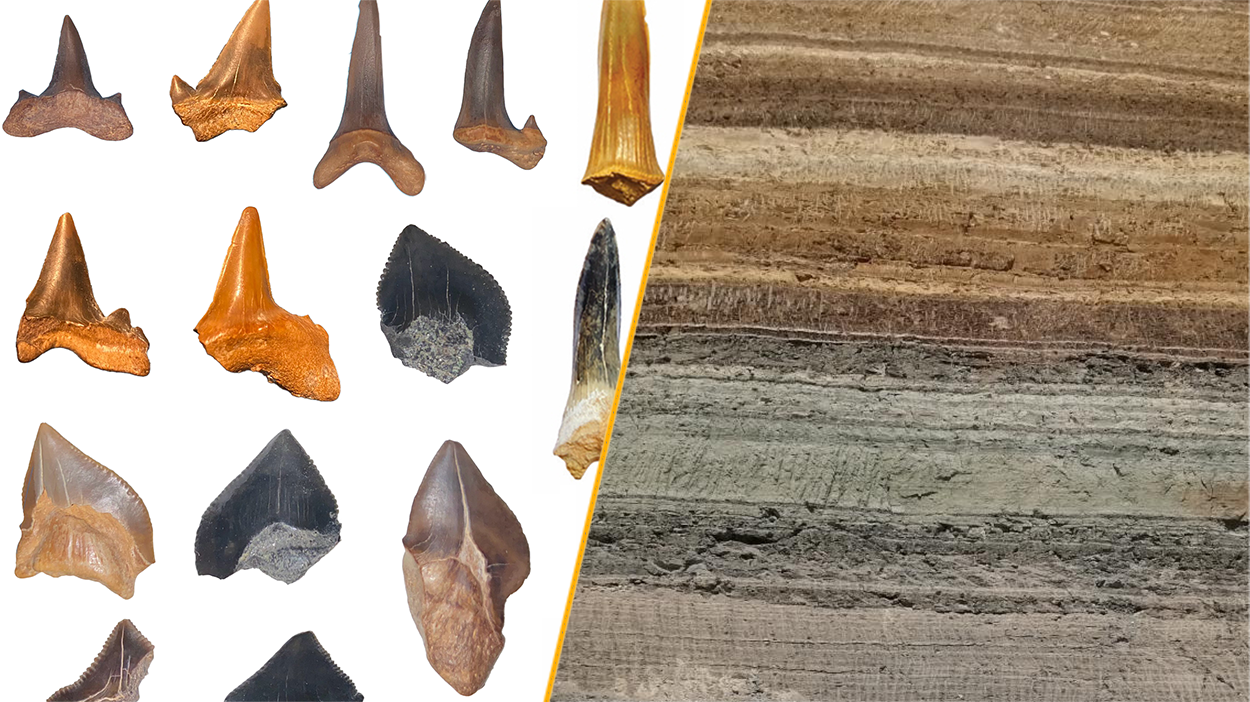
Researchers have discovered a remarkable collection of ancient shark fossils in Egypt’s Western Desert, revealing evidence of a thriving marine ecosystem that existed millions of years ago. Expeditions conducted between 2020 and 2022 at the Abu-Tartur Plateau uncovered fossilized teeth from seven distinct shark species, with findings detailed in a recent study published in the journal Cretaceous Research.
During the Cretaceous period, which ended approximately 66 million years ago, Earth’s climate was significantly warmer and sea levels were substantially higher than today. These conditions allowed shallow seas to cover regions that are now arid desert landscapes, including much of Egypt. The Abu-Tartur Plateau, located within the Duwi Formation geological region, contains phosphorite-rich rocks that frequently preserve marine animal remains. Notably, three of the seven shark species identified had never previously been documented in Egypt, including one species that represents the first known African discovery of its kind.
The concentration of multiple shark species at a single location suggests the area once supported a nutrient-rich environment capable of sustaining a complex marine food chain. While researchers cannot confirm whether these sharks lived simultaneously, the accumulation of their teeth in the same sediment layer indicates substantial biological activity in ancient times. Study authors acknowledge the possibility that additional discoveries remain buried in the plateau, with plans to expand their investigations across the surrounding region.
Originally reported by Livescience →
About the Author