
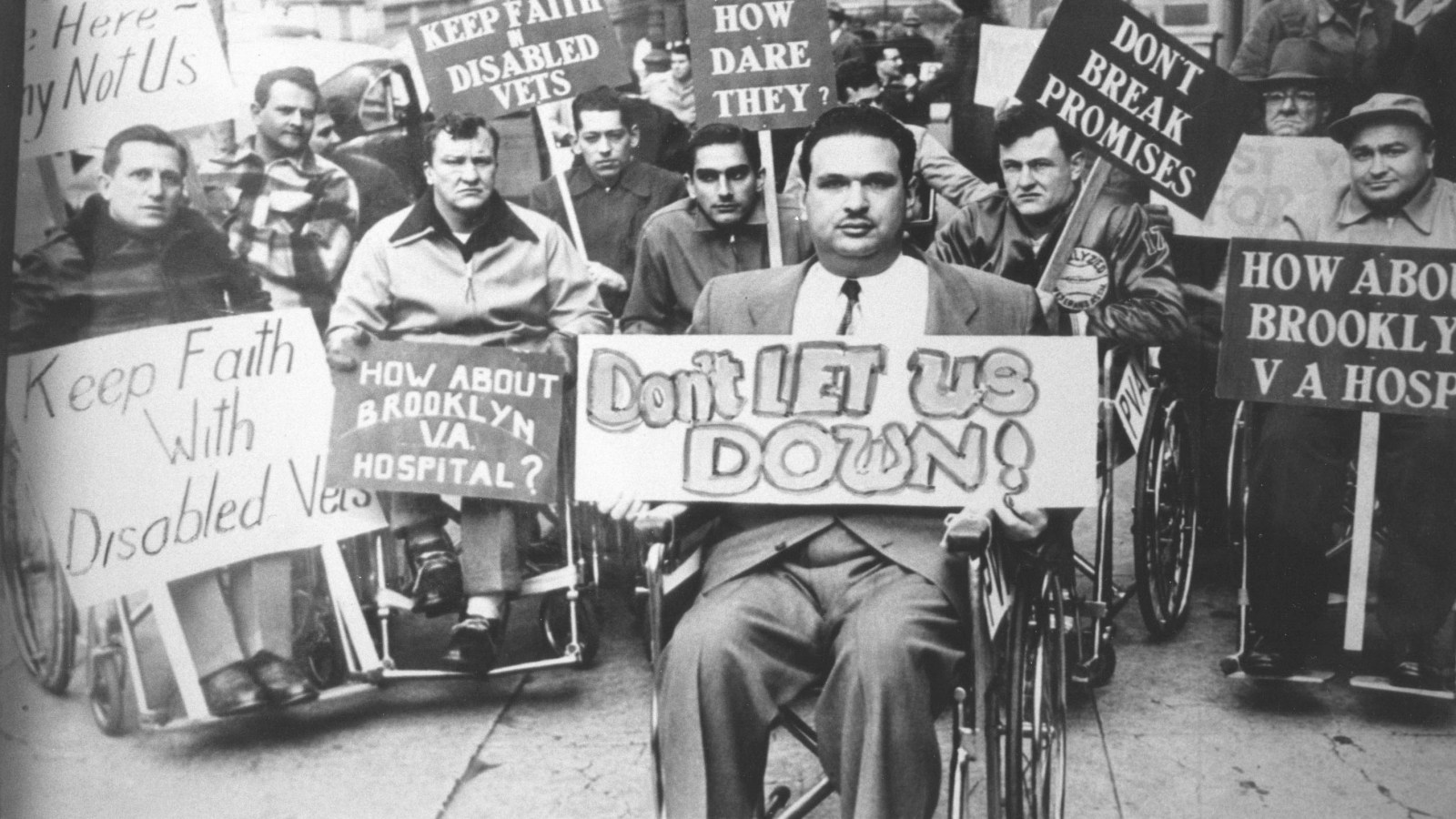
Joseph A. Jordan Jr. suffered a devastating spinal cord injury while serving in France during World War II, returning to the United States permanently paralyzed. Like thousands of other wounded veterans, he faced a society unprepared to accommodate his needs. Hospitals, homes, and public spaces were inaccessible, and many disabled service members found themselves isolated and institutionalized with little hope for meaningful futures.
Determined to change their circumstances, Jordan and 69 other paraplegic veterans founded Paralyzed Veterans of America in January 1946 at a California hospital. Rather than accept their situation, these former soldiers organized themselves to advocate for accessible housing, improved healthcare, and employment opportunities. The organization quickly established PN Magazine, an influential publication addressing the needs of individuals with spinal cord injuries, and pioneered adaptive athletics by organizing the nation’s first wheelchair basketball game just months after the group’s formation.
PVA’s impact extended beyond sports and publications. Members collaborated with architects to design accessible homes and successfully lobbied Congress, resulting in the 1948 passage of legislation providing grants for disabled veterans’ housing modifications. The organization also challenged racial discrimination, with founder Gilford Moss ensuring that Black member Jordan could attend a board meeting in segregated Richmond, Virginia. Through decades of persistent advocacy, PVA transformed disability rights and accessibility standards across America, proving that collective action by veterans could reshape society itself.
Originally reported by Rollingstone →
About the Author