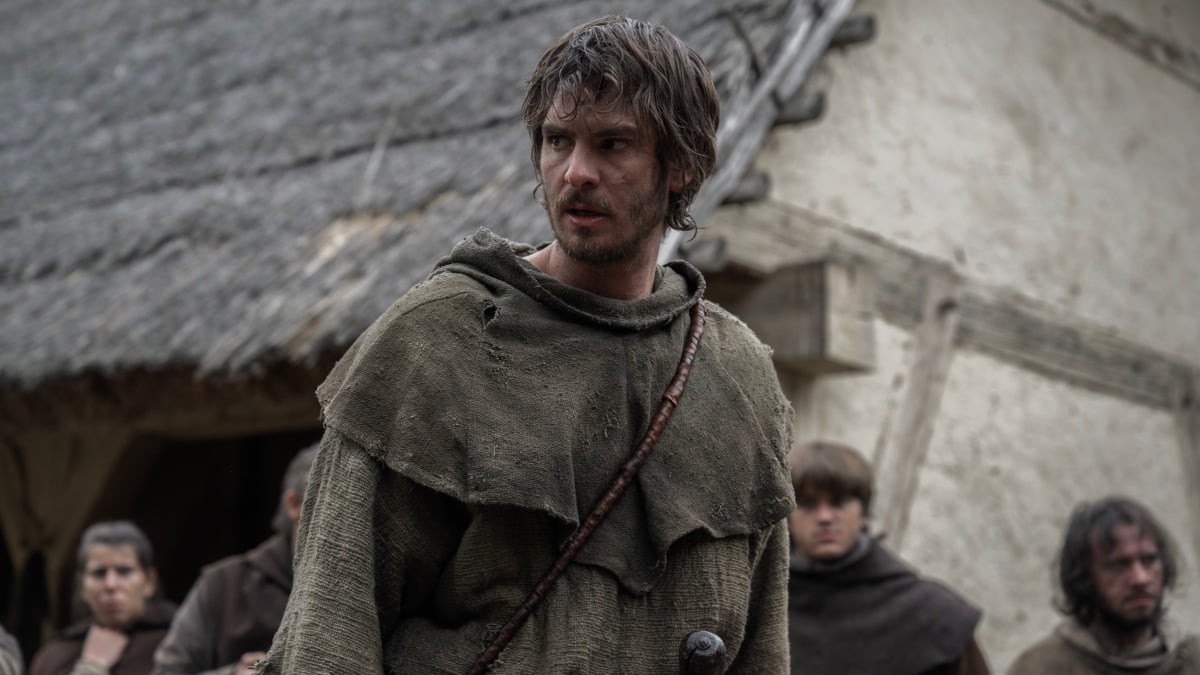
Director Paul Greengrass brings his signature style to a historical drama about the 1381 Peasants’ Revolt, starring Andrew Garfield as a grief-stricken farmer who becomes swept up in a movement against royal tyranny. The film explores themes of uprising and resistance as commoners face exploitation through punitive taxation and violence orchestrated by the crown. Despite its promising premise centered on rebellion and social justice, the production struggles to generate tension or emotional resonance around its central conflict.
Garfield delivers a restrained performance as his character navigates internal conflict between pacifism and necessary resistance. Supporting players Jamie Bell and Thomasin McKenzie inject moments of intensity, particularly through scenes exploring religious corruption and ideological differences about how to achieve change. However, these compelling character dynamics remain underdeveloped, overshadowed by Greengrass’s muted approach to storytelling. The ensemble cast, including Katherine Waterston and established character actors, find themselves relegated to marginal roles that contribute little to the narrative’s momentum.
Cinematographer Pål Ulvik Rokseth’s handheld camera work provides the film’s most vital energy, creating an immediacy that contrasts sharply with Greengrass’s bleak visual palette and emotionally subdued direction. This technical disconnect leaves viewers yearning for the boldness the story demands. Rather than capturing the urgency and fervor of its subject matter, the film presents revolution as inevitable yet regrettable, ultimately delivering a pedestrian examination of historical conflict that fails to inspire.
The Uprising releases in U.S. theaters September 10, with a UK release scheduled for October 9.
Originally reported by Mashable →
About the Author