
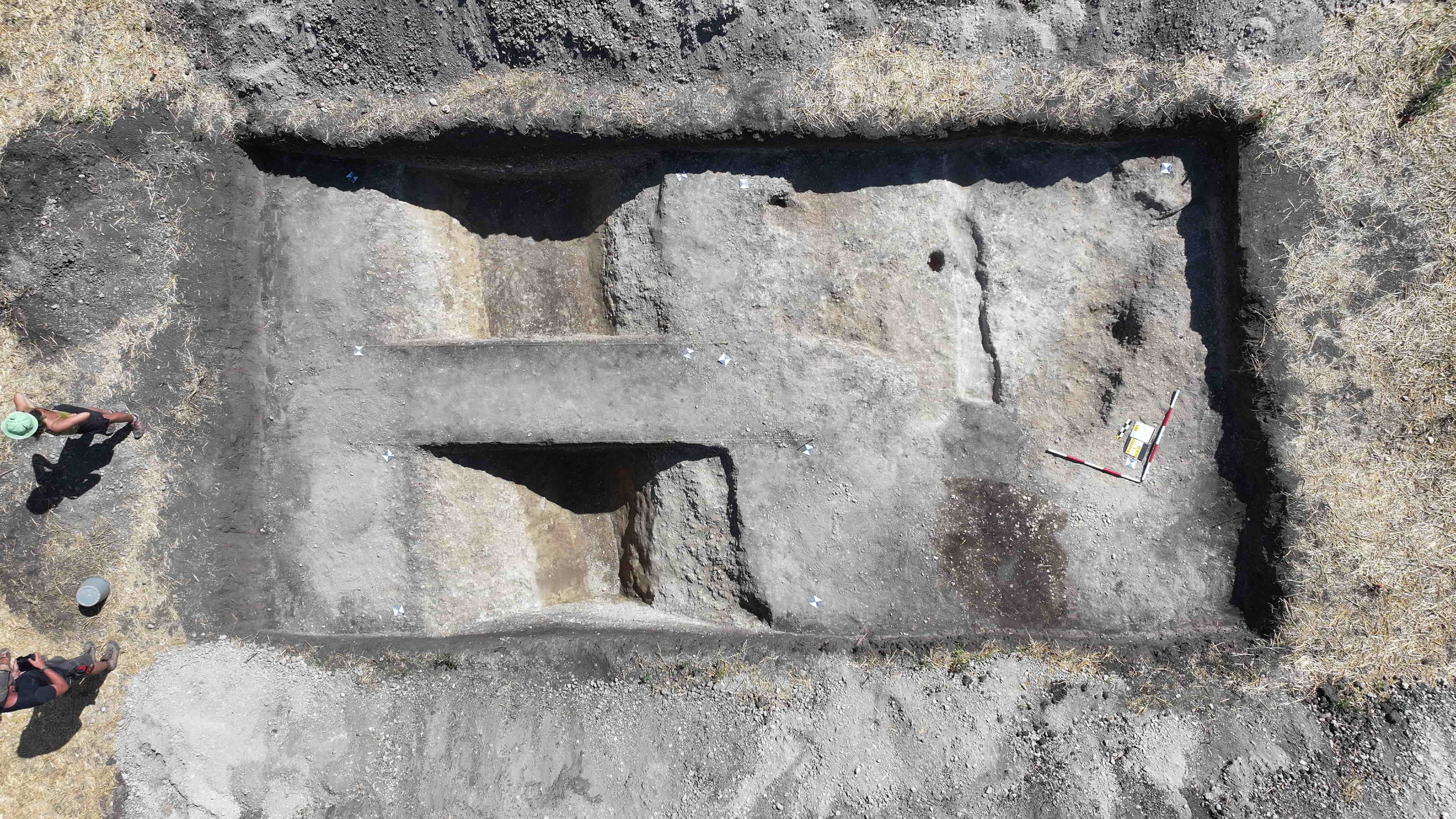
Archaeologists working in the Czech Republic have uncovered an ancient ceremonial complex that predates Stonehenge by approximately 1,000 years. The site, located at Chleby in the Central Bohemian Region, dates back roughly 6,500 years and features a massive circular ditch measuring 230 meters across and 2.5 meters deep. Twelve strategically positioned openings provided access to the enclosure’s interior, and researchers believe wooden posts once formed the structure’s walls.
Evidence suggests the entrances were decorated with bull skulls and horns, reflecting the spiritual significance of bulls in early farming societies across prehistoric Europe. According to researchers at Charles University and the University of West Bohemia, these animals symbolized strength and fertility in Neolithic cultures. The site’s unusual circular design and entrance configuration distinguish it from other Stone Age structures in the region.
The arrangement of the twelve openings was deliberately engineered to allow occupants to track critical solar and lunar events. The entrances align with the summer and winter solstices and enable observation of the moon’s most extreme positions during its 18.6-year cycle. This astronomical orientation mirrors similar principles found at Stonehenge, suggesting the Chleby site functioned as an ancient observatory for ritual purposes.
Over millennia, the structure’s original significance diminished. Burials from the Bronze Age Únětice culture appeared centuries later, while by the Iron Age, a settlement had been established over the sanctuary site. Ongoing research includes soil analysis to uncover additional information about the people who inhabited this exceptional location throughout prehistory.
Originally reported by Livescience →
About the Author