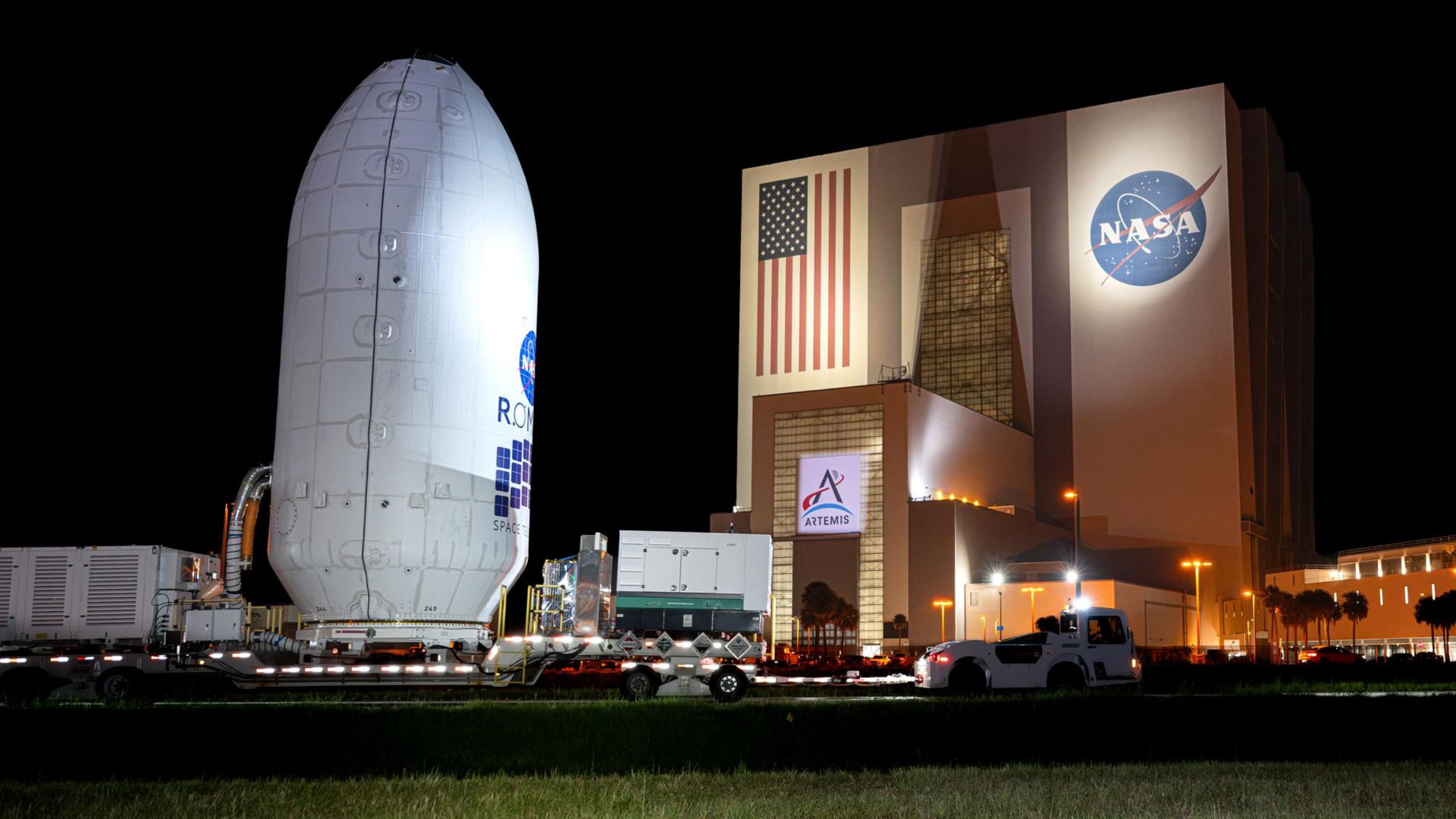
NASA’s Nancy Grace Roman Space Telescope is preparing for its highly anticipated launch this weekend aboard a SpaceX Falcon Heavy rocket from Kennedy Space Center in Florida. The mission, scheduled for Sunday, August 30 at 7:26 a.m. EDT, represents a major milestone in space exploration. The observatory, named after pioneering NASA astronomer Nancy Grace Roman, will embark on a mission expected to last at least five years, though scientists hope it could operate considerably longer.
The Roman telescope stands apart from previous observatories through its advanced capabilities. Its Wide Field Instrument features a 288-megapixel camera paired with a 7.9-foot mirror, providing a field of view 100,000 times greater than the Hubble Space Telescope. Most significantly, its coronagraph technology will enable direct imaging of distant exoplanets, a revolutionary advancement in planetary detection. Scientists predict Roman could potentially discover up to 100,000 exoplanets during its mission, drastically expanding humanity’s catalog of known alien worlds.
Patience will be required before the first images arrive. Following launch, Roman must travel several weeks to reach its designated location at the Sun-Earth Lagrange point, roughly four times farther from Earth than the moon. A subsequent 90-day commissioning period will allow technicians to power systems and conduct diagnostic evaluations. NASA officials tentatively expect the telescope to begin photographing the cosmos in early 2027, mirroring the timeline of the James Webb Space Telescope, which took approximately seven months to transmit its inaugural images.
Weather may affect launch proceedings, as forecasters predict a 50 percent chance of thunderstorms at the launch site Sunday. If necessary, a backup launch window exists for Monday, August 31 at 7:22 a.m. EDT with reduced storm probability.
Originally reported by Livescience →
About the Author