
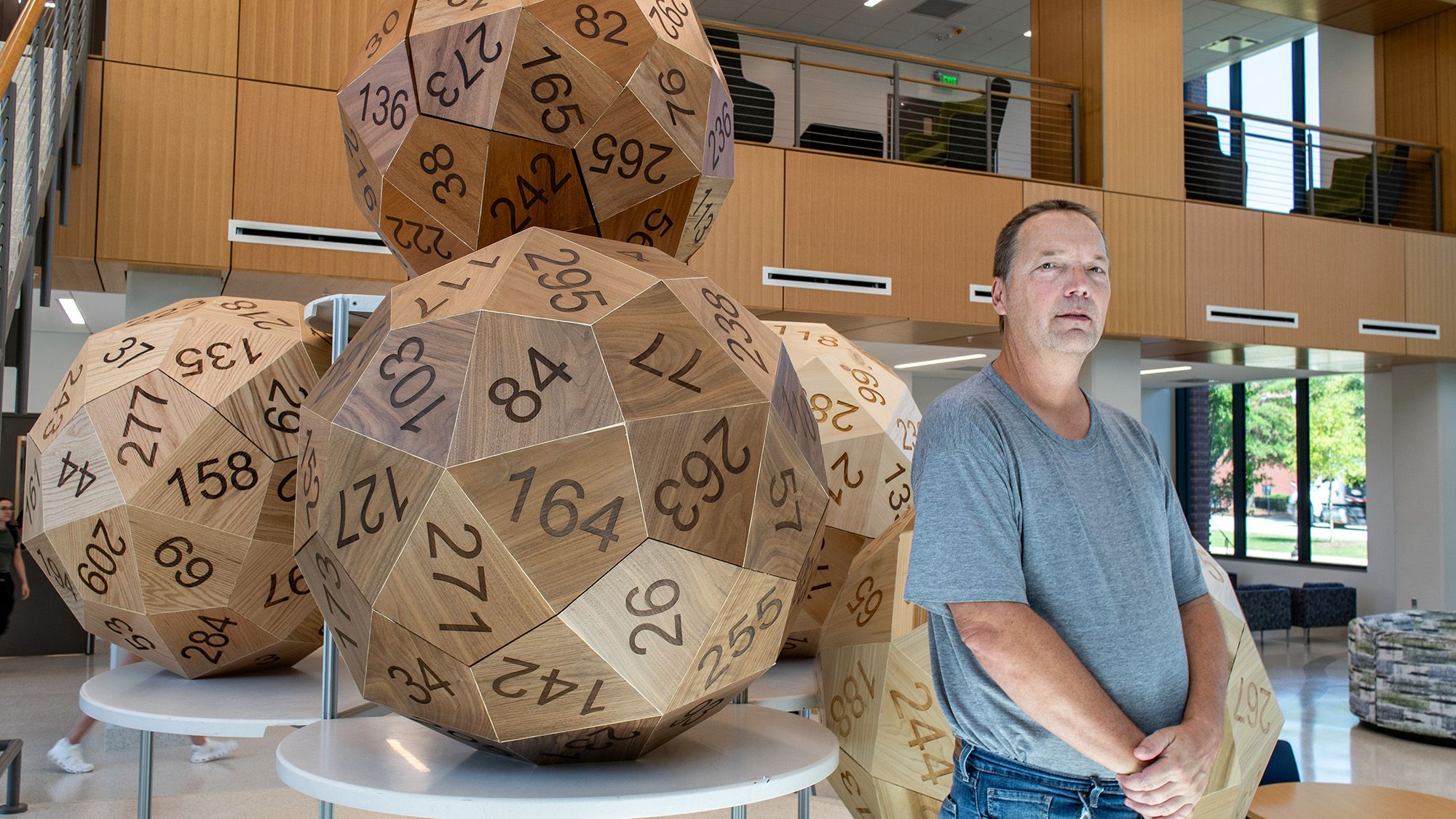
Mathematicians have unveiled what they claim to be the world’s fairest dice: a set of five 60-sided polyhedrons designed to ensure perfectly equal odds for any number of players rolling to determine turn order. The breakthrough came after 15 years of collaborative work, beginning when board game designer James Ernest posed the challenge to mathematician Eric Harshbarger at a gaming convention in 2010.
The core problem proved devilishly complex. While preventing ties was straightforward—simply using different numbers on each die—achieving fairness across any possible subset of players required intricate mathematical solutions. Whether five people grabbed five dice or three people selected three dice, each participant needed identical winning probabilities. Harshbarger and collaborator Robert Ford initially solved the puzzle for three and four players using standard dice configurations, but expanding to five players meant navigating a search space containing more possible combinations than atoms in the observable universe.
The solution arrived unexpectedly in mid-2023 when Canadian software engineer Paul Meyer discovered a configuration using five 60-sided dice, each engraved with unique numbers from the sequence one through 300. To commemorate the achievement, Harshbarger constructed five large wooden replicas from different wood types, now permanently displayed in Auburn University’s newly opened mathematics building.
The discovery has already attracted commercial interest, with manufacturers now producing the dice for retail sale worldwide. Harshbarger emphasized that the geometric appeal and accessibility of these mathematical objects make them powerful tools for public engagement with mathematics.
Originally reported by Livescience →
About the Author