‘Especially Exciting’: JWST Finds Water Surviving Surprisingly Close to Our Galaxy’s Supermassive Black Hole
 "It shows that molecular material can survive in an environment dominated by intense radiation."
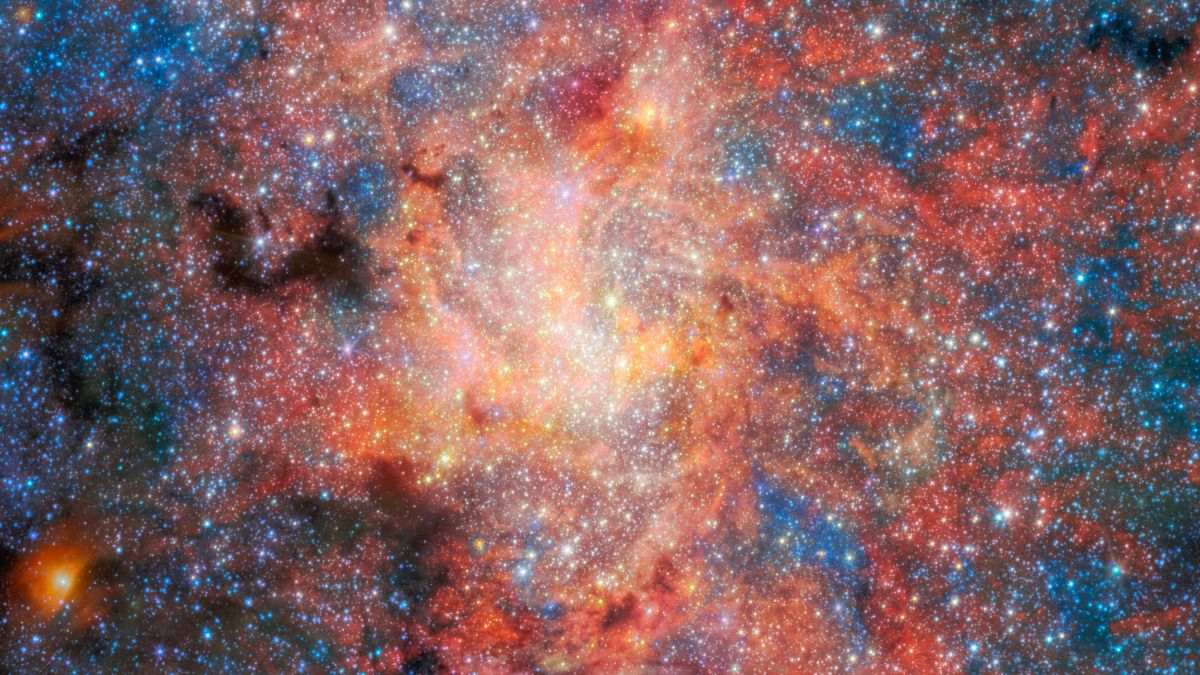
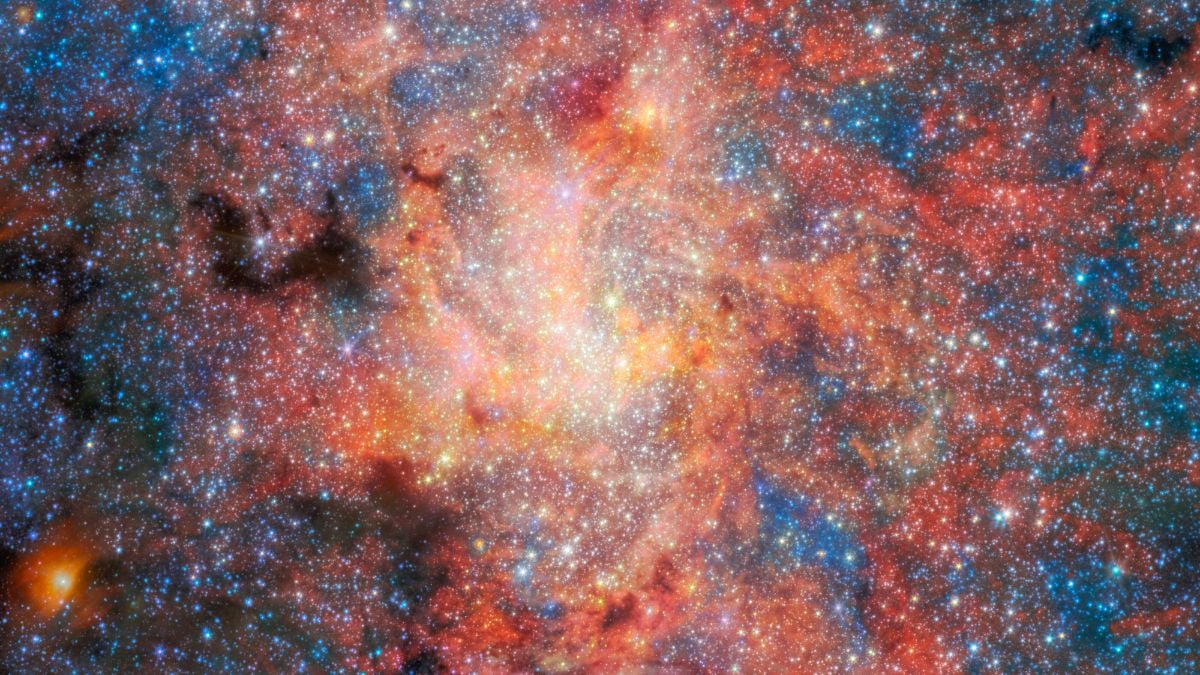
The James Webb Space Telescope has made a surprising discovery near the center of our galaxy: water and other chemical compounds persist in the extreme environment surrounding a supermassive black hole. Researchers detected these materials around IRS 3, a dying star located just 0.55 light-years from Sagittarius A*, the massive black hole at our galaxy’s core. This finding challenges previous assumptions about what could survive in such a hostile region.
IRS 3 is an evolved star in its final stages of life, ejecting its outer layers into space at speeds of about 15 kilometers per second. These stellar winds have created an enormous dusty envelope extending 10,000 astronomical units around the star. Using JWST’s infrared instruments, astronomers analyzed the composition of this material and ran computer simulations to understand how the star behaves under conditions of intense radiation near the black hole.
The discovery has significant implications for understanding stellar processes in galactic centers. The research shows that dying stars can continue enriching their surroundings with complex chemistry—including water, dust, and other oxygen-based compounds—even in these extreme environments. Scientists estimate IRS 3 is about six times more massive than our Sun and shines roughly 60,000 times brighter, despite having a relatively cool surface temperature.
The detection of water molecules proves particularly noteworthy to researchers, as it demonstrates that molecular materials can endure the intense radiation fields present near supermassive black holes, opening new questions about chemical enrichment in galactic centers.
Originally reported by Sciencealert →
About the Author