Earth May Be Harboring a Hidden Stash of Water, Up to 1,800 Miles Below The Surface
 A breakthrough in the mystery.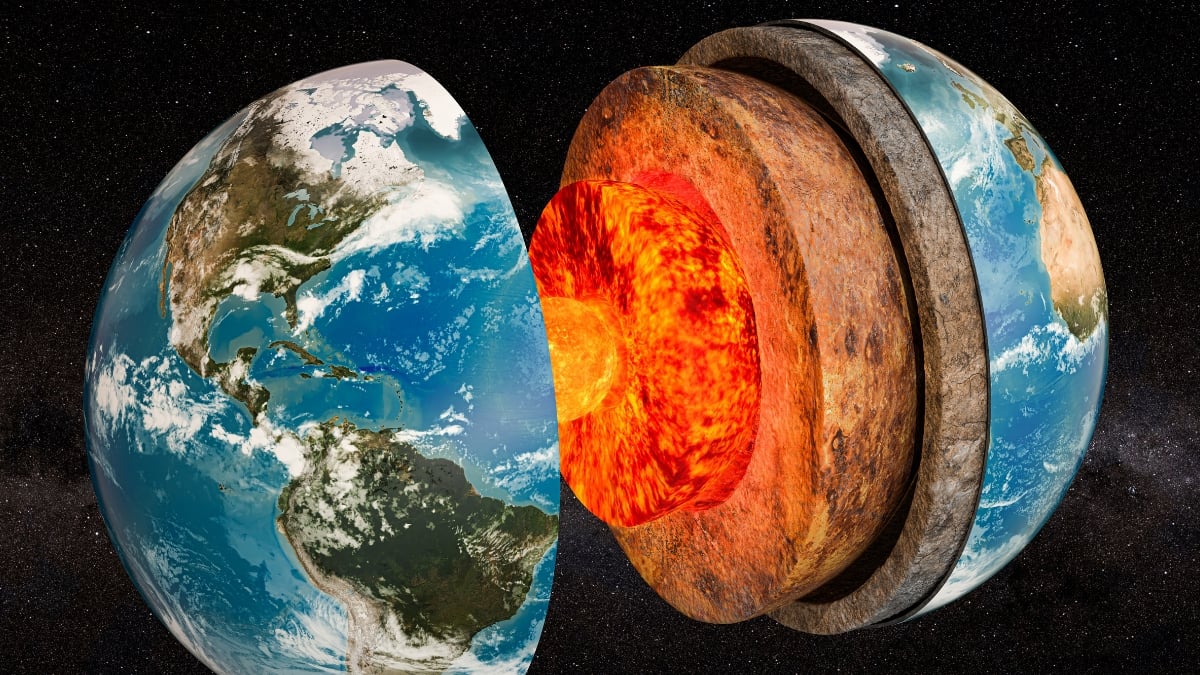
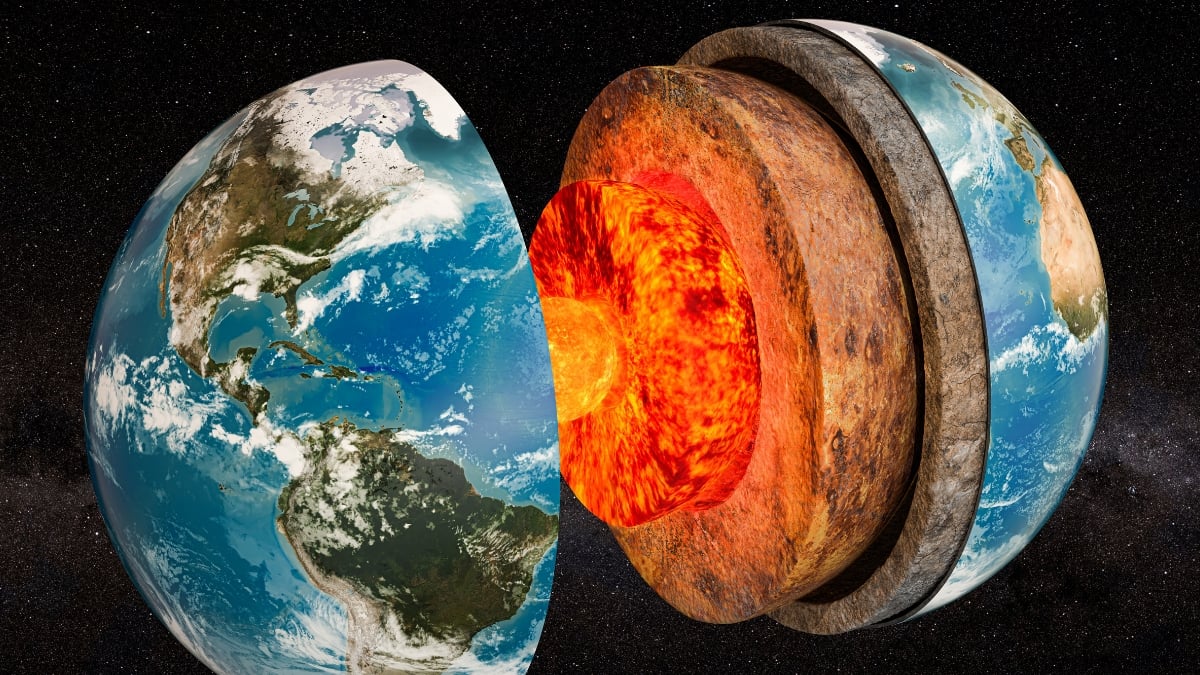
Scientists have discovered evidence that vast quantities of water may be trapped deep within Earth’s interior, potentially extending nearly 1,800 miles below the surface. The findings suggest that water plays a crucial role not only in supporting life but also in facilitating the movement of Earth’s mantle and regulating our planet’s climate over geological timescales.
Researchers conducted high-pressure experiments using specialized equipment to simulate the extreme conditions found in Earth’s lower mantle. Their work identified two previously unknown iron oxyhydroxide minerals that appear capable of storing enormous amounts of water under these intense pressure and temperature conditions. Remarkably, these minerals remained stable even when water was extremely scarce, suggesting they could effectively trap hydrogen from minimal moisture.
The discovery may explain mysterious low-velocity zones detected near the boundary between Earth’s mantle and liquid outer core. Scientists believe these water-bearing minerals could have formed and sunk toward the core during Earth’s early history, then gradually released their water through mantle circulation and volcanic activity. This finding also clarifies earlier puzzling observations from laboratory experiments.
While the research represents a significant breakthrough in understanding Earth’s water distribution, important questions remain unanswered. Scientists still need to determine exact water quantities stored in these minerals and understand how water ultimately returns to the surface, suggesting Earth’s complete water cycle may be far more complex than previously understood.
Originally reported by Sciencealert →
About the Author