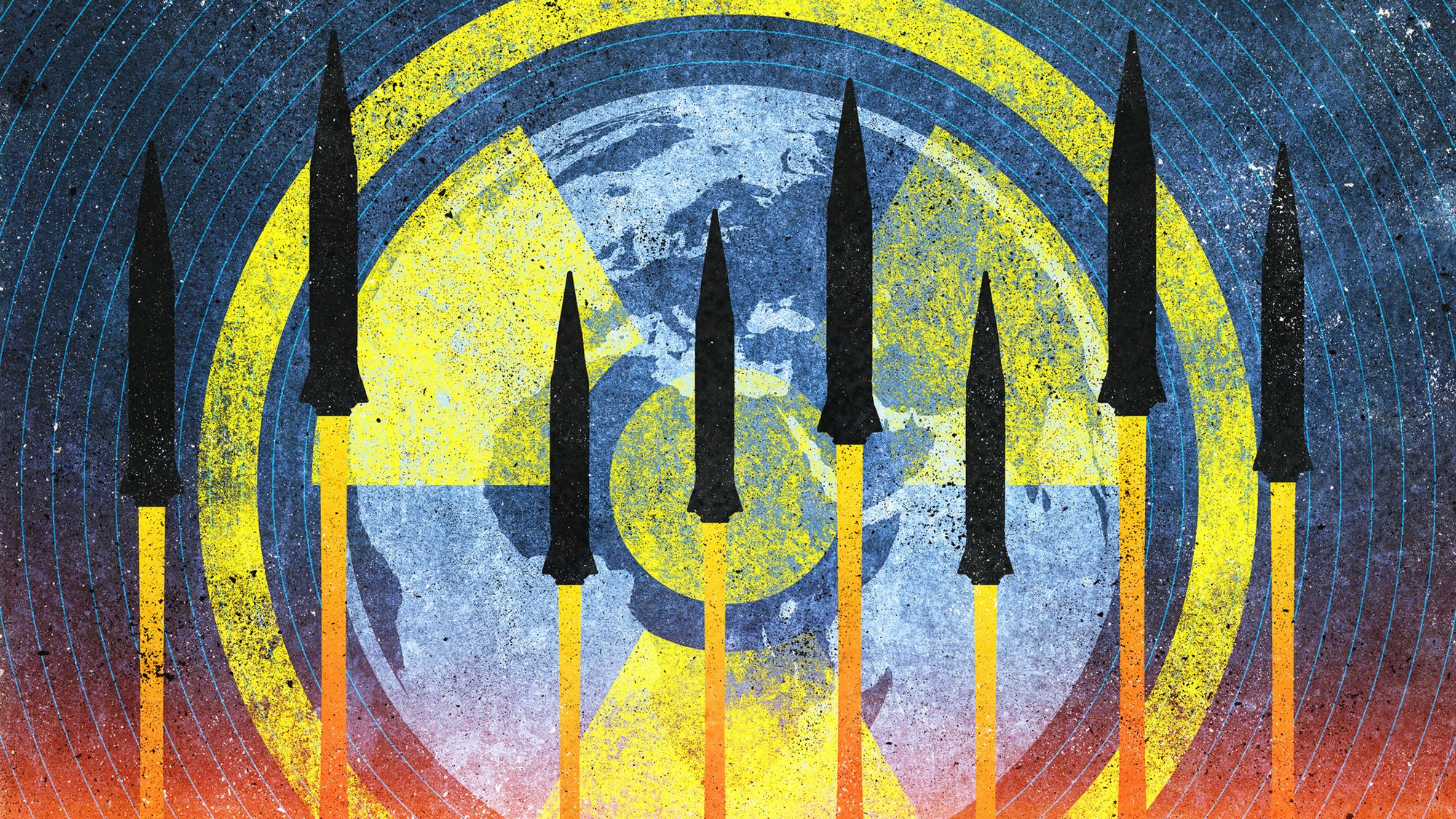
The United States has publicly acknowledged deploying weapons in space for the first time, marking a significant shift in orbital military capabilities. Air Force Secretary Troy Meink made the announcement on September 14th at the Air, Space and Cyber Conference in Maryland, revealing that the nation has positioned “on-orbit space control weapons” designed to protect American forces against hostile actions by adversaries.
While officials have not identified these weapons as nuclear, the disclosure raises pressing questions about the trajectory of space-based armaments and whether nuclear weapons deployment in orbit may soon follow. The development challenges a long-standing international agreement designed to prevent such escalation, potentially opening the door for rival nations to pursue similar capabilities.
The historical foundation for restricting weapons in space dates to the Cold War era. The Outer Space Treaty, signed by the United States and Soviet Union in 1967, established a commitment from both nations to refrain from placing nuclear weapons or other weapons of mass destruction in Earth’s orbit. However, the treaty notably lacked enforcement mechanisms, leaving it vulnerable to violation without consequence.
With this recent disclosure, concerns mount that the delicate balance maintained for decades may be unraveling. The absence of verification procedures and enforcement tools in the original agreement means nations could potentially add their own weapons systems to space without detection, possibly triggering a new arms race beyond Earth’s atmosphere.
Originally reported by Livescience →
About the Author