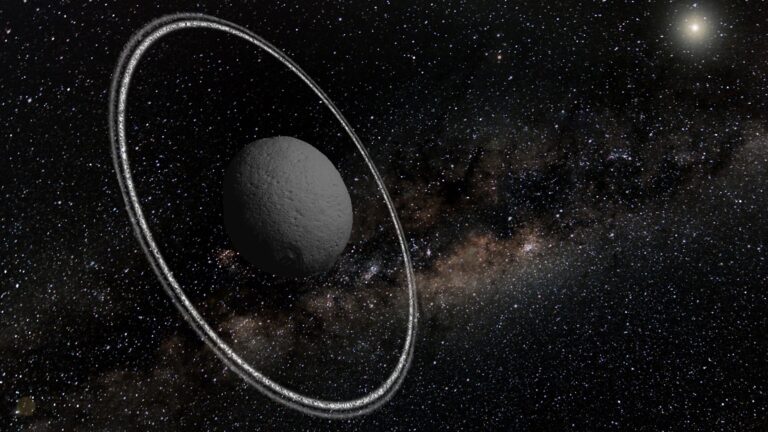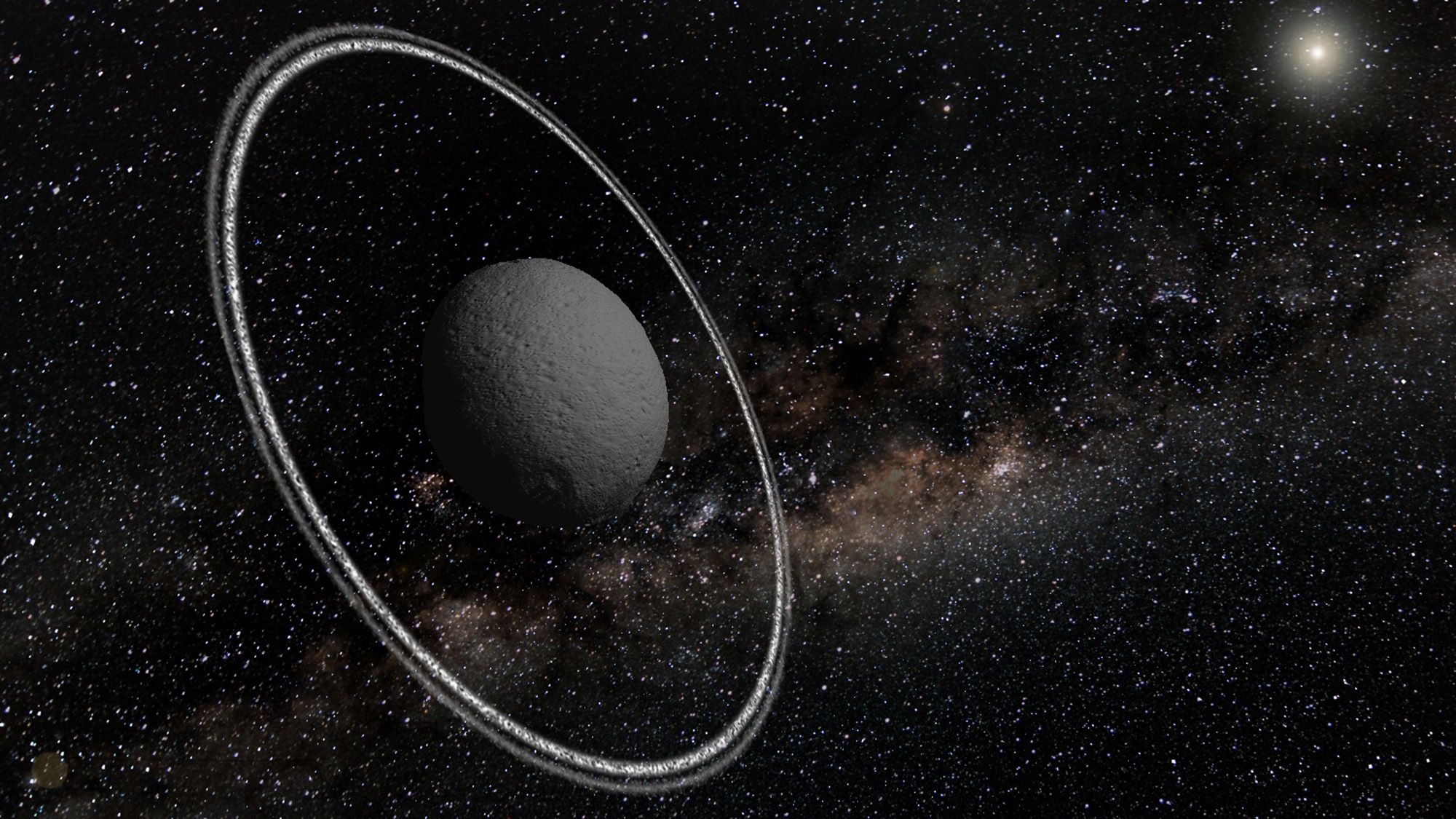
The James Webb Space Telescope has revealed unexpected changes in the ring system orbiting Chariklo, a small celestial body located between Saturn and Uranus. Chariklo, which measures approximately 250 kilometers across, belongs to a class of objects called centaurs that display characteristics of both asteroids and comets. Scientists initially detected the rings surrounding this distant body in 2013, making it the first small solar system object known to possess rings.
A recent study published in Science Advances compared data from the Webb telescope gathered in 2022 with observations made over the previous decade using ground-based instruments. The findings showed surprising contrasts: the inner ring became noticeably more opaque while the outer ring grew more transparent. Researchers at the Institute of Astrophysics of Andalusia suggested three possible explanations for these shifts, including Webb’s superior resolution revealing previously unseen details, actual material changes within the rings, or variations in grain composition and size.
The research challenges existing assumptions about distant ring systems, suggesting they may experience more dramatic transformations than previously believed. Scientists propose that understanding these mechanisms could fundamentally alter how researchers think about ring formation and stability around small bodies far from planetary gravitational influences. Future observations when Chariklo passes in front of distant stars will help confirm these findings and distinguish between natural evolution and optical effects.
The study also marked a significant achievement for the Webb telescope, representing the first time researchers deliberately coordinated observations around a stellar occultation, using precise data from the European Space Agency’s Gaia mission to execute the complex timing required.
Originally reported by Livescience →
About the Author