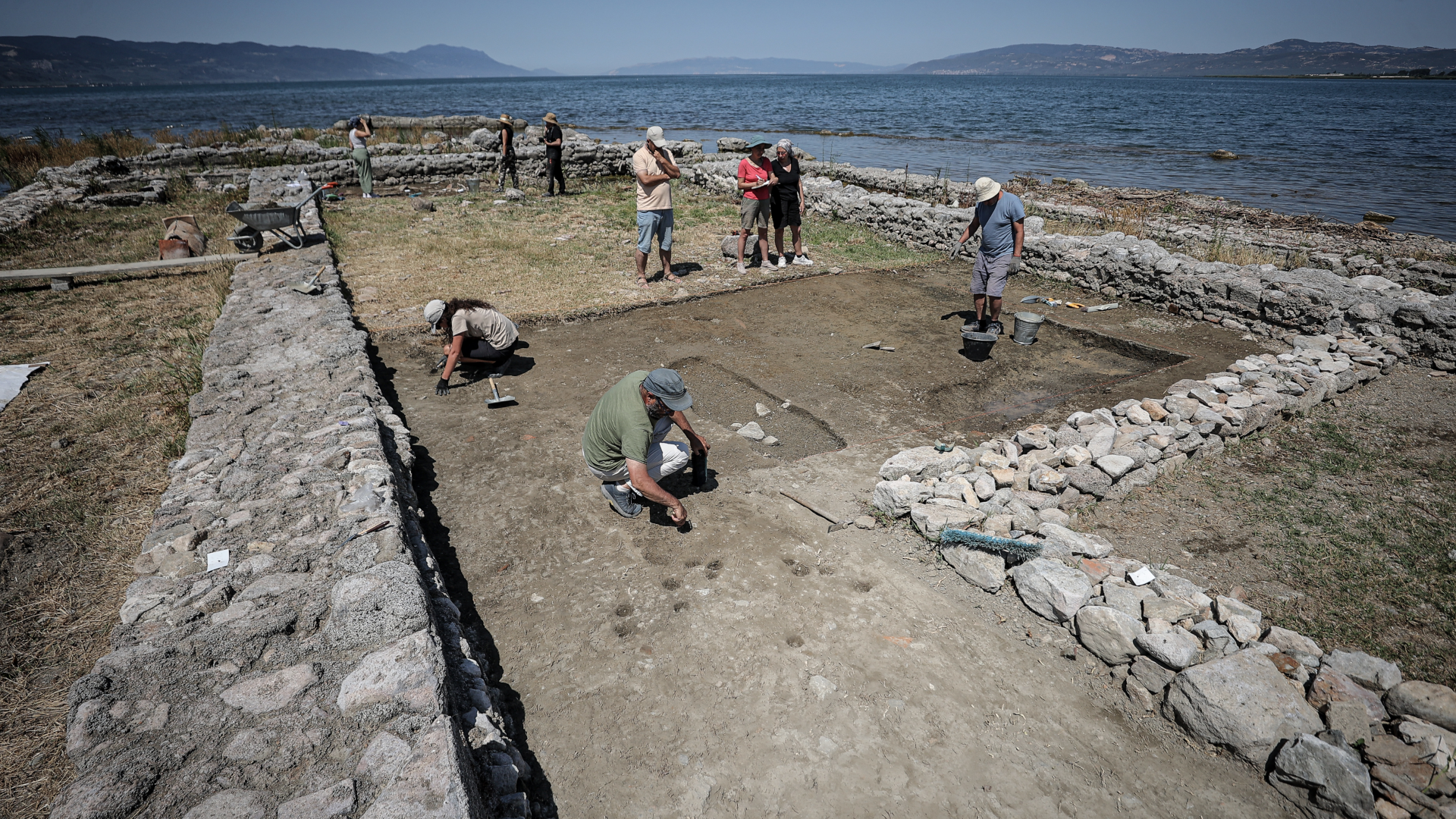
Archaeologists working beneath Lake İznik in Turkey believe they may have uncovered the site of a pivotal fourth-century Christian gathering. The team, led by professor Mustafa Şahin, discovered two church structures at the submerged location—a smaller edifice built underneath a larger basilica. The First Council of Nicaea, convened in A.D. 325 under Roman Emperor Constantine I, brought together Christian bishops to establish theological doctrine and formulate the Nicene Creed, a foundational statement of Christian faith.
The researchers argue that the smaller church aligns with historical accounts describing the council’s meeting place. An ancient church historian noted that sessions occurred in a modest “house of prayer,” which better matches the dimensions of the smaller structure than the larger basilica above it. The smaller church likely dates to the early fourth century and may have been destroyed by earthquake around A.D. 368, with the basilica subsequently erected on the same spot decades later.
However, several academic experts have expressed reservations about this interpretation. Historians note that historical sources indicate the council’s primary sessions took place in Constantine’s imperial palace, which remains undiscovered beneath the lake. Additionally, they point out that the smaller church has not been securely dated, and the council’s three-month duration suggests multiple meeting venues. While acknowledging the findings offer interesting context about the era, these scholars caution against overstating the church’s direct connection to the historic council.
Ongoing excavations continue at the site as researchers work to gather additional evidence and clarification.
Originally reported by Livescience →
About the Author