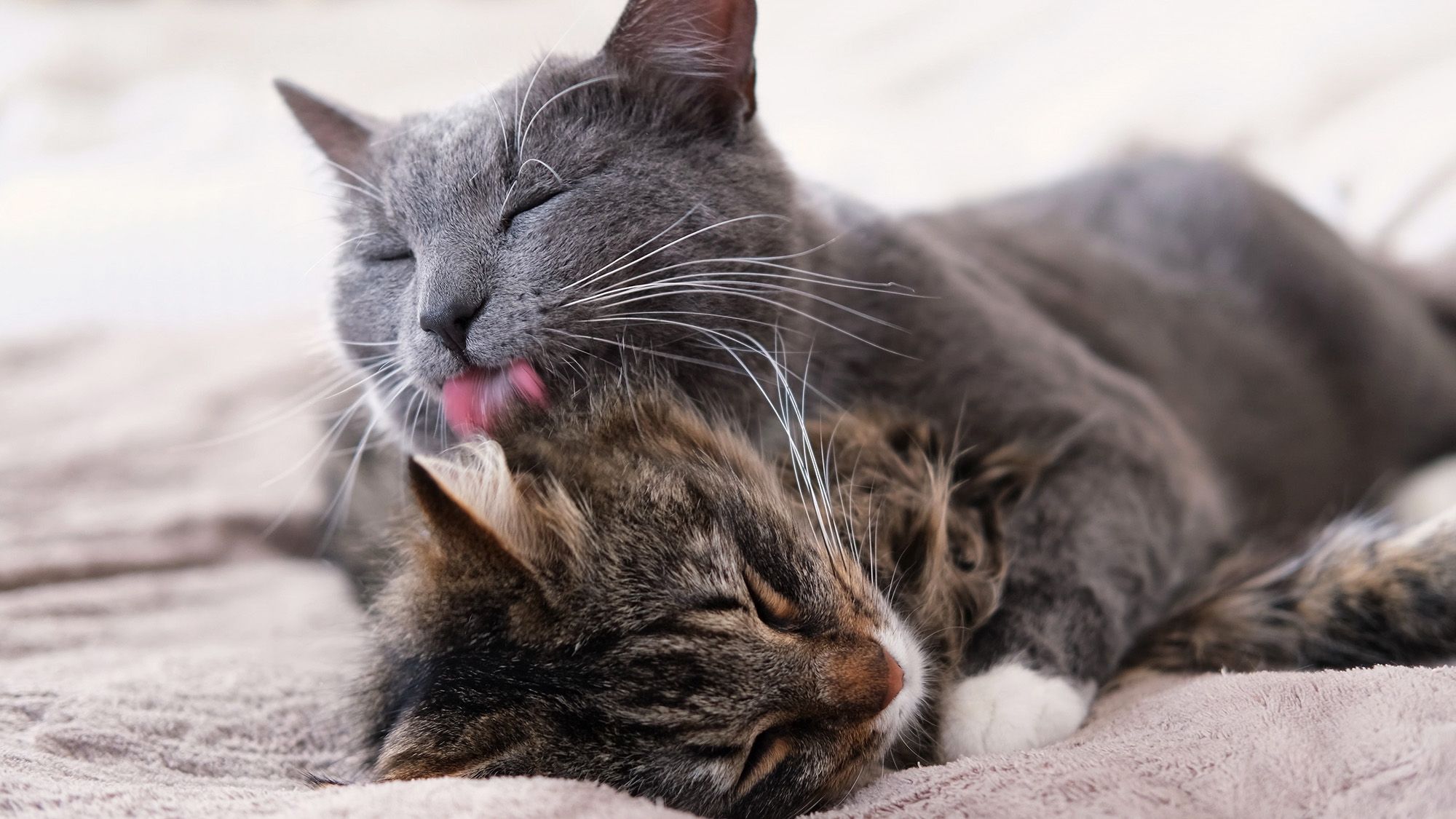
When multiple cats share a home, observing one cat lick another is quite common. Many people interpret this behavior, called allogrooming, as a straightforward display of affection. However, scientific investigation suggests the reality may be considerably more nuanced, with researchers identifying several distinct purposes for this grooming activity.
Historically, researchers believed allogrooming primarily strengthened social bonds among cats, potentially by establishing a unified scent across group members. A 1998 study challenged this assumption by documenting aggressive behavior in approximately 35 percent of grooming sessions, proposing instead that the behavior might serve to prevent conflicts in confined spaces. Recent research by cat behavior scientist Morgane Van Belle at Ghent University, which examined videos from 53 two-cat households, revealed that allogrooming functions differently depending on context. When cats huddled together while copying each other’s postures, grooming likely reinforced bonding. The ears—rich with sensory nerve endings—were frequent targets, potentially triggering relaxation responses similar to those observed in other animals. However, when allogrooming preceded conflict indicators like backward ears or biting, researchers suggested it functioned as an appeasement signal to prevent serious fights.
Beyond social communication, allogrooming may serve practical hygiene purposes. Since cats primarily target areas they cannot easily groom themselves, such as the head and neck, mutual grooming could help maintain cleanliness in these regions. Veterinary behaviorist Terry Curtis notes that feral cats, exposed to more parasites, might demonstrate different grooming patterns than house cats, though additional research is needed to confirm these hygiene benefits.
Originally reported by Livescience →
About the Author