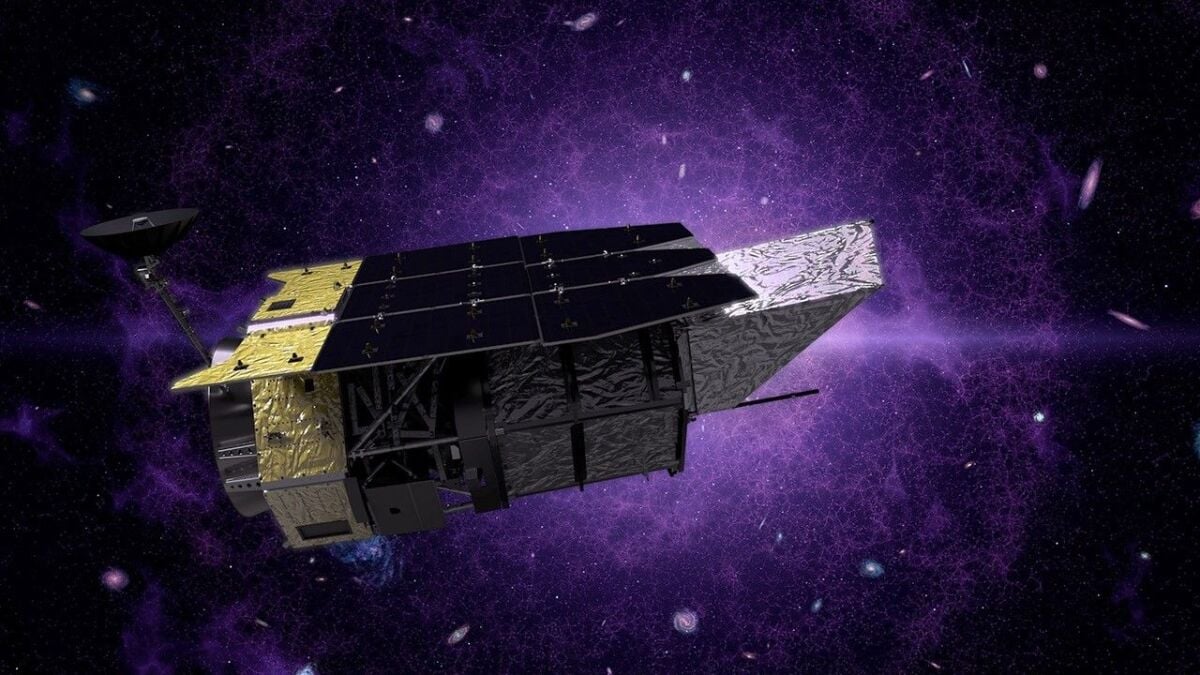
NASA’s Nancy Grace Roman Space Telescope has begun its journey toward deep space following its August 30 launch from Cape Canaveral aboard a SpaceX Falcon Heavy rocket. The observatory is now traveling toward the second sun-Earth Lagrange Point, a gravitational location positioned approximately 1 million miles from Earth, with NASA providing real-time tracking capabilities for members of the public interested in monitoring the spacecraft’s progress.
During its three-month voyage to L2, mission controllers are conducting extensive system checks and equipment calibration in a process known as commissioning. Engineers have already executed the first course correction maneuver, a brief engine burn that refined the telescope’s trajectory. The team has built flexibility into the mission timeline, with additional correction opportunities available if needed. Preserving fuel reserves remains a priority, as unused propellant directly extends the observatory’s operational lifespan.
Once Roman reaches its destination beyond the moon’s orbit, it will begin groundbreaking astronomical observations from an unobstructed vantage point. The telescope’s wide-field camera will capture sky images significantly larger than those produced by the Hubble Space Telescope while maintaining comparable image clarity. This capability will enable scientists to map galaxies, planets, and supernovae on unprecedented scales. Roman is expected to generate approximately 1.4 terabytes of data daily throughout its five-year primary mission, with NASA committing to releasing all datasets without restriction.
Originally reported by Mashable →
About the Author