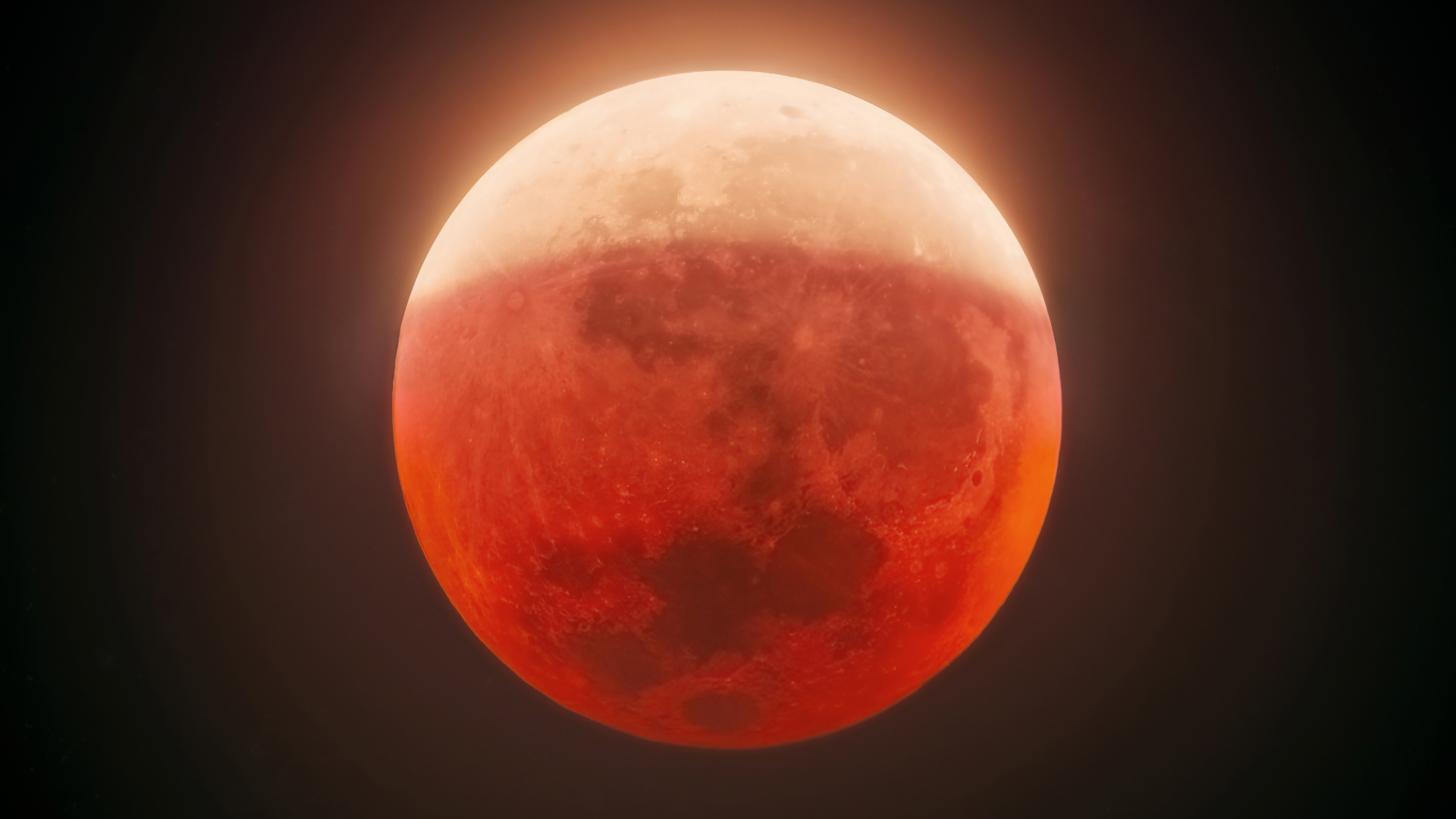
A striking partial lunar eclipse will occur on the night of August 27-28, transforming the full moon into a deep reddish hue. The celestial event will see Earth’s shadow cover approximately 96 percent of the lunar surface, making it the most substantial partial eclipse visible anywhere on Earth until a total lunar eclipse occurs on December 31, 2028. Observers in North and South America will have optimal viewing conditions, with the eclipse beginning at 9:23 p.m. EDT Thursday and reaching its peak shortly after midnight before concluding around 3 a.m. Friday. European skywatchers will only catch glimpses as the moon sets below the horizon near dawn.
The moon’s distinctive reddish coloration during a lunar eclipse results from how Earth’s atmosphere interacts with sunlight. While our planet’s atmosphere absorbs the blue and yellow wavelengths of sunlight, red light gets bent and directed toward the lunar surface, creating a crimson glow similar to a red flashlight beam. The precise shade of red varies depending on atmospheric conditions at the time of the eclipse, with volcanic ash and desert dust potentially darkening the appearance.
Unlike solar eclipses, viewing a lunar eclipse requires no special protective eyewear, making it accessible for casual observation. Those seeking enhanced views may benefit from telescopes, binoculars, or astrophotography equipment to capture detailed images of the phenomenon.
Originally reported by Livescience →
About the Author