
Test Yourself: This Week’s Microscope Mystery
 Challenge your eyes to start the week right.
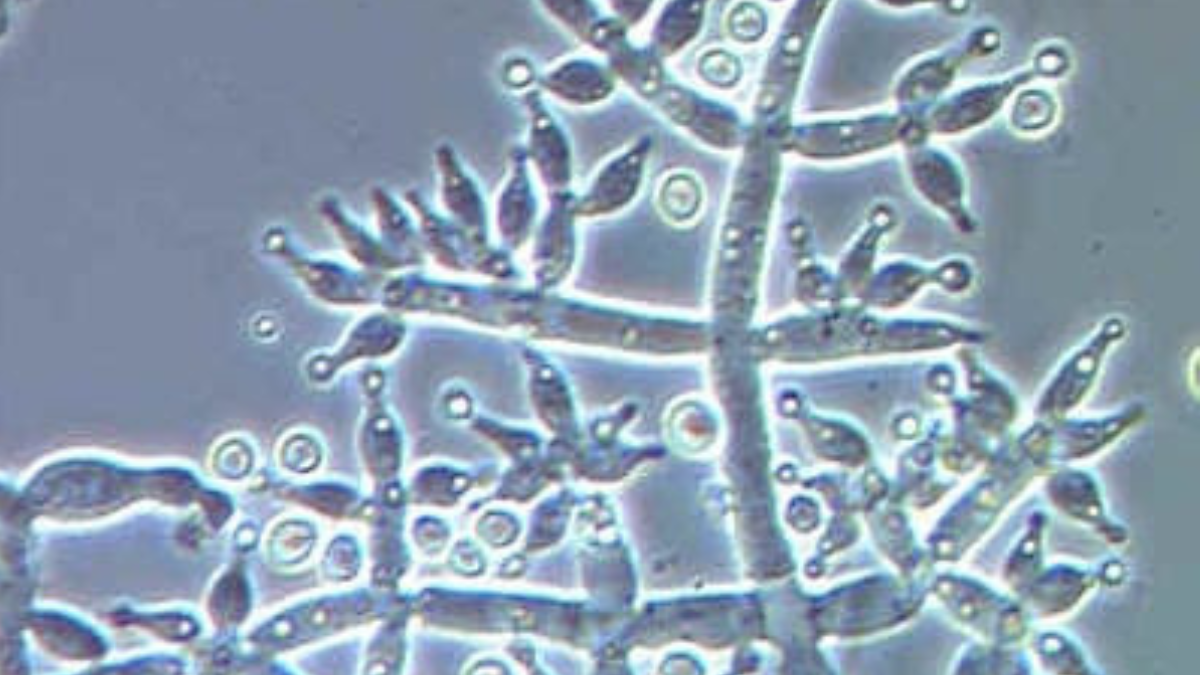
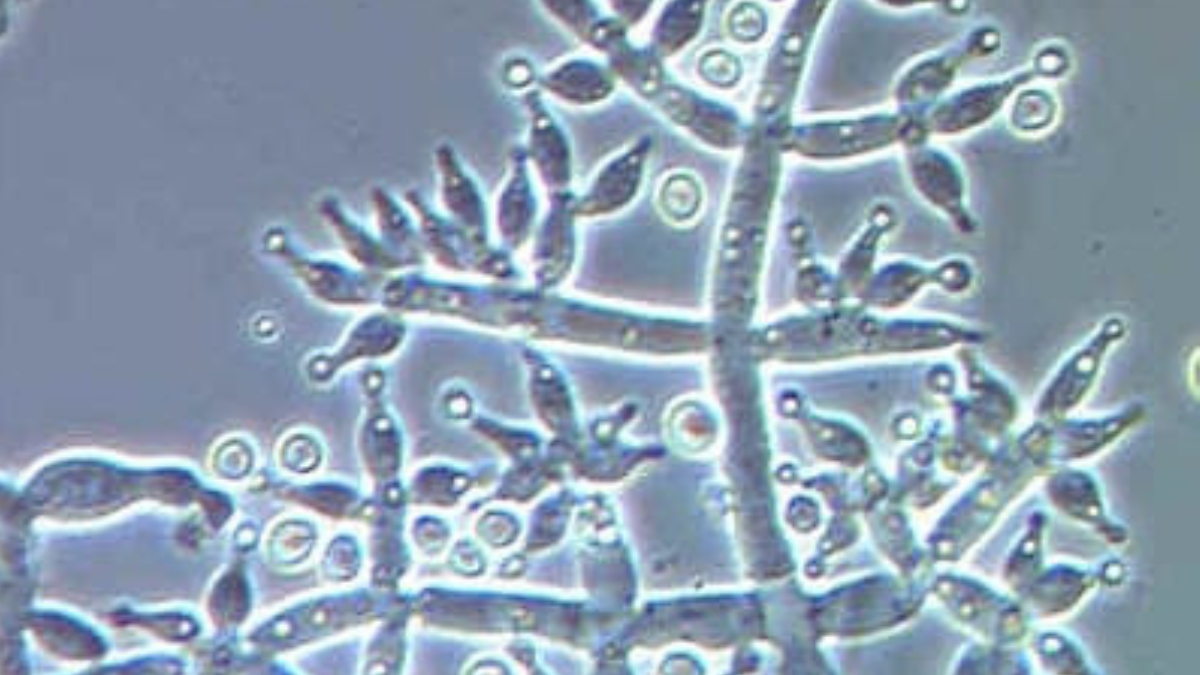
Uchemedia’s weekly microscope mystery challenges readers to identify unusual specimens viewed at high magnification. This week’s image presents delicate, branching structures adorned with tiny spherical formations, resembling frost crystals or miniature winter patterns frozen on glass.
The mystery specimen is actually a fungus engaged in reproduction. The branching filaments are conidiophores, specialized structures that produce spores called conidia. These microscopic spheres bud from the tips of the branches and serve as cloned copies of the parent organism, designed to spread via wind, water, or insects to establish new fungal colonies elsewhere. The repeated branching pattern creates an intricate tree-like appearance despite originating from a single-celled reproductive system.
The fungus belongs to Trichoderma, a mold genus commonly found in soil worldwide. Many species within this group have practical applications in agriculture, where they function as biological control agents against plant-damaging fungi. Interestingly, researchers recently discovered that one species, Trichoderma harzianum, exhibits accelerated growth and increased spore production when exposed to white noise, though scientists continue investigating the mechanism behind this unusual response.
These fungal structures remain invisible to the human eye, with individual spores measuring mere micrometers. While such organisms surround us in soil and compost, much about their behavior and functions remains scientifically unexplored.
Originally reported by Sciencealert →
About the Author