
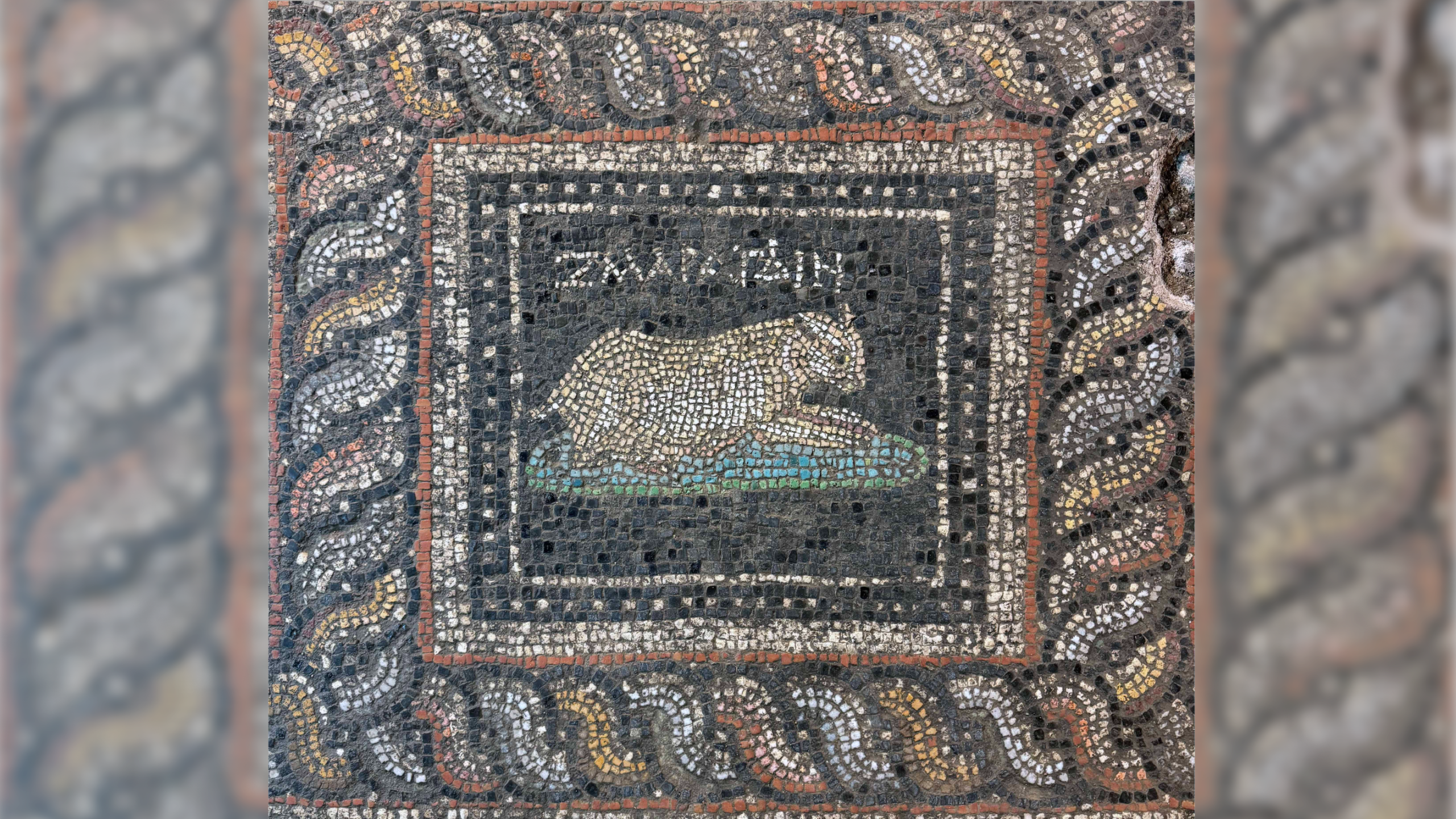
Archaeologists working in Turkey have uncovered a remarkable Roman-era mosaic featuring two named household animals, shedding light on domestic life nearly two thousand years ago. The intricate floor decoration was discovered at an ancient villa in Adramytteion on Turkey’s Aegean coast and has been dated to the late second or third century A.D. The mosaic’s 15 colorful panels were arranged in the villa’s primary reception hall, where visitors would have encountered them upon entry.
Two of the depicted animals bear identifying names rendered in Greek letters. A pale cat seated on a cushion is labeled “Zmaragdin,” meaning Emerald, while a dynamic dog is identified as “Okeanos,” or Ocean. The positioning of these animals at opposite sides of the entrance suggests they held special significance to the villa’s inhabitants. Researchers believe the cat’s name may reference emeralds mined in Roman Egypt, hinting at the owner’s possible merchant connections, while the dog’s maritime name likely reflects Adramytteion’s status as a harbor city.
The remaining panels of the mosaic showcase mythological creatures and animals rendered in ten different colored tiles, including representations of Medusa and a winged horse. According to head researcher Hüseyin Özgen, the named animals’ prominent placement in the mosaic may have served as symbols of household ownership and identity, preserving the memory of creatures that were significant to the villa’s residents whether as cherished pets or otherwise familiar household members.
Originally reported by Livescience →
About the Author