
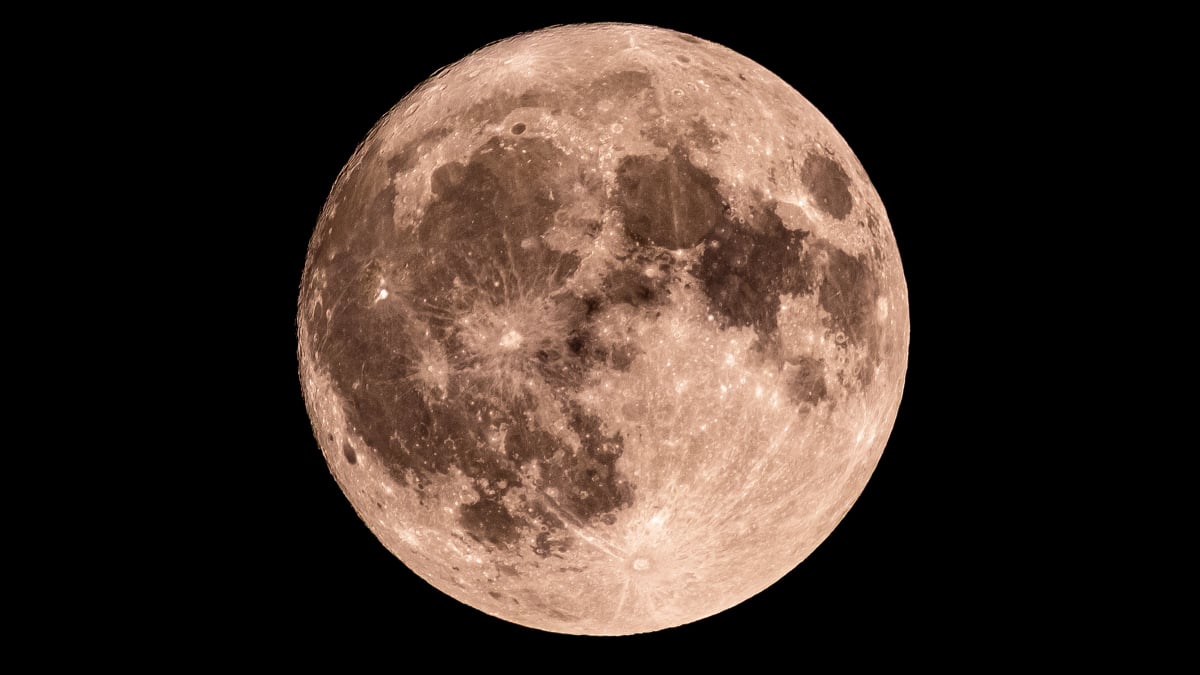
On September 7, the Moon enters its waning crescent phase with only 18 percent of its surface illuminated by the Sun. As it continues its journey toward the new Moon phase, observers will notice the lunar disk appearing increasingly narrow in the night sky. This marks a progression through the lunar cycle that repeats approximately every 29.5 days.
Stargazers with clear skies can spot notable features on the Moon’s surface during this phase. Those using only their eyes should be able to identify the Aristarchus Plateau, while observers equipped with binoculars or telescopes can view the Grimaldi Basin and Gassendi Crater in greater detail. The reduced illumination makes these observations particularly interesting for amateur astronomers.
The lunar cycle encompasses eight distinct phases as the Moon orbits Earth. Each phase depends on the Moon’s position relative to the Sun, which determines how much of its lit side becomes visible from our planet. The waning crescent represents one of the later stages, occurring just before the Moon returns to its new phase when it becomes completely dark.
The next full Moon will occur on September 26, marking the opposite point in the lunar cycle when the entire face of the Moon appears fully illuminated. This rhythmic progression of phases has guided celestial observation for millennia and continues to captivate modern skywatchers.
Originally reported by Mashable →
About the Author