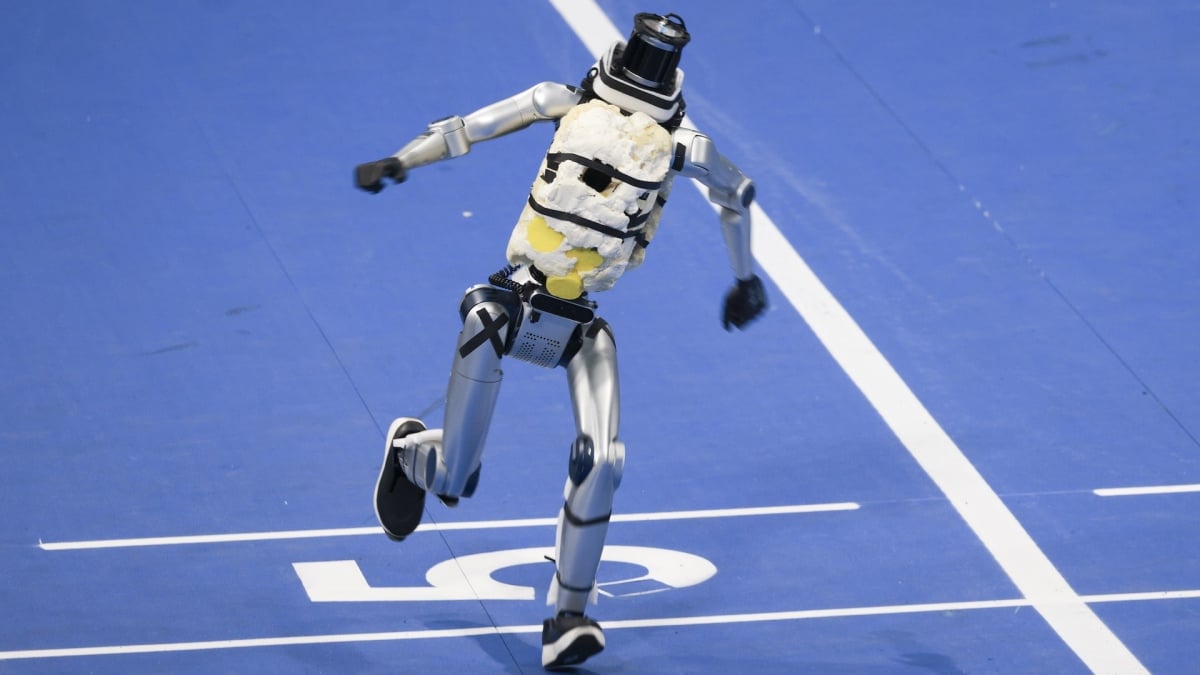
The Second World Humanoid Robot Games are set to commence this weekend in Beijing, bringing together over 2,000 robots from 666 teams representing 16 countries to compete across 50 different events. The competition has expanded significantly since its inaugural edition last year, which featured 500 robots from 280 teams competing in 26 events. The expanded program now includes new athletic competitions such as table tennis, tug of war, and weightlifting, along with practical scenario-based challenges including power tool assembly, fire rescue operations, and electric vehicle charging.
Competition rules vary depending on event type, with some allowing human operators to control robots while others require fully autonomous operation. Scenario-based events permit both autonomous and remote-controlled robots, though remotely controlled entries receive half the scoring points. This structure incentivizes teams to develop robots capable of independent decision-making and action. Chinese companies Unitree and X-Humanoid are expected to be strong contenders, having dominated last year’s medal count with 11 and 10 medals respectively. Unitree recently unveiled its new “Superman” robot, which demonstrated impressive athletic capabilities including a 2-meter jump and running speeds exceeding those of Olympic sprinter Usain Bolt.
Pre-competition testing has generated viral moments on social media, with several humanoid robots failing to navigate properly during trial runs. Videos circulating online show robots colliding with walls and obstacles, with some suffering apparent damage including falls and structural failures. Robotics expert Eren Chen observed that this year’s robots seem to struggle more with directional control than their predecessors, potentially due to the new requirement for autonomous operation in previously remote-controlled events. The Games run from August 22-26, with public attendance available at affordable ticket prices starting from approximately $14.50.
Originally reported by Mashable →
About the Author