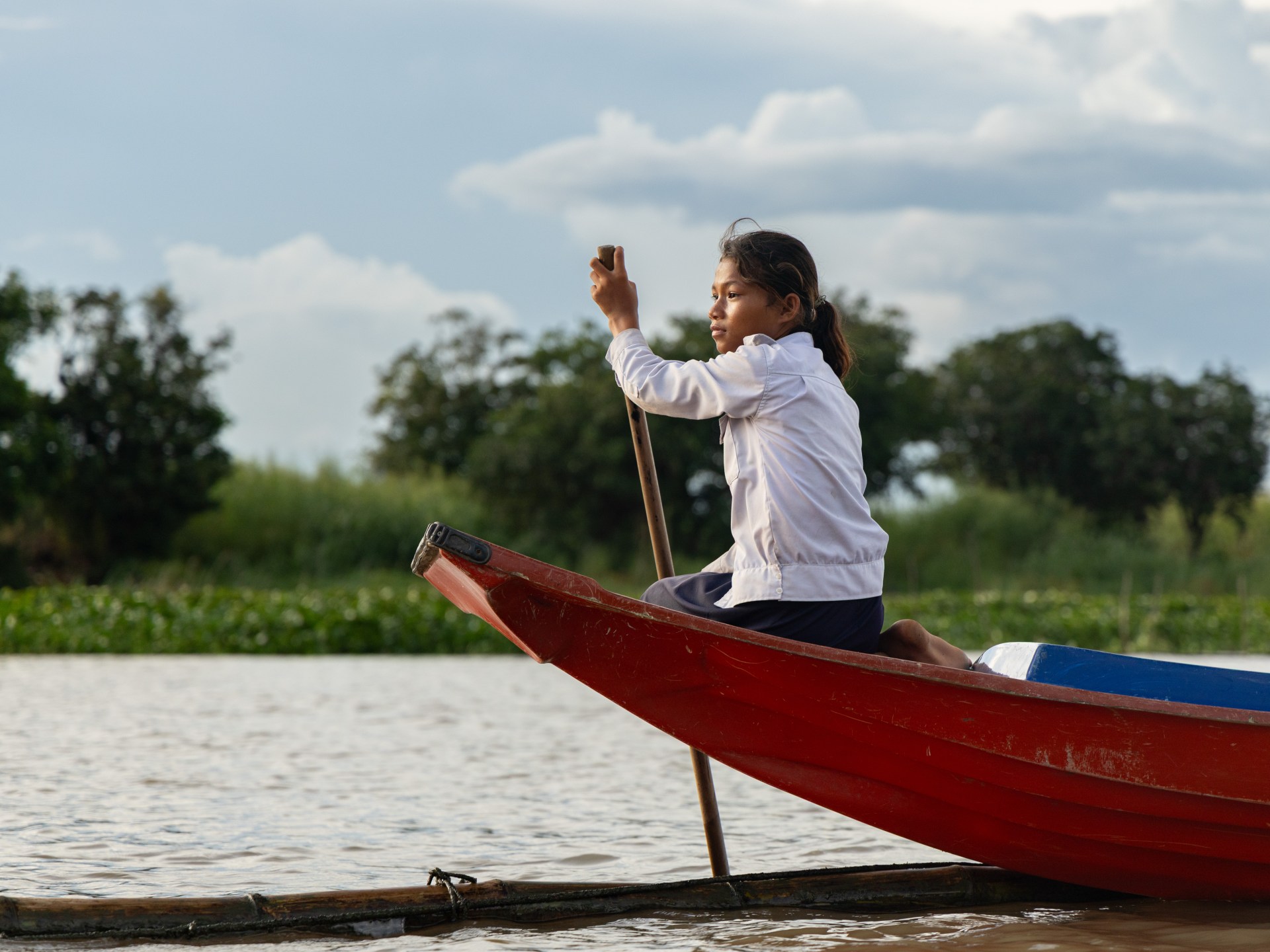
Escalating fuel costs are forcing children on Cambodia’s Tonle Sap lake to abandon their education. Families living in floating villages depend on boat transportation to reach schools, but surging energy prices driven by geopolitical tensions have made these journeys increasingly unaffordable. Thirteen-year-old Sou Sreynich, who only began attending school at age ten, now frequently skips classes to work gutting fish or harvesting peppers when her family cannot afford fuel costs for fishing expeditions.
The impact extends well beyond Cambodia’s borders. Similar situations are unfolding across Southeast Asia, with Vietnamese siblings dropping out of school after their father lost his fishing job due to diesel expenses. International aid organizations warn that the current global conflict could push approximately 23.4 million additional children into poverty by year’s end, with the majority residing in Africa and Asia.
As household finances deteriorate, families face difficult choices about which children remain enrolled. This pattern of selective school attendance leaves vulnerable youth at heightened risk for labor exploitation, human trafficking, and homelessness. Simultaneously, governments struggle to maintain education budgets as transportation costs for both students and teachers mount, creating a cascading crisis that threatens educational access for the world’s poorest populations.
Originally reported by Aljazeera →
About the Author