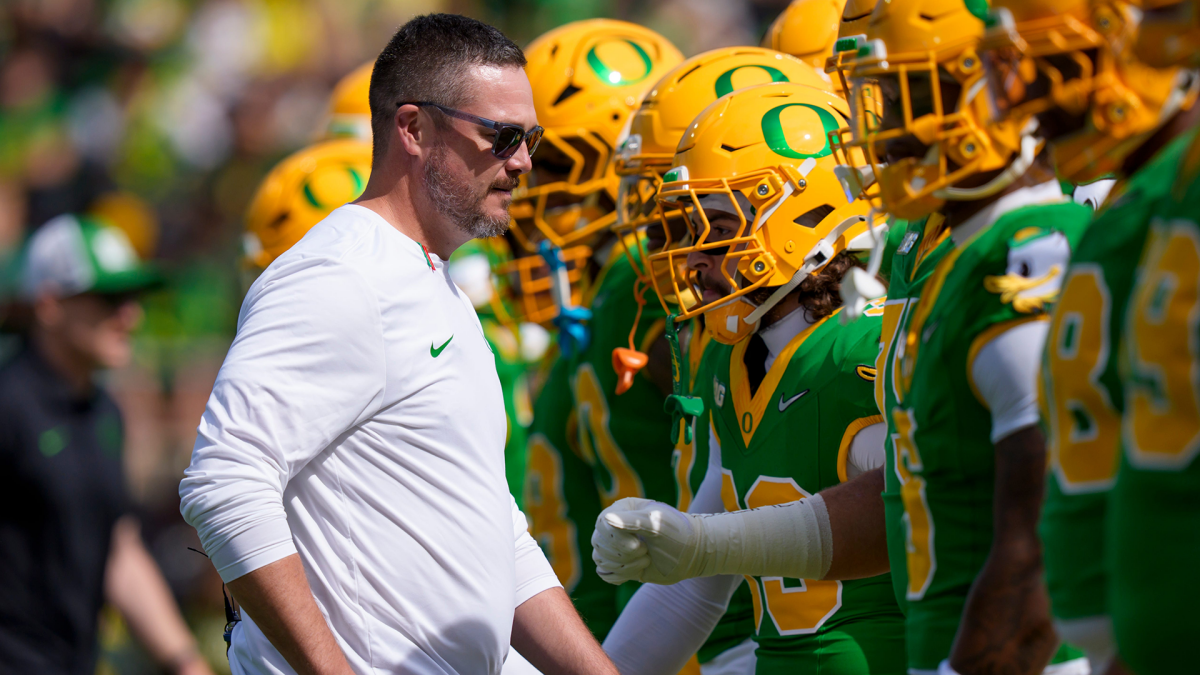
The University of Oregon football team narrowly avoided a significant upset loss to Boise State in their season opener, but the victory exposed critical weaknesses that could hinder their pursuit of a national championship. Despite escaping with a win, the Ducks demonstrated concerning inconsistency throughout the contest that raises questions about their title aspirations.
Offensive line instability emerged as a primary concern for Oregon’s coaching staff. The unit has undergone considerable turnover, and the resulting disruptions were evident in the team’s performance against Boise State. These issues along the line of scrimmage created obstacles that hampered the offense’s rhythm and effectiveness throughout the game.
Third-down execution proved to be another significant problem area for the Ducks. The team struggled to consistently convert opportunities in crucial situations, a deficiency that cannot be tolerated if Oregon hopes to compete for a national title. Converting third downs is essential for maintaining offensive drives and controlling game tempo against quality opponents.
As Oregon progresses through the season, addressing these fundamental issues will be paramount. The team’s coaching staff must prioritize stabilizing the offensive line and improving third-down efficiency to ensure the Ducks can compete at the highest level of college football. The narrow escape against Boise State serves as an early warning that substantial refinements are necessary before the team can realistically challenge for a championship.
Originally reported by Cbssports →
About the Author