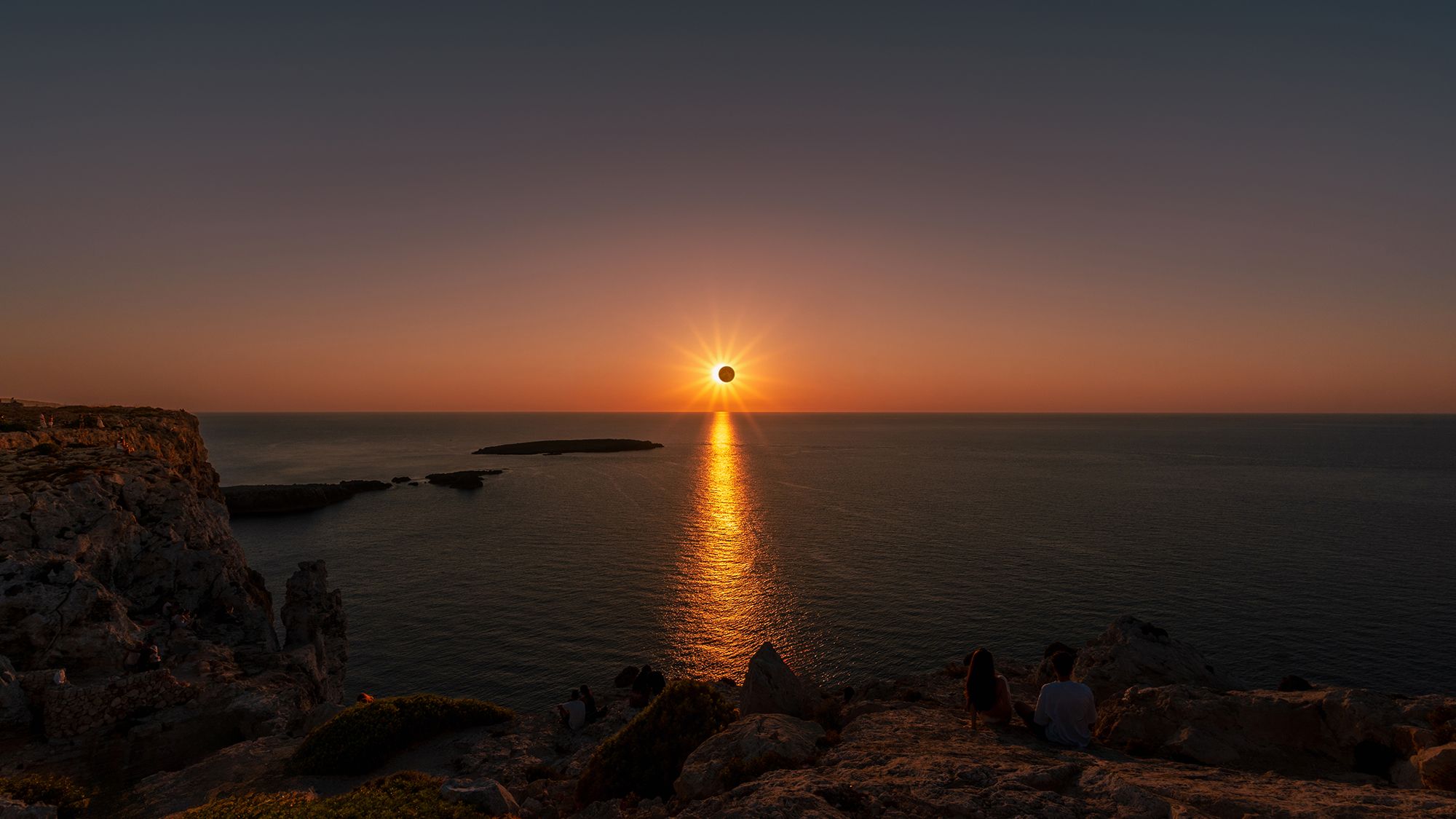
A forthcoming book by historian William Sheehan examines how total solar eclipses have captivated human civilizations throughout history, from ancient times to the modern era. Despite occurring roughly every 18 months globally, these celestial events remain rare from any single location due to the Moon’s narrow shadow path across Earth’s surface. Ancient peoples had no way to predict these occurrences, leading them to interpret eclipses through religious and mythological frameworks.
The earliest documented account of witnessing a total solar eclipse comes from Archilochus, a seventh-century B.C.E. Greek soldier and poet whose personal writings reveal him to be an immoral and violent figure. Despite his questionable character, Archilochus left behind a vivid poetic description of the total eclipse that crossed Greece on April 6, 648 B.C.E. His verses captured the terror and awe he experienced as daylight suddenly turned to darkness, expressing disbelief that such an impossible event could occur.
Archilochus’s poem represents humanity’s first known named eyewitness account of a total solar eclipse. His emotional reaction—describing how Zeus had transformed midday into night—underscores the profound psychological impact such unexpected celestial phenomena had on ancient observers. This historical record provides modern eclipse enthusiasts with a window into how profoundly transformative these cosmic events were for people without scientific knowledge of their cause.
Originally reported by Livescience →
About the Author